30 June 2026, EU: Today NGOs from the ‘End Toxic Pesticide Trade Coalition’ called out the European Commission following media reports that it would not hold its promise to end the toxic export of EU-banned pesticides to countries in the Global South. The promise for a legislative proposal was announced in 2020 under the Chemicals Strategy for Sustainability (CSS) to put an end to this double standard. By doing so, the Commission committed to set an example in protecting public health and natural resources and moving away from hazardous pesticides.
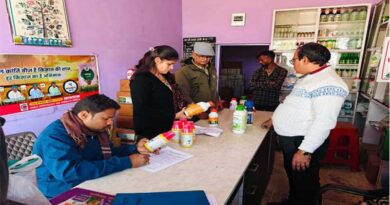
“The European Commission intends to continue approving the exports of tens of thousands tonnes of highly hazardous pesticides that have been banned for use in its own territory because of their high toxicity, exploiting the weaker protection laws of countries in the Global South. This is a slap in the face of every European citizen who still thinks that the EU is respecting human rights. It’s also an insult to all African, Asian and Latin American citizens who claim the right to a healthy environment,” said Natalija Svrtan, PAN Europe policy officer and coordinator of the End Toxic Pesticide Trade Coalition.
Back in 2020, the Commission wrote it would “promote safety and sustainability standards globally” and would “lead by example and ensure that hazardous chemicals banned in the European Union are not produced for export,” promising legislation by 2023. Since then, the Commission has undertaken extensive preparatory work, including public consultations in 2023, studies and an impact assessment process.
In the meantime, a number of European countries, EU policy-makers, the UN Rapporteurs on toxics and human rights, as well as the general public, have urged the Commission to act and resolve this double standard. Yet six years later, no legislative proposal has been published and the impact assessment remains unavailable to the public. This equals bad governance under the influence of a powerful agrochemical lobby.
In a written response to Danwatch, the independent journalistic platform that revealed this information (see below), a European Commission spokesperson acknowledged that exports of hazardous pesticides remain a concern but argued that an export ban would not necessarily solve the problem. Instead, it could “simply shift production outside the EU while penalising European companies”. Firstly, by using these kinds of arguments the EC once again copies and pastes the narrative of the chemical industry, arguments which have been rebutted over and over again by legal experts, UN Rapporteurs and civil society. And secondly, the Commission is not addressing the problem it originally committed to solve.
The Commission aims at improving the functioning of the Rotterdam Convention and strengthening PIC procedures. Therefore, it chooses to focus solely on improving reporting and transparency rather than protecting human rights and the world’s environmental resources by preventing the production or export of pesticides the EU itself has determined to be too hazardous.
Hans van Scharen, researcher at Corporate Europe Observatory (CEO) said: “The Commission’s arguments for not introducing an export ban are virtually identical to those the industry has been using ever since the EU announced that it was considering one. The rhetoric is exactly the same. Lobby organisations such as Cefic and CropLife carry enormous weight on the European political agenda. Today, it is primarily EU politicians who seek out the industry—not the other way around. It’s called corporate capture, and it is high time to stop influence on EU policymaking from chemical lobbyists via a firewall, just like we do with tobacco and should do with fossil fuel lobbyists.”
The End Toxic Pesticide Trade Coalition today sent a letter to Jessika Roswall, Commissioner for Environment, Water Resilience and a Competitive Circular Economy, with a request for clarification.
Global Agriculture is an independent international media platform covering agri-business, policy, technology, and sustainability. For editorial collaborations, thought leadership, and strategic communications, write to pr@global-agriculture.com