24 November 2026, Xingan, CN: The ISO 1750 Maintenance Agency has provisionally approved “bemystrobin” as the international common name for a strobilurin fungicide from Jiangxi Hetian Technology Co. Ltd., giving a Chinese-developed molecule a formal identity for regulatory filings and labels outside China. The name was approved on 20 November 2026 and announced on 23 November.
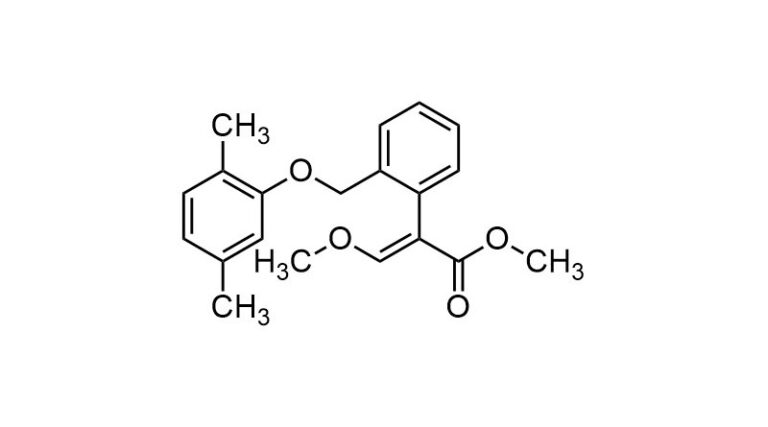
The compound’s chemical name is methyl (αE)-2-[(2,5-dimethylphenoxy)methyl]-α-(methoxymethylene)benzeneacetate, registered under CAS number 2852369-40-5’s shorter form, 852369-40-5. In China it is already known as 苯醚菌酯 (benmijunzhi), and in the research literature it has long carried the development code ZJ0712.
The molecule’s roots lie in the Zhejiang Research Institute of Chemical Industry, home to the Zhejiang base of China’s National Southern Pesticide Research Centre in Hangzhou. Zhejiang Hetian Chemical Co. Ltd. was built on the institute’s pesticide chemical research arm, and Jiangxi Hetian Technology is its subsidiary, with a manufacturing plant at Xingan in Jiangxi province.
Researchers have described ZJ0712 as a broad-spectrum strobilurin with strong protective and curative activity against plant pathogenic fungi. In 2018 a team produced carbon-14 labelled versions of the molecule so its metabolism, residues and environmental behaviour could be tracked, the kind of work needed to build a safety dossier for registration.
Strobilurins, also called QoI fungicides, stop fungal growth by blocking energy production in the mitochondria. The class reached the market in 1996 and includes well-known products such as azoxystrobin, kresoxim-methyl and picoxystrobin, together accounting for roughly a quarter of global fungicide sales. Structurally, bemystrobin carries the same methoxyacrylate “warhead” as azoxystrobin, paired with a dimethylphenoxymethyl side chain that resembles the one found in kresoxim-methyl.
Resistance risk flagged early
Strobilurins are known for a high risk of resistance, and early laboratory work on ZJ0712 pointed the same way. In a 2009 study, scientists at the Zhejiang institute exposed three sensitive strains of wheat powdery mildew to the compound over ten generations and obtained three resistant mutants, each with a resistance index above 80. The resistance was stably inherited, the mutants were as aggressive on wheat as their parent strains, and all three carried the G143A mutation in the cytochrome b gene, the same single change behind strobilurin resistance in many crop pathogens. The researchers concluded the molecule carried a high resistance risk in wheat powdery mildew and would need careful use.
The ISO approval remains provisional until 20 May 2027. Any company that considers “bemystrobin” to infringe one of its trademarks can object to the Maintenance Agency before that date. If no objections are received, the name will be fully approved and included in a new edition of ISO 1750, which will list preferred names alongside common names. The agency has also published the French form, bemystrobine, and the Russian form, бемистробин.
Global Agriculture is an independent international media platform covering agri-business, policy, technology, and sustainability. For editorial collaborations, thought leadership, and strategic communications, write to pr@global-agriculture.com