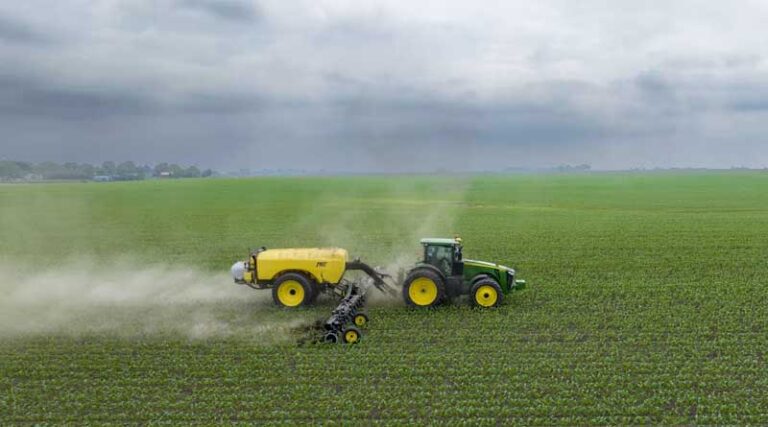
27 November 2026, London, UK: Great Britain’s Health and Safety Executive has added 12 substances to the GB Register of Unacceptable Co-Formulants, a move that will force reformulation or withdrawal of any plant protection product or adjuvant mixture that contains them.
HSE issued the update on November 5, requiring authorization holders to withdraw or amend affected products no later than June 16, 2028. The register covers co-formulants, the inert ingredients blended into pesticide formulations alongside active substances, along with adjuvants, the separate products mixed into a spray tank to improve how a pesticide performs.
The update follows the European Union’s adoption of Commission Regulation (EU) 2026/1120, which added the same 12 substances to Annex III of the EU’s pesticide framework regulation. That EU regulation applies directly in Northern Ireland, and HSE said it independently reviewed the justification for each substance before deciding to add all 12 to the GB register as well.
Once a substance is added to the register, there are no grace periods for adjuvants once they are removed from the UK’s Official List of Adjuvants. For plant protection products, authorization holders get a maximum grace period of three months after an amendment or withdrawal to sell existing stock, and a further twelve months after that for users to dispose of, store or use what they already hold. If a banned substance is present only as an unintentional impurity in another co-formulant, it is allowed up to a concentration of 0.1% by weight before it counts as a breach.
HSE said authorization holders are responsible for reviewing their own formulations for compliance, and that it will contact holders directly where it has already identified affected products. The agency is advising companies to submit amendment applications before the compliance date rather than waiting for individual contact.
The update lands while the UK and EU are separately negotiating a wider Sanitary and Phytosanitary Agreement that would cover the pesticides regime. HSE said it does not expect that negotiation to change the compliance timeline attached to this specific register update.
Global Agriculture is an independent international media platform covering agri-business, policy, technology, and sustainability. For editorial collaborations, thought leadership, and strategic communications, write to pr@global-agriculture.com