24 November 2026, Vietnam: Implementation is at the centre of the climate debate in this year’s COP. The COP31 Action Agenda aims to move from commitments to implementation, with food security and climate-resilient agriculture among its priorities. Countries now face the more complex task of delivering on their food systems and climate commitments in the face of overlapping climate, economic and geopolitical shocks.
The effects of shocks depend in part on the resilience of food systems. But the severity of a shock does not, by itself, determine its impact. Vietnam, for example, experienced above-average shocks while continuing to reduce undernourishment. Across countries, improvements in government effectiveness and greater diversity in food supply were associated with smaller fluctuations in undernourishment, while stronger social capital supported better outcomes over time.
Building resilience means dealing with trade-offs. Farming practices that improve soil health and reduce vulnerability to drought may bring costs before farmers see the benefits. Policies that advance climate or nutrition goals may affect food prices, jobs or public spending. In practice, governments face choices about which trade-offs are politically acceptable, who bears the costs and how quickly change can realistically happen.
Speaking at the World Food Forum this year, Sierra Leone’s Minister of Agriculture and Food Security, Dr Henry Musa Kpaka, put this more practically: experts often seek the perfect solution, while governments need workable options that can be put into practice and improved over time. In Sierra Leone, more than USD 1 billion has been pledged to support Feed Salone, but converting commitments of this scale into investable programmes places considerable demands on implementation capacity. Rigorous evidence is indispensable, but it has to engage with the priorities, knowledge, experience and capacities of the people and institutions making and living with the decisions.
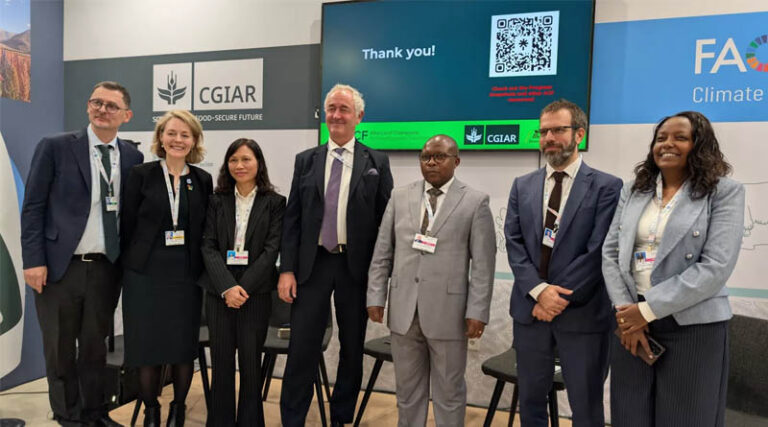
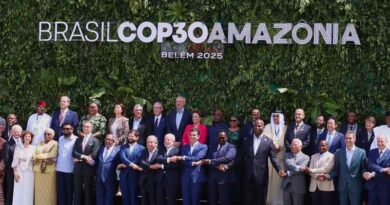
It was partly in recognition of these challenges that Brazil, Cambodia, Norway, Rwanda and Sierra Leone established the Alliance of Champions for Food Systems Transformation at COP28. Colombia, Italy and Vietnam subsequently joined at COP30. This unusually diverse coalition, two countries each from Africa, Europe, Asia and Latin America, brings together countries with very different contexts and capacities, offering an opportunity to learn from one another’s experiences and understand what it takes to move from ambition to implementation.
ACF countries are already putting food systems resilience at the heart of their climate action. In Brazil, school feeding policy requires at least 45% of resources under the National School Feeding Programme to be spent on direct purchases from family farming, including through cooperatives and other producer organisations. Sierra Leone is linking local farmers to school meals, creating market opportunities for more than 22,000 smallholders in 2025/26. Rwanda is using subsidised agricultural insurance to reduce risks for farmers and encourage investment, with the national scheme supporting more than 200,000 farmers a year.
Our deepening collaboration with Brazil through ACF opened further opportunities to work together on moving from evidence to implementation. TERRA emerged from Brazil’s COP30 Action Agenda as an initiative to scale agroecology and agroforestry. Working with Brazil, FAO, IFAD, the Agroecology Coalition and NOW Partners, the Alliance contributed to an implementation framework that starts with country and producer priorities and draws on evidence and experience from within and beyond the country. It looks across the conditions needed to reach scale, from producer organisation and knowledge to finance, technology and markets.
Our contribution, drawing on the CGIAR Multifunctional Landscapes Science Program, will focus on co-creating locally adapted approaches and innovations, policies, planning and decision-support tools, and monitoring, reporting and verification approaches. This work will connect local knowledge and experience with evidence and learning from across the world. Three pilots in Brazil are in the startup phase, while 10 other governments have expressed interest in the initiative.
COP31 offers an opportunity to build greater climate ambition on the back of progress countries are already making on food systems. These experiences show what it takes to turn commitments into action, and where challenges remain. For science and development organisations, the task is to learn from these experiences and adapt how we work, so that evidence is not only available but useful to the governments and communities putting it into practice.
Global Agriculture is an independent international media platform covering agri-business, policy, technology, and sustainability. For editorial collaborations, thought leadership, and strategic communications, write to pr@global-agriculture.com