Agriculture Gets Just 5% of Climate Finance, FAO Warns at COP31
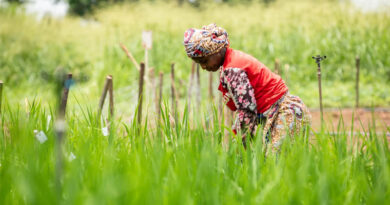
17 November 2026, Antalya, TR: Agriculture and food systems are receiving only around five percent of global climate-related development finance, a share that is declining even as climate shocks increasingly threaten food production, the UN Food and Agriculture Organization warned during the first week of the COP31 climate conference in Antalya, Turkey.
Kaveh Zahedi, FAO’s Assistant Director-General and Head of its Climate and Biodiversity Office, told reporters at the summit that the funding gap left agriculture dangerously exposed, saying “the biggest risk is not investing in agriculture.” His comments came as UN Secretary-General Antonio Guterres used what he described as his final COP press conference before leaving office at the end of the year to press wealthy nations on climate finance commitments more broadly. Guterres said that even tripling global adaptation finance would meet less than 30 percent of what developing countries actually need.
Under the New Collective Quantified Goal agreed at COP29, developed countries are expected to lead efforts to mobilize at least $300 billion a year by 2035 for developing nations, within a broader $1.3 trillion target drawn from all public and private sources. A new assessment presented at COP31 found that current financing trends could leave the larger goal roughly $840 billion a year short by 2035. Developing countries face adaptation costs estimated at up to $305 billion a year by that date, while international public adaptation finance totaled only $28.2 billion to $31.7 billion in 2024, according to UNEP’s Adaptation Gap Report.
New pledges during the first week
Development finance institutions from the United Kingdom, Norway and Canada announced plans during COP31’s first week to mobilize $10 billion for climate projects in emerging markets by 2030. Officials speaking at the conference said that each dollar of development bank financing typically unlocks eight to ten dollars in additional private financing, a ratio they argued makes blended finance mechanisms central to closing the broader gap. COP31 President Murat Kurum said discussions in the conference’s opening days spanned food, agriculture, health and energy, and organizers reported more than $26 billion in green investment commitments announced during the first week alone, including $15 billion in renewable energy financing jointly backed by Turkey and China and a $6 billion, five-year commitment from the European Bank for Reconstruction and Development inside Turkey.
A model from the Pacific
Zahedi and other officials pointed to parametric insurance schemes already operating across eight Pacific island countries as an example of climate finance reaching agricultural communities directly, with tens of thousands of people reported to have benefited from payouts so far. Sinja Buri of the United Nations University Institute for Environment and Human Security said such mechanisms show how targeted, pre-arranged finance can reach smallholders faster than traditional disaster response funding, though she and other participants cautioned that insurance payouts alone cannot substitute for the deeper structural investment agriculture needs to adapt to more frequent droughts, floods and heat extremes. More than 100 world leaders attended COP31’s Leaders’ Summit on November 11 and 12, and organizers said over 100,000 people registered to attend the conference, which runs in Antalya through November 20.
Also Read: ADM Opens New Destination Marketing Office in Nairobi, Strengthening Presence Across East Africa
Global Agriculture is an independent international media platform covering agri-business, policy, technology, and sustainability. For editorial collaborations, thought leadership, and strategic communications, write to pr@global-agriculture.com