17 November 2026, Brasília, BR: Brazil’s national crop supply agency, Conab, reported that soybean planting for the 2026/27 season had reached 66.8 percent of the projected area as of November 9, with Mato Grosso nearing completion even as persistent rain, hail and waterlogging disrupted wheat, rice and soybean development across the country’s southern growing states.
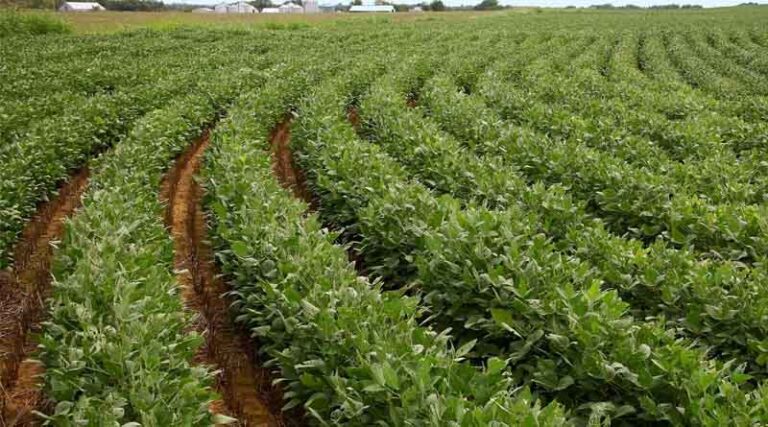
In Mato Grosso, Brazil’s largest soybean-producing state, planting is practically finished, with only plots on sandy soils still to be sown, according to Conab’s weekly crop monitoring report. Planting in Goiás has also advanced, helped by recent rain, with crop development described as satisfactory. In Paraná, sowing has moved forward significantly, though excess soil moisture, erosion and localized emergence failures have slowed machinery access in some fields. In Rio Grande do Sul, planting sped up during a dry spell before rain and hail interrupted the work again, causing localized damage to young plants; Conab also noted early signs of bacterial disease in soybean fields that had already reached flowering.
Wheat and rice feel the strain
The same wet conditions have weighed on Brazil’s winter wheat crop, now in its final stages of harvest. Nationally, 78.4 percent of the 2025/26 wheat crop had been harvested as of the report date. In Rio Grande do Sul, Conab said wheat yield and grain quality are highly variable this season because of rain and frost during flowering and persistent cloud cover during grain filling. The harvest in Paraná is nearly complete but is coming in with below-expected yield and quality, while Santa Catarina’s wheat crop has lost both yield and quality to heavy rain and hail; the state’s western Oeste and Extremo Oeste regions were about 82.6 percent harvested. Wheat harvesting is already complete in Bahia, Goiás, Minas Gerais, Mato Grosso do Sul and São Paulo.
Rice planting has also been uneven. In Rio Grande do Sul, Brazil’s largest rice-producing state, sowing has been intermittent but roughly 77 percent of the planned area had been planted, with crop conditions described as generally good. In Paraná, excess rain caused localized flooding that forced farmers to replant some rice fields, while in Santa Catarina excess moisture also forced replanting in places as the state’s rice planting nears its end.
Corn and bean planting have faced similar pressure this month. Conab’s report put first-crop bean planting at 44.3 percent of the projected national area. In Rio Grande do Sul, hail, strong winds and intense rain caused what the agency described as irreversible damage to some first-crop corn fields, adding to losses already reported in soybeans. In Santa Catarina, excess soil moisture, reduced sunlight and nutrient leaching are limiting early corn growth, while persistent rain has also slowed fieldwork there more broadly.
Conab’s report forecasts further rain for the south over the week following November 9, with total accumulations of 30 to 70 millimeters, higher in central-southern Rio Grande do Sul and the Santa Catarina highlands and somewhat lower in Paraná. The center-west is forecast to receive 10 to 30 millimeters of rain, with isolated storms of 20 to 50 millimeters possible in a single day near the border of Mato Grosso do Sul and Goiás and in northwestern Mato Grosso. In Piauí, by contrast, planting has stalled in most areas for lack of soil moisture, a reminder of how unevenly this year’s rainfall has been distributed across Brazil’s growing regions.
The contrast between a soybean crop that is broadly on pace nationally and a southern belt struggling with excess water illustrates the agency’s recurring message this spring: planting progress alone does not capture the condition risk building in Rio Grande do Sul, Paraná and Santa Catarina, where several crops are overlapping in the same fields during the same wet weeks. Conab’s agronomists noted that waterlogged soils have also slowed spraying and other field operations in parts of Paraná, raising the risk of pest and disease pressure building in soybean fields that are otherwise developing normally. The agency is due to update its planting and production estimates again in its next monthly grain survey, when it will have a fuller picture of how November’s rainfall pattern has affected both yield potential and the pace of fieldwork across the south.
Global Agriculture is an independent international media platform covering agri-business, policy, technology, and sustainability. For editorial collaborations, thought leadership, and strategic communications, write to pr@global-agriculture.com