Tractors: Market Grows in India, While in the U.S. it Continues To Decline
24 June 2026, New Delhi: Global tractor sales rose in the first four months of the year, reaching 512,000 units. The sector’s performance was driven by India, which continues to set record pace. Traditional markets showed mixed results: the U.S., Canada, and Brazil slowed, Europe held steady, and Turkey saw a sharp decline. A key factor is the stability of the agreement between the United States and Iran.
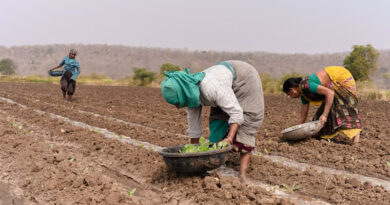
Data on global tractor sales trends for the first four months of 2026 reveal a mixed picture across major countries. Between January and April, total sales rose by 18% compared to the same period in 2025, increasing from 433,000 to 512,000 units; however, this growth is skewed by India’s performance and does not reflect the sector’s true trajectory. In fact, with 375,000 units sold during the four-month period, the Indian subcontinent is once again setting a record pace, confirming its status as a country capable of exceeding one million registrations per year—representing approximately 40% of the global total. This analysis was presented by Mariateresa Maschio, president of FederUnacoma (the Italian association of agricultural machinery manufacturers), during the Federation’s Annual Meeting, held this afternoon at the Palazzo di Varignana (Bologna). During her speech, the president highlighted the unique characteristics of the Indian market, which is predominantly characterized by medium- and low-horsepower tractors and by the versatile use of tractors—employed not only for agricultural work but also for transporting goods and people.
While the Indian market is growing, traditional markets are slowing down. In North America, the United States continue to lose ground. Following sharp declines in 2024 (-13%) and 2025 (-10%), tractor sales dropped further in the first four months of 2026, totaling 53,800 units—a 9% decrease compared to the same period last year. Canada also saw a decline, falling by 8% to 6,100 new registrations, as did Brazil, which recorded a 15% drop to 12,300 units. Turkey’s decline was particularly sharp, with sales totaling 7,250 tractors—half the number registered in the first four months of 2025. Europe’s performance was a mixed bag, with overall tractor sales increasing by 4% (to over 45,000 units), but the German market stagnated (-0.7%, with 9,240 units sold) and the Polish market saw a sharp decline (-14.8%, with 2,670 units sold), which had shown great dynamism in recent years. On the other hand, Italy posted positive results (up 4.6% with 5,250 units) as did France (up 1.1% with 7,340 tractors), while the United Kingdom returned to growth (up 25% with 4,550 units). “Geopolitical tensions, the regionalization of the economy, market fragmentation, and the protectionist strategies pursued by some countries have long influenced the performance of the agricultural machinery sector,” noted Mariateresa Maschio. “These challenges were exacerbated in the first months of the year by the consequences of the conflict in the Persian Gulf, which—as the Federation’s president concluded—led to a new surge in the cost of energy and fertilizers, further reducing the primary sector’s capacity for investment.”
Also Read: EU Mandates Digital Labels for Plant Protection Products from 2028
Global Agriculture is an independent international media platform covering agri-business, policy, technology, and sustainability. For editorial collaborations, thought leadership, and strategic communications, write to pr@global-agriculture.com