Biostimulants Get Brassica Crops Growing
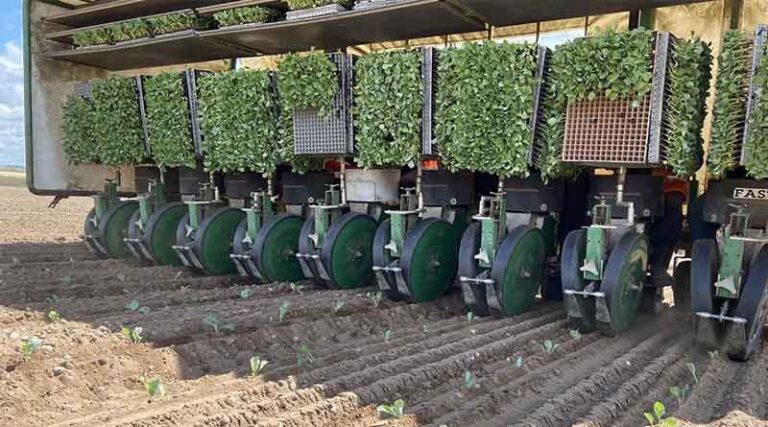
14 March 2026, UK: After a long dull and wet winter, the planters have been busy on sunny days and drying soils. With plenty of fields already planted, crops should be ready in good time for the start of the UK season.
Focussing on planting, over the last few seasons we have looked at improving establishment with pre-planting module drenches of MAXICROP® Triple and VIXERAN®. Replicated trials and split field work in 2025, showed again, that these products applied in combination one week before planting improved evenness of establishment and head size at harvest.
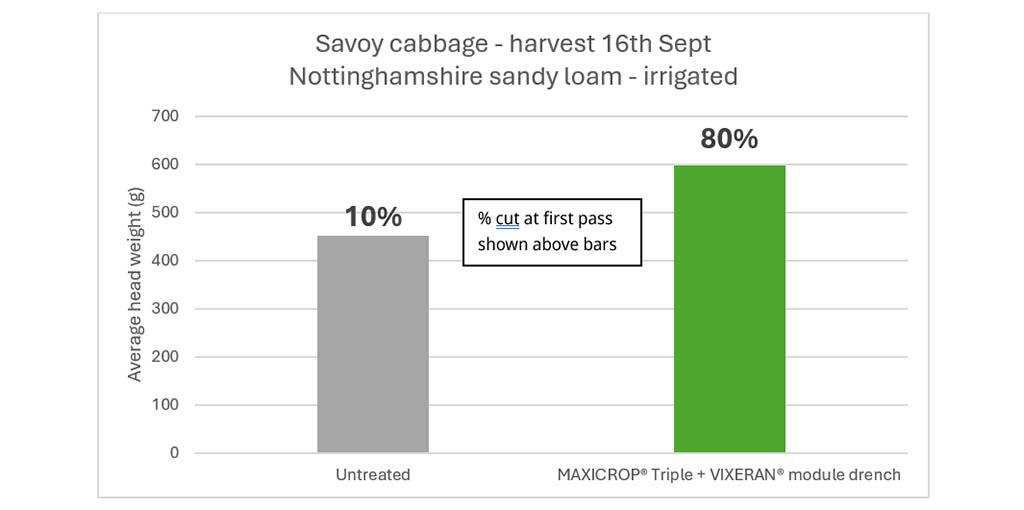
Results from two trials, with MAXICROP® Triple applied at 1:300 (or 2l/ha) and VIXERAN® applied at 50g/ha, are shown below.

Nottinghamshire savoy cabbage trials (below) reported just 10% of savoy heads harvested in the first pass in the untreated plots, compared to 80% cut in the first pass with MAXICROP triple and Vixeran treatment. As well as heads being an average 33% heavier overall with the biostimulant treatment, compared to untreated.
Now that the earliest plantings are in the ground, I will be looking to see if we can also get some commercially treated trials this year. As with all replicated trials, variability can be an issue, so the real confirmation of results is from larger plots or split fields.
Pest threats
Planning ahead, Rothamsted Research have published their aphid forecast. As a summary, they are predicting aphid emergence up to two weeks earlier in the south, with timings as average further north.
It is always difficult to predict the numbers that will emerge, but the forecast also suggests emergence will be lower than average with a wet winter affecting survival rates. The full forecast can be found here: https://insectsurvey.com/aphid-forecast
I’m starting to think we have had a run of early emergence forecasts for the last few years, which probably means the average will be moving earlier over time and the new normal.
An early emergence of aphids typically gives them a longer time for the population to build up as the season progresses – and usually means more issues. However, with a lower emergence predicted this spring, it will hopefully reduce the effect as they are starting from a lower base.
Another pest which may have found the autumn/winter challenging is whitefly. This pest tends to suffer more in higher rainfall, so I suspect there will be fewer whitefly emerging this season.
Global Agriculture is an independent international media platform covering agri-business, policy, technology, and sustainability. For editorial collaborations, thought leadership, and strategic communications, write to pr@global-agriculture.com