Adaptation Finance Needs To Reach People Before The Next Shock
18 November 2026, Kenya: When there’s drought in parts of Kenya, the location of a borehole can determine who has access to water and who must travel farther to find it. Where to drill then, matters almost as much as whether to drill at all. Through County Climate Change Funds, communities help decide which investments make the most sense, from boreholes to water pans. While CGIAR researchers, working with Kenyan partners, bring evidence to the planning process, the decisions themselves remain with local institutions and the people who will live with their consequences.
These are practical choices that cannot wait until the rains have failed. Yet a lot of the international debate over adaptation finance takes place on a very different timetable, with governments negotiating billions of dollars against deadlines that stretch years into the future. For communities trying to prepare for the next dry season, those distant commitments offer little assurance that the money will arrive while there is still time to put it to use.
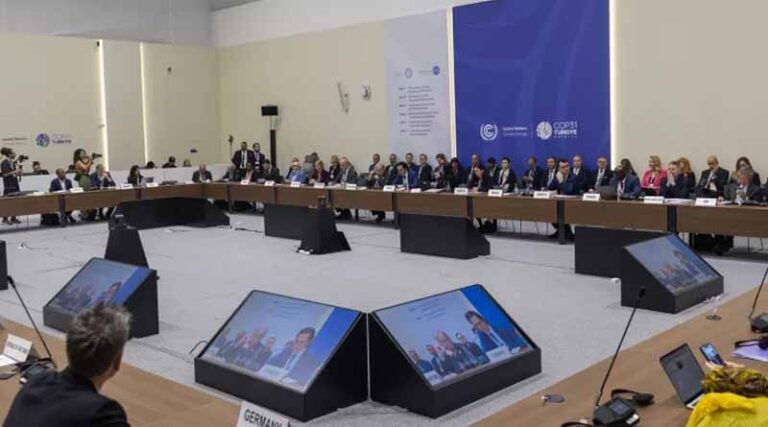
At COP30 in Belém last year, governments called for efforts to at least triple adaptation finance by 2035. The need is considerably larger. The United Nations Environment Programme estimates that developing countries will require about US$305 billion a year for adaptation by 2035, while international public adaptation finance from developed to developing countries amounted to just US$28.2–31.7 billion in 2024. Can the money arrive soon enough to help countries prepare for the next drought, flood or failed harvest.
In the newly published policy paper Operationalising the Tripling of Adaptation Finance by 2035: An African Perspective, AGNES, CARE and CGIAR Climate Action propose at least US$120 billion a year by 2035. The figure comes from tripling the roughly US$40 billion benchmark associated with the earlier Glasgow pledge to double adaptation finance by 2025. But that benchmark was a political target, not a verified account of what countries received. The COP30 decision did not settle what should count toward the new goal. The paper also argues that the minimum should be expressed in constant 2025 prices, so its value is not inadvertently diminished by inflation. As adaptation needs grow, US$120 billion should remain a floor, not a limit.
Reaching that target in 2035 will mean little if countries spend the intervening years without the resources to prepare. Water infrastructure takes years to plan and build and farmers need support before a poor harvest, not after. The paper therefore argues for a steady increase in funding, with clear interim targets to show whether governments are making progress or falling behind.
The terms of the funding are just as important. An early-warning system or a public water supply can protect people without earning the kind of return that attracts investors. Between 2017 and 2023, just over half of tracked adaptation finance commitments to Africa took the form of loans. Borrowing to pay for essential services can leave governments with more debt just as climate pressures strain public budgets. The policy paper argues that the tripling goal should rest primarily on grants and highly concessional public finance, consistent with developed countries’ obligation to provide support under Article 9.1 of the Paris Agreement. Private investment can contribute, but money mobilised from private sources should not be counted as a substitute for that public responsibility.
Even when money is available, complicated application procedures can prevent it from reaching the local institutions that need it. County governments need dependable funding and the resources to manage it, while communities must have a say in how the money is spent. In Kenya, County Climate Change Funds show how this can work in practice. Communities help identify the projects they need, and research helps inform those choices. CGIAR works with Kenyan partners to provide that evidence, leaving decisions about local priorities to the people and institutions responsible for carrying them out.
The accounting must also become more candid. Announced commitments are not the same as money disbursed, and a loan’s face value does not tell us how much assistance it provides once repayment is considered. We need clearer reporting and regular public assessments of progress. Those assessments should look beyond the total raised to ask whether the money is meeting needs that countries and communities have identified, and whether investments can be maintained over time.
The next drought could arrive long before 2035. Communities may already know what needs to be done, and research can help them make informed decisions. But if the funding does not arrive in time, even the best plans will leave people exposed when the rains fail.
Also Read: Mahindra Launches 50 HP Compact Harvester Harvest Yuva for Small Farms
Global Agriculture is an independent international media platform covering agri-business, policy, technology, and sustainability. For editorial collaborations, thought leadership, and strategic communications, write to pr@global-agriculture.com