Mapping The Way To Fertiliser Efficiency For Yield Gains
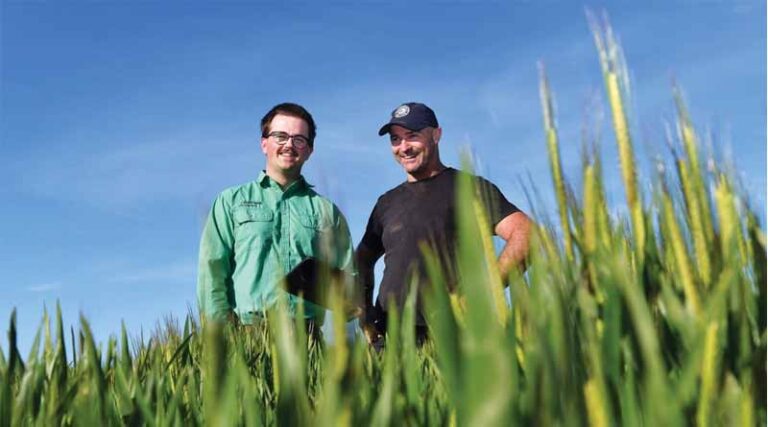
18 November 2026, AU: Wycheproof grower James Coatsworth has been on a steep learning curve since returning to run the family farm during the COVID pandemic. Working off-farm as an electrician for 20 years, he set out to update the farming operations, including investing in machinery that had variable-rate technology (VRT) capability.
James’s interest in the technology strengthened after he saw Nutrien Ag Solutions Precision Ag Data Specialist Mason McGregor speak on the topic in 2025. But not being ‘tech-savvy’, he baulked at starting out on his own.
So when the opportunity arose to work directly with Mr McGregor implementing the technology on-farm through a national project led by the Society of Precision Agriculture Australia, he jumped at the chance.
The GRDC initiative, ‘Fostering the adoption of variable rate fertiliser application for improved nutrient use efficiency’, pairs VRT experts with growers to build robust, regionally relevant evidence to support confidence and ongoing adoption of the technology.
“I’d been thinking about VRT, but I needed a bit of a push, because I didn’t know how to set it up,” James says. “And that’s where Mason has been really handy. He’s got the knowledge, he’s very helpful and if I had any issues, he was on the phone ready to go.”
Fertiliser efficiency
James, who was shocked at the price of putting in a crop after returning to the farm, says using fertiliser to more efficiently maximise returns from his better soils was the key motivator for looking into VRT.
Prior to the project, he had planned to spread urea on his Maximus CL barley at a blanket rate of 80 kg/ha – a decision made for cost and convenience.
But after Mr McGregor created a VRT map, splitting the 230 ha paddock into low, medium and high-production zones, that rate varied between 40 and 120 kg/ha, with higher rates applied on better soil types with higher yield potential.
Average application of urea across the paddock was 83 kg/ha. While this was slightly higher than the 80 kg/ha James had originally planned, it was a better use of the resource.
“Through VRT we can better allocate resources, making a fertiliser budget go further by targeting zones where it will push yields further to give us our best bang for our buck,” says Mr McGregor, who is working with 3 Victorian growers as part of the project.
On James’s farm, Mr McGregor stacked 10 years of NDVI (normalised difference vegetation index) satellite data into one layer to produce a comprehensive picture of crop performance.
This was correlated with ‘ground-truthing’ soil tests and yield data collected from James’s header to build the prescription map tailoring urea application rates across the paddock.
James says he won’t know the impact on yield of the variable-rate approach until harvest in November. But after receiving more than 370 mm of rainfall by late August, he is optimistic of achieving 5 t/ha yields across the board.
The wet conditions, James explains, appear to have evened out crop performance, with water sitting on top of his hard red soils that yield higher in drier years, and crops growing well on the heavier soils that can struggle without rain.
Despite the high-rainfall season potentially masking the impact of the variable urea rate, he is looking to expand his VR program in 2027. This includes using prescription maps for lime and gypsum as well as urea at seeding and top-dressing.
Mr McGregor says a lack of confidence is one of the biggest barriers to adoption that he hopes will be broken down through this project.
By walking through the process together, I hope we can provide a realistic experience of how VRT works, and how it can fit into a farm business.
Also Read: Mahindra Launches 50 HP Compact Harvester Harvest Yuva for Small Farms
Global Agriculture is an independent international media platform covering agri-business, policy, technology, and sustainability. For editorial collaborations, thought leadership, and strategic communications, write to pr@global-agriculture.com