How Forecasts Can Help Farmers Make Timely Planting Decisions
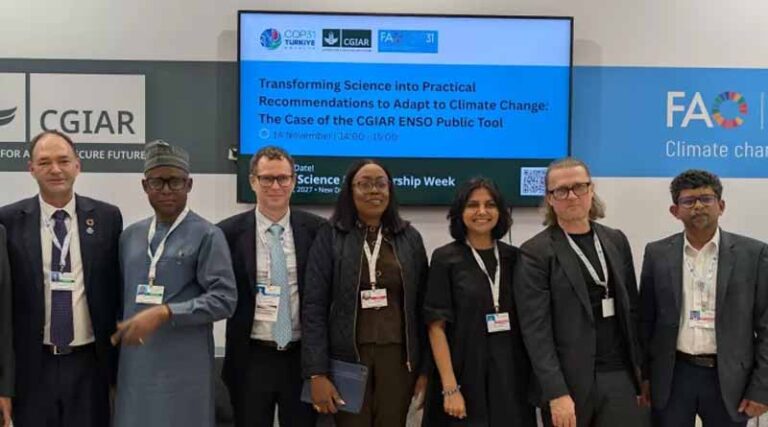
18 November 2026, Zambia: Zambia had warning of El Niño well before the planting season. The forecast was timely; the response was not. Nachilala Nkombo, founder of Women Leaders for Climate Action, told a COP31 audience on 14 November that national plans were still being finalised as farmers prepared to sow. The women she works with worried less about which seed or fertiliser they might receive than whether they would have water. Advance notice had given them few additional choices.
The discussion, held at the Food & Agriculture Pavilion in Antalya, centred on the ENSO Outlook developed by the International Water Management Institute (IWMI), part of CGIAR. The El Niño–Southern Oscillation shifts the odds of unusually wet or dry conditions across regions. IWMI’s outlook is meant to bring those probabilities closer to decisions about planting dates and crop varieties. It cannot predict the weather on an individual farm, and even useful advice has limits when farmers lack the means to follow it.
In Sri Lanka, that translation has already changed public preparations. Rohan Cooray, a climate risk and finance specialist, said the government brought the cultivation season forward and asked local authorities to clear canals and drains. Different regions can face drought and heavy rain at the same time. Cooray also described an effort to bring banks into the process. Lenders, he argued, need agreed forecast thresholds so they know when to offer repayment moratoriums or other relief to farmers at risk. A climate warning may matter as much to the person approving a loan as to the one working the land.
For Richard Choularton of the World Food Programme,
For Richard Choularton of the World Food Programme, forecasts already trigger support ahead of floods, droughts and storms, including cash transfers to households. He stressed the importance of local advice about how to use that support: which seeds might withstand a dry spell or how to manage a farm with limited water. When asked where the greatest improvement was needed, he chose financing. Only about 2 per cent of global crisis finance is arranged in advance, he said. Putting money in place beforehand also encourages institutions to build the systems needed to deliver it.
Finance moves to a timetable of its own. Laouali Garba of the African Development Bank said some agricultural projects already include emergency funding that governments can activate. Restructuring other projects to free up resources, however, can take three to six months. A forecast may arrive early, yet much of that lead time can disappear before money moves. Garba also argued for more investment in resilient infrastructure and agricultural technologies that farmers can use long before a crisis.
Ritu Bharadwaj of the International Institute for Environment and Development described how established social protection programmes could deliver help before a shock. Her team’s ASPIRE assessment looks for missing links between forecasts, triggers and the systems that reach vulnerable households. The task, she argued, is often to adapt institutions that already exist. Jesper Hörnberg of the Global Resilience Partnership pressed the question of who should pay. Companies that depend on agricultural supply chains, he said, ought to invest in the farmers who sustain them rather than expect public funding to cover everything.
Also Read: Mahindra Launches 50 HP Compact Harvester Harvest Yuva for Small Farms
Global Agriculture is an independent international media platform covering agri-business, policy, technology, and sustainability. For editorial collaborations, thought leadership, and strategic communications, write to pr@global-agriculture.com