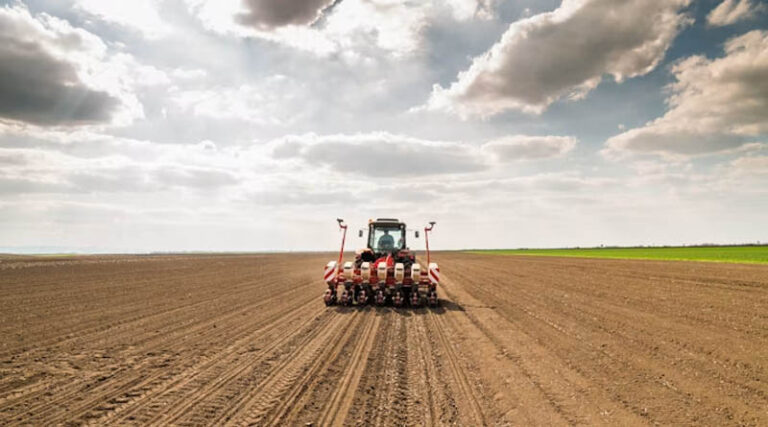
05 September 2026, Kansas: A small but growing number of Midwest grain farmers are planting Kernza, a perennial grain that does not need to be replanted every year, as a buffer against the drought and volatile weather that have squeezed conventional wheat and corn operations. The trend was detailed in reporting published September 4, 2026, by the Associated Press (AP), based on interviews with farmers, plant breeders and soil scientists in Kansas.
Bryce Black, a fourth generation farmer who works a 4,500 acre operation near Beloit, Kansas, described recent seasons of erratic rainfall as forcing tough choices on his farm. He said the experience of the last few years had been a matter of gritting his teeth and getting through it, adding that at times he felt he was in survival mode. Farmers like Black are among those experimenting with perennial grains such as Kernza, a domesticated relative of wheatgrass that regrows from its own root system for several years after a single planting, rather than being sown fresh each season like conventional wheat.
The Land Institute, a research organization based in Salina, Kansas, has led the domestication of Kernza since it began the formal breeding program in 2001, with the crop’s first commercial farm harvest occurring in 2010. Lee DeHaan, who leads the Kernza domestication effort at the institute, and Laura van der Pol, its lead soil ecologist, are among the researchers who have worked to improve the crop’s yield and root structure over the past two decades. Matthew Ryan, a sustainable cropping systems professor at Cornell University, is also studying the crop’s soil and environmental benefits.
The numbers illustrate how early stage the shift remains. Kernza was grown on about 3,511 acres nationwide in 2025, compared with roughly 37.2 million acres of conventional wheat, according to figures cited in the AP report. Kernza’s grain yields currently run at only 20 to 40 percent of comparable wheat yields in the same region, and the crop is harder to harvest with standard equipment. But it needs only about one third of the fertilizer that wheat requires, and its extensive perennial root system helps hold soil in place and improve water infiltration, an advantage a United Nations report from 2024 tied to preventing some of the more than 20 trillion dollars in losses that global soil degradation could cause by 2050.
Buyers are also willing to pay for those attributes. David Mueller, a farmer near Halstead, Kansas, who has grown Kernza on roughly 100 acres since 2018, said the crop lets him use marginal acres profitably while also building soil health. Companies further down the supply chain, including the Kernza supplier and processor Sustain-a-Grain and the Kansas based food producer Prairy, are working to expand markets for Kernza flour and other food products, which the AP report noted can fetch five to ten times the price per pound of conventional wheat.
The biggest obstacle to wider adoption is not agronomy but policy. Unlike wheat, corn and soybeans, perennial grains currently have no equivalent to the federal bridge payments and crop insurance support that help conventional row crop farmers absorb bad years, leaving early adopters of Kernza and similar crops, including perennial rice and wheat varieties still in development, to bear more of the transition risk themselves.
Global Agriculture is an independent international media platform covering agri-business, policy, technology, and sustainability. For editorial collaborations, thought leadership, and strategic communications, write to pr@global-agriculture.com