Advancing Cereal Resilience Through Regional Collaboration Under The CLIMARES Project
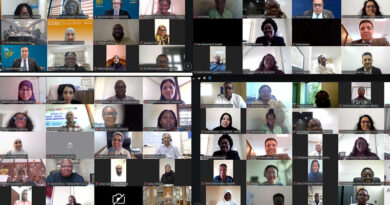
04 February 2026, Africa: Researchers, breeders, and policymakers from across the Arab world, Central and West Asia and North Africa (CWANA), and Eurasia convened to exchange knowledge and strengthen collaboration under the CLIMARES project, implemented within the framework of the Bilateral Funding Scheme-5 (BFS-5) Treaty initiative. CLIMARES is one of 27 projects currently being implemented globally under this framework. Two key events held in Algeria and Türkiye highlighted progress in managing cereal pests, accelerating wheat breeding, and advancing the use of plant genetic resources to support climate-resilient food systems.
Tackling cereal nematodes across Arab and CWANA agroecosystems
At the 14th Arab Congress of Plant Protection, a concurrent session on Advances in Managing Cereal Nematodes across Arab and CWANA Agroecosystems drew strong attention from participants, reflecting the growing recognition of nematode management as a cornerstone of sustainable cereal production.
Led by Professor Amer Dababat, CIMMYT Representative in Türkiye, the session was organized under the CLIMARES project and brought together scientists, practitioners, and decision-makers to discuss emerging research and regional priorities. The Congress gathered more than 450 participants from research institutions, universities, government agencies, and international organizations, with women representing over half of the attendees highlighting the increasing leadership of women in plant protection science and policy.
Five scientific presentations showcased recent advances in cereal nematode research, including:
Live Newsroom
- Progress in molecular diagnostics for accurate nematode identification
- Development and deployment of nematode-resistant cereal varieties
- Integrated management strategies combining biological and cultural control
- The influence of climate change on nematode distribution and dynamics
- Opportunities for regional surveillance and data sharing across Arab and CWANA agroecosystems
Discussions emphasized three key priorities: strengthening national and regional diagnostic capacity through improved laboratories, training, and harmonized protocols; accelerating the integration of nematode resistance into locally adapted breeding programs linked to seed systems; and scaling integrated management practices through extension services, farmer engagement, and public–private partnerships. Participants also stressed the need to integrate climate-risk projections into surveillance and management strategies to ensure long-term resilience.
Beyond scientific exchange, the session strengthened professional networks and helped align regional research agendas. Outreach by the Arab Plant Society extended the Congress’s impact, reaching more than 1,000 contacts directly and an estimated 10,000 scientists indirectly across the region.
Strengthening Treaty implementation and breeding capacity across regions
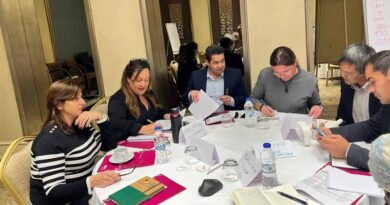
In parallel with the Congress, a multi-country capacity-building workshop on the International Treaty on Plant Genetic Resources for Food and Agriculture (ITPGRFA) brought together 25 participants from the Balkan, Central Asia, and Caucasus regions. The workshop included wheat breeders and experts from CIMMYT and ICARDA, focusing on turning Treaty commitments into practical outcomes.
Key sessions explored:
- The foundations of the International Treaty and its role in climate change adaptation and food security
- Practical implementation of the Treaty’s systems at national and regional levels
- Integrating Access and Benefit-Sharing (ABS) mechanisms into policies, programs, and planning frameworks
Participants reviewed the status of plant genetic resources conservation and use in their regions, identifying pathways to strengthen agrobiodiversity conservation while ensuring that genetic resources are effectively utilized in breeding and seed systems.
Accelerating wheat improvement through CLIMARES and regional partnerships
Presentations from CIMMYT and ICARDA highlighted how BFS-supported initiatives are strengthening the link between the conservation and use of plant genetic resources.
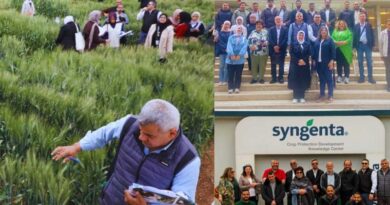
Dr. Tadesse, Principal Wheat Breeder at ICARDA, showcased advances in accelerated wheat breeding, where integrated conventional and molecular approaches reduce the breeding cycle to just four years. Over the past 15 years, more than 80 bread wheat varieties of ICARDA origin have been released in CWANA and Sub-Saharan Africa. Under CLIMARES, pathogen profiling, targeted screening, and participatory evaluations have already resulted in the distribution of promising genotypes to partner countries, supported by workshops and field days in Türkiye and Morocco.
Dr. Beyhan Akin, Coordinator of CIMMYT’s International Winter Wheat Improvement Program (IWWIP), highlighted breeding efforts across the Balkan and CWANA regions, which have led to the registration of 145 winter wheat varieties. She also presented the Landrace Project with Türkiye’s Ministry of Agriculture, emphasizing the value of local genetic diversity for gene banks, breeding programs, and farmers. Both speakers stressed the importance of pre-breeding, gene mining, and regional collaboration to accelerate future wheat improvement efforts.
Also Read: Mastering VIXERAN® Application: Top Tips for Optimal Results
Global Agriculture is an independent international media platform covering agri-business, policy, technology, and sustainability. For editorial collaborations, thought leadership, and strategic communications, write to pr@global-agriculture.com