02 October 2026, UN:Rethinking Food Loss and Waste: From a Challenge to a Transformative Opportunity
This year’s International Day of Awareness of Food Loss and Waste, marked on 29 September, comes at a time when cities are growing rapidly, food systems are under increasing pressure, and millions of people continue to struggle to access affordable and nutritious food. At the same time, significant quantities of food are lost along supply chains. Themed “The Transformative Potential of Reducing Food Loss and Waste,” this year’s observance draws attention to food loss and waste not simply as an environmental imperative, but as an opportunity to strengthen food security and nutrition, protect natural resources, improve productivity and create economic opportunities.
Urban populations are expanding, increasing demand for diverse, affordable and nutritious food. Yet the food that reaches urban consumers often travels through long and complex supply chains involving farmers, aggregators, traders, transporters, processors, retailers and informal markets. At each stage, food can be damaged, spoiled or discarded, reducing the amount that ultimately reaches consumers and eroding the value generated along the chain.
This means food loss and waste cannot be viewed simply as what happens to food at the end of the chain. Losses can begin much earlier—on farms, during harvesting and handling, in storage and transportation, and within the markets that connect rural producers to growing urban populations. What is lost at one point in the chain can have consequences across the wider food system, affecting farmer incomes, food prices, nutrition, livelihoods and the land, water, energy and labour invested in producing food in the first place.
Food is being lost while people are going without enough nutritious food. The scale of the challenge makes action increasingly urgent. Globally, around 13% of food is lost between harvest and retail, while an estimated 19% of food available to consumers is wasted at the retail, food-service and household levels. Food loss and waste also contribute significantly to greenhouse gas emissions, while representing a loss of the natural resources and human effort invested in food production.
Perishable foods face particular risks
According to the Food and Agriculture Organization of the United Nations (FAO), fruits and vegetables, roots and tubers are among the food groups particularly vulnerable to loss because of their perishability and the conditions under which they are harvested, handled, stored, processed and marketed.
For root and tuber crops such as potatoes and sweetpotatoes, inadequate harvesting and handling practices, poor storage, limited processing capacity and weak market linkages can all contribute to losses. For farmers, this can mean losing income from food they have already produced. For consumers, it can mean less food reaching markets, higher prices and fewer affordable sources of nutritious food.
Reducing these losses begins with understanding where and why they occur and investing in solutions that prevent them in the first place. For root, tuber and banana crops, this can include varieties better suited to local growing conditions, improved harvesting and handling practices, better storage and processing technologies, value addition, and stronger links to markets.
Innovation can also help address infrastructure gaps. Solar-powered cold-chain technologies, for example, are providing reliable cooling in areas where access to electricity is limited, helping extend the shelf life of fresh produce as it moves from farms to markets.
Turning waste into high-value resources
Cities are not isolated consumers of food. They are connected to farmers, traders, transporters, processors and markets across extensive food value chains. What happens along these value chains determines how much food reaches consumers, how much income farmers and other food-system actors retain, and how affordable and nutritious food remains.
Rather than treating food waste as the final stage of a linear journey from farm to market to plate to disposal, circular approaches seek to keep food, nutrients and other resources in productive use for longer. They can recover nutrients, create new products and reconnect urban consumption with food production.
In Vietnam, farmers are combining crop and livestock production by recycling livestock manure and other organic materials into compost that can be returned to farms. This puts nutrients back into the soil while reducing reliance on external inputs. In Ghana, researchers are exploring ways to recover value from the large amounts of organic waste generated in cities and reconnect these resources with agriculture, while strengthening promising local solutions and taking them beyond individual pilots.
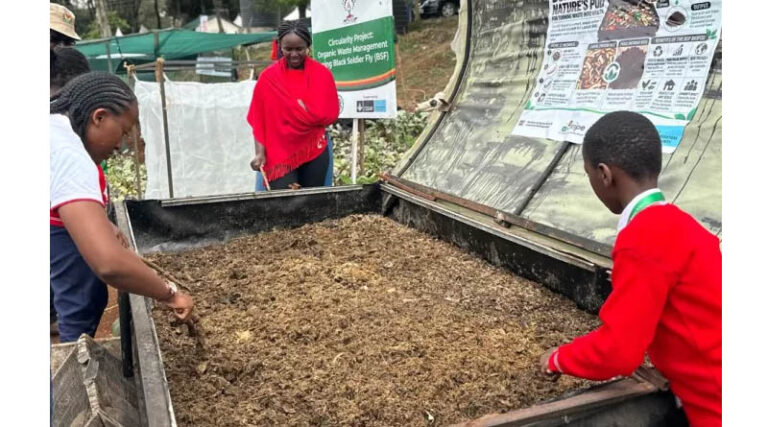
In Nairobi, schoolchildren are turning lunch leftovers into animal feed and fertilizer using Black Soldier Fly larvae. At pilot schools and a farmers’ hub, organic waste is fed to the larvae, which can then be used as protein-rich feed for poultry and pigs. The remaining material, known as frass, can be returned to vegetable gardens as fertilizer.
Elsewhere, community-led food rescue and food bank initiatives in Lima, Peru, connect local agricultural producers with community soup kitchens, known as ollas comunes. By redirecting surplus food that might otherwise be lost, these initiatives help improve access to nutritious food while strengthening connections between food producers and communities.
In Quezon City, Philippines, the Vendor Business School is taking another approach. The initiative works with market vendors to improve food safety and handling practices while increasing consumer demand for nutritious foods. By strengthening vendors’ skills in food handling, storage, business management and food safety, it demonstrates that reducing food loss can also mean investing in the people who keep urban food markets moving.
Technology alone will not deliver this transformation
Technology can help reduce food loss and waste, but technology alone will not deliver this transformation. Scaling solutions will also require access to finance, infrastructure, knowledge, skills and practical support.
Research is equally important in understanding where losses occur, why they occur, who is affected, and which solutions are most likely to work in particular contexts. This is where research programmes such as CGIAR Food Frontiers and Security can play an important role, bringing together research across food production, markets, cities, nutrition and food environments to build a more connected understanding of food loss and waste.
By bringing together evidence from different parts of the food system and testing approaches that respond to the realities of farmers, businesses, markets and urban communities, research can help identify solutions that are both practical and relevant to local contexts. It can also help reveal where interventions are most needed and how different parts of the food system influence one another.
Bringing different voices together
But evidence alone is not enough.
Reducing food loss and waste also requires stronger collaboration among farmers, traders, businesses, researchers, local governments, policymakers and consumers. Intentional and meaningful dialogue across different parts of the food system can bring these voices together to understand local challenges, share knowledge and identify solutions that are practical and appropriate to their context.
Context matters. Reducing food loss and waste requires more than developing new technologies or transferring solutions from one place to another. It requires contextualized approaches shaped through research, collaboration and dialogue, and supported by the infrastructure, markets and policies needed to sustain them.
Urban governments have an important role to play in shaping markets, waste systems, infrastructure and planning. But city-level action needs to connect with the wider food systems that supply urban populations. A city cannot address food waste effectively without considering what happens before food reaches its markets, just as farmers cannot address post-harvest losses without considering the markets and infrastructure through which their produce moves.
The opportunity, therefore, is to connect these pieces and retain more value from the food we already produce: more food reaching consumers, more income retained by farmers and businesses, more opportunities for women and youth, more nutrients returned to production, and fewer resources used to produce food that is never eaten.
Ultimately, the question is whether we can build food systems in which more of what we produce becomes food, nutrition, income and opportunity rather than loss and waste.
That is where the transformative potential of reducing food loss and waste lies.
Global Agriculture is an independent international media platform covering agri-business, policy, technology, and sustainability. For editorial collaborations, thought leadership, and strategic communications, write to pr@global-agriculture.com