IRRI, KALRO, and MRGM Showcase Kenya’s Rice Innovation Ecosystem From Research To Markets
Rice is doing more than feeding Kenya. It is creating businesses, generating jobs for women and youth, and demonstrating how partnerships can transform entire value chains.
09 July 2026, Kenya: As part of the World Food Prize Foundation’s DialogueNEXT Africa, participants stepped beyond the conference venue and into one of Kenya’s most dynamic rice-growing regions. Participants experienced firsthand how research, entrepreneurship, and collaboration are building a more competitive and inclusive rice economy, offering a viable blueprint for stronger food systems across Africa.
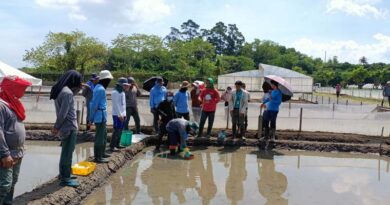
Hosted by the International Rice Research Institute (IRRI) in partnership with the Kenya Agricultural and Livestock Research Organization (KALRO), the immersion in Kirinyaga County connected delegates from Tanzania and Sierra Leone, among others, with farmers, cooperatives, researchers, and agribusinesses working together to strengthen rice production, create market opportunities, and improve livelihoods.
Designed as one of DialogueNEXT Africa’s immersive learning experiences, the visit translated conversations on food systems transformation into practical examples of innovation at scale. Through visits to the Mwea Rice Growers Multipurpose Cooperative Society (MRGM) and NICE Millers, participants saw how research, farmer organizations, and private-sector partnerships are moving innovation from laboratories into farmers’ fields, businesses, and markets.
Delegates witnessed how a thriving rice economy creates opportunities throughout the value chain. Seed enterprises, mechanization services, milling, transport, retail, and input supply are generating employment and entrepreneurship, particularly for women and youth. The bustling commercial activity in Mwea, including the concentration of businesses and financial institutions serving the rice sector, offered participants a tangible example of agriculture as an engine of rural economic growth.
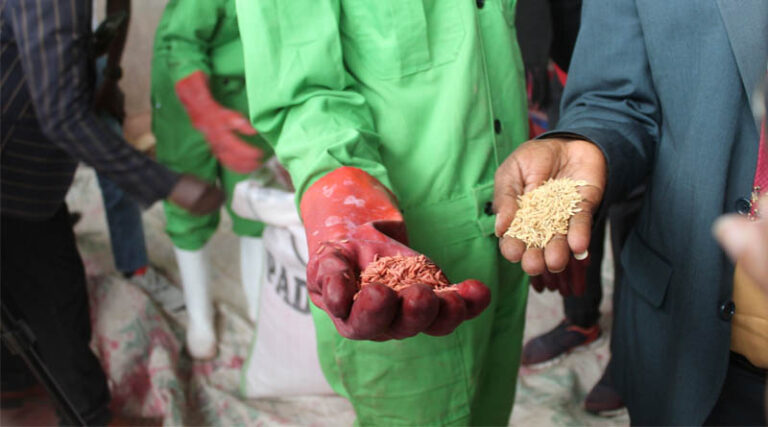
Moving through MRGM’s integrated operations, participants observed modern seed systems, mechanization services, grain drying and storage facilities, branding, post-harvest technologies, and sustainable rice straw management. Together, these services demonstrate how farmer cooperatives have evolved beyond production to become business hubs that connect farmers to quality seed, technology, markets, and value-added opportunities.
Dr. Rosemary Murori, IRRI Kenya Representative, noted that while Kenya still imports nearly 80% of the rice it consumes, innovation and partnerships have started to bolster domestic production.
Its partnership with MRGM has scaled innovations such as the Komboka rice variety to approximately 8,500 farmers. Developed jointly by IRRI and KALRO, Komboka has achieved almost 100% adoption in Tana River, about 80% adoption in Western Kenya, and around 40% adoption in Mwea, demonstrating how research partnerships can accelerate technology adoption while strengthening food security and farmer incomes.
“The importance of hosting this immersion is that we have participants from different African countries. They have a lot of lessons that they are going to take back to their own countries,” said Dr. Murori. “I’m very excited after seeing how everything operates. This is exactly the kind of model I’m hoping to replicate in my country, and I learned a great deal from the experience,” said Alhassan Almamy Dumbuya of Global Hub Agribusiness Ltd., Sierra Leone.
The immersion also highlighted the growing role of women and young people in Kenya’s rice economy. Participants met women engaged in rice trading and processing and young people working in seed preparation, mechanization, and milling, demonstrating how stronger value chains create employment opportunities beyond farming.
“What surprised me the most is that this is truly a women- and youth-dominated value chain,” said Phyllis Engefu-Ombonyo of CABI. “In agriculture, we often feel that women and young people are not meaningfully involved, but this is a great example of how they can actively participate and lead when a value chain such as rice is well developed.”
Delegates also explored circular approaches to rice production, where rice straw and husks are transformed into livestock feed and other value-added products, demonstrating how innovation can reduce waste while creating additional income streams for farmers and processors.
At MRGM, cooperative leaders highlighted how partnerships with IRRI, KALRO, and other stakeholders have strengthened local seed systems and accelerated the adoption of improved rice varieties.
“With the help of IRRI and KALRO, we introduced the Komboka variety, which is semi-aromatic and yields almost twice as much as Basmati. We will continue to promote Komboka and other new varieties like Mkombozi so that we can strengthen food security and maintain our position as Kenya’s leading rice-producing region,” said Mr. Anthony Waweru, Chief Executive Officer of MRGM.
Sofia Tesfazion, IRRI Regional Director for Africa, said the immersion demonstrated how science delivers greater impact when combined with strong partnerships and vibrant markets.
“DialogueNEXT is creating opportunities to experience agricultural innovation where it matters most, in farming communities. Africa’s rice demand is growing faster than any other staple, yet production continues to lag behind consumption, creating a significant opportunity to strengthen domestic rice value chains. This immersion demonstrates how IRRI, KALRO, farmer organizations and private-sector partners are translating science into stronger rice value chains, from improved seed and climate-smart production to mechanization, post-harvest systems and market opportunities that increase farmer incomes and strengthen food security.”
Also Read: Manufacturing Powerhouse Ichiban Crop Science Strengthens India’s Agrochemical Leadership
Global Agriculture is an independent international media platform covering agri-business, policy, technology, and sustainability. For editorial collaborations, thought leadership, and strategic communications, write to pr@global-agriculture.com