Locally LED Adaptation Has Momentum, Now It Needs Proof
07 August 2026, Zambia: The principles behind locally led adaptation are now widely recognized. More than 150 institutions have endorsed them. Funders, governments, researchers and implementing partners increasingly accept the basic argument, which is that adaptation should not be designed far from the people who will live with its consequences.
We are now left with the bigger challenge of implementation.
In a recent PLOS Climate article I co-authored, we argued that locally led adaptation still lacks enough practical tools, methods and evidence to be applied across different locations and too few institutions are equipped to implement it.
Funders have good reason to be interested in locally led adaptation. Many adaptation efforts have failed to reach the most vulnerable people, or have delivered uneven benefits.
Live Newsroom
But interest alone will not shift investment at scale. Funders also need evidence about the viability of locally led adaptation projects in places with complex institutions and where climate risks are urgent. They need to know how it compares with other adaptation approaches in terms of costs and whether it can be scaled without weakening the local decision-making that gives it value.
These are fair questions, and the questions CGIAR Climate Action’s Locally Led Action work is designed to answer.
At CGIAR Climate Action, our task is not simply to repeat that local people should lead. We want to show, in practical terms, what local leadership means. That means working with communities as designers of solutions, not passive beneficiaries. We are interested in how local and Indigenous knowledge can sit alongside scientific approach to address the climate-driven challenges affecting their food systems.
Then capturing those learnings so we can understand not only the impact of local leadership, but how it can be made practical, credible and scalable.
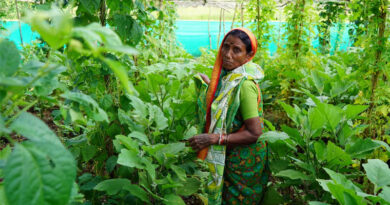
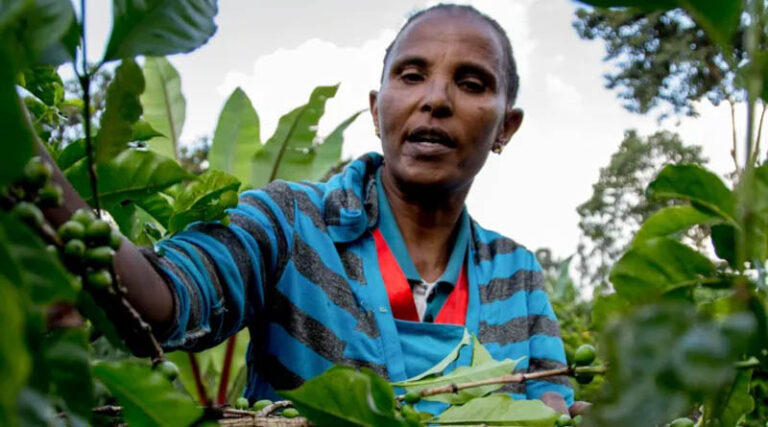
This is why we are documenting use cases. In Ethiopia, work on positive deviance is helping examine how communities identify and build from practices that are already working; farmer-authored handbooks documenting these strategies are now embedded in Ethiopia’s national extension strategy. In Zambia, locally led water borehole extension work is showing how adaptation can prioritize vulnerable households and strengthen access to safer water; the community-governed Hanzila borehole has cut reliance on unsafe water sources by 86%, sustained without external funding. In Mali, the Smart Valleys work is bringing farmers, women, youth, migrants, pastoralists and fishers into decisions about water management, land use, varieties, inputs and markets — the model has spread organically from farmer to farmer, with communities now designing, building and maintaining their own water-control infrastructure.
None of this means locally led adaptation is straightforward. From years of research in this field, we know that local priorities are often in conflict. Community participation can reproduce existing power imbalances, and implementing institutions may struggle to give communities real control over finance and decisions. At scale, there is also a risk that the very local judgment that gives the approach its value becomes diluted.
But that is precisely why evidence is needed.
If we want locally led adaptation to influence how programs are designed and financed, it must be tested in the real world. We need evidence on ownership, inclusion, equity, accountability and sustainability, as well as climate resilience. These should be locally defined metrics, not only indicators chosen by outsiders. And we need to know why the approach succeeds in some places and struggles to take off in others.
Agricultural research has a major role to play here, but it must change how it works. While technologies and practices remain important, locally led adaptation requires research to pay closer attention to governance, social norms, institutional incentives and decision-making. It also requires researchers to work with more humility. In many cases, communities, local institutions and implementing partners will know things that formal research systems do not.
Also Read: Syngenta Appoints Eladio Robles as India Managing Director
Global Agriculture is an independent international media platform covering agri-business, policy, technology, and sustainability. For editorial collaborations, thought leadership, and strategic communications, write to pr@global-agriculture.com