Scientists Discovered New Gene To Help Rice “Escape” Heat, Protect Yields
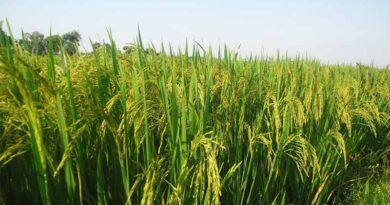
11 June 2026, Philippines: With El Niño-driven heat and prolonged dry spells threatening rice production, scientists from Japan’s National Agriculture and Food Research Organization (NARO), other Japanese research institutions, and the International Rice Research Institute (IRRI) have discovered a gene that helps rice “escape” heat during its most sensitive flowering stage.
The gene, called EMF3 (Early Morning Flowering 3), shifts rice flowering to the early morning, when temperatures are cooler. By flowering earlier in the day, rice can avoid heat stress that would otherwise reduce grain formation and lower yields in tropical and subtropical regions.
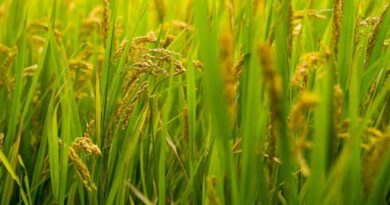
Rice normally flowers between 10:00 AM and noon, when temperatures reach their daily peak (33°C–35°C). Heat stress during this period, expected to intensify under global warming, can disrupt fertilization, leaving spikelets (“potential grains”) sterile, and therefore, reducing yields. The EMF3 gene, particularly its variant emf3-1D, shifts flowering by about 1.5 hours earlier, significantly improving grain fertility under high-temperature conditions.
For Dr. Tsutomu Ishimaru of NARO, Japan, the discovery represents a breakthrough. “It allows rice to ‘escape the heat’ at its most critical stage, protecting fertilization, and ensuring farmers can harvest even under extreme temperatures,” he said.
According to researchers, no other rice variety carries the emf3-1D allele. “It appears to be a rare variant and has the potential to work across many popular varieties, including indica and japonica types,” IRRI Scientist Dr. Sung-Ryul Kim.
He added, “This trait could be advantageous for hybrid seed production, where adjusting flower opening time of both parental lines with same time of day is an important consideration. ”
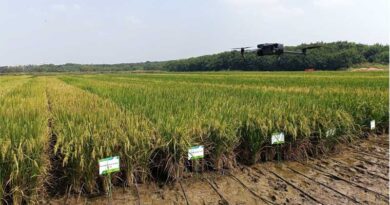
Researchers are already introducing emf3-1D into widely grown rice varieties such as IR64, Swarna (India), Pusa Basmati (India), TDK1 (Laos), Sahel 329 (West Africa), Caiapo (Brazil), and Toyomeki (Japan). These advanced lines act as prototypes that could maintain grain fertility even in hot conditions.
“The emf3-1D can be applied to diverse rice varieties worldwide through DNA marker selection, giving breeders a powerful tool to develop early-morning flowering rice,” said breeders Dr. Hideyuki Hirabayashi of NARO and Dr. Kazuhiro Sasaki of Japan International Research Center for Agricultural Sciences (JIRCAS).
This breakthrough, according to Dr. Inez Slamet-Loedin, IRRI’s Rice Genetic Design & Validation Unit Head, opens the door for gene editing approaches like prime editing to rapidly introduce the early-morning flowering (emf3-1D) trait into elite rice varieties, enhancing heat resilience across tropical and temperate rice ecosystems for (both) inbred and hybrid.
Importantly, EMF3 only affects the flower opening time and does not change overall plant growth or yield under normal temperature conditions, allowing rice to become heat-resilient without losing other key traits.
Dr. Ishimaru further emphasized, “We can spend hot days in air-conditioned rooms, but rice plants must survive field heat. With EMF3, they ‘wake up’ early to avoid heat stress, showing that sometimes, being an early riser is key, not just for birds but for crops too.”
This discovery is the result of a collaborative effort between Japanese research institutions and IRRI, supported by the Ministry of Agriculture, Forestry and Fisheries (MAFF) of Japan, with NARO and JIRCAS as key partners.
The full study “Rice EMF3 Alleles Adjust Flower Opening Time to Enhance the Seed Setting Rate Under High Temperature Stress” is available in the Plant Biotechnology Journal.
Also Read: UPL Recognized as Top Innovator in AgriBusiness at Clarivate South Asia Innovation Awards 2026
Global Agriculture is an independent international media platform covering agri-business, policy, technology, and sustainability. For editorial collaborations, thought leadership, and strategic communications, write to pr@global-agriculture.com