UNCCD COP17: Integrated Land-use Planning Could Save Billions For Land Restoration, Climate Action, And Biodiversity
14 September 2026, Mongolia: At the UNCCD COP17, international experts and government officials presented a compelling case for integrating climate, biodiversity, food security, and land use planning to unlock massive financial savings and accelerate ecosystems recovery.
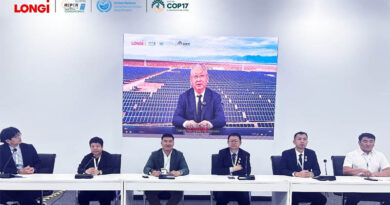
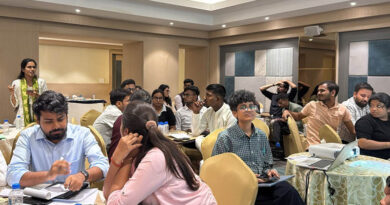
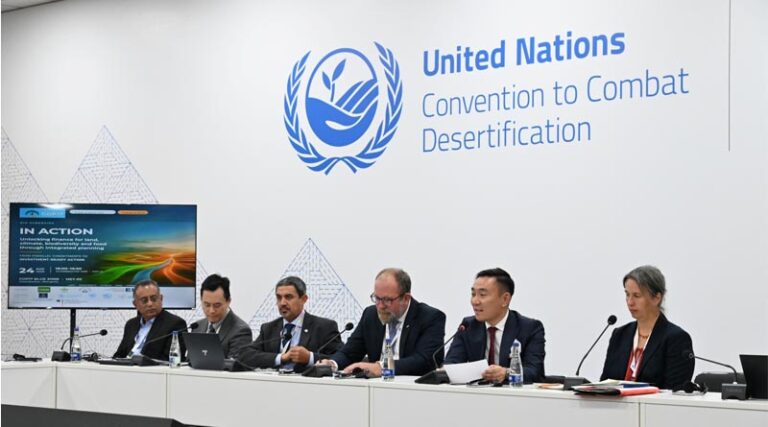
The side event, Rio Synergies: Unlocking Finance for Land, Climate, Biodiversity and Food through Integrated Planning, jointly led by the International Rice Research Institute (IRRI), Mongolia’s Ministry of Environment and Climate Change (MECC), and partners including GIZ and FAO, brought together researchers, government representatives, development organizations, and financial institutions to discuss how coordinated planning can turn environmental priorities into investment opportunities.
For decades, the three Rio Conventions on land (UNCCD), climate (UNFCCC), and biodiversity (CBD) have operated through separate institutions, financing mechanisms, and planning processes. Yet, their priorities converge on land, where biodiversity is protected, climate action takes place, and land degradation affects food security and rural livelihoods. Bringing these efforts together can reduce duplication and transaction costs, direct more resources toward restoration, and make investments more effective and efficient.
As Mr. Ali Raza Rizvi, Director of Climate Change and Energy Transition at IUCN, underscored, “It’s a matter of life and death for thousands and millions of people.”
The Cost of Action and Inaction: Case of Mongolia
Highlighting findings from the Economics of Rio Synergies project, IRRI Senior Scientist Dr. Alisher Mirzabaev revealed that while Mongolia’s land sector is a net carbon sink, some areas are experiencing carbon losses associated with land degradation and desertification. The country could be losing about US$2.5 billion annually due to land degradation and associated land use and land cover change.
The study also showed that restoring these degraded areas could bring significant economic benefits. Of the degraded areas assessed, 94% are economically viable to restore for over the next 30 years. While this would require an estimated US$8.66 billion in investment, it could generate an average return of US$1.77 for every dollar invested and break even in about nine years.
Moreover, if Mongolian restoration projects are integrated, the country is projected to achieve up to 17% in efficiency gains with roughly US$1.2 billion in financial savings or additional restored land. “Synergies improve effectiveness, improve efficiency, and make land restoration investments inclusive,” Dr. Mirzabaev emphasized.
This integration can be enabled by shared monitoring, reporting, and verification (MRV) systems, collaborative capacity-building, and a centralized data repository as main levers. By establishing unified MRV systems, countries can track agricultural food systems, soil health, carbon sequestration, and biodiversity returns simultaneously, eliminating redundant field visits and separate sectoral tracking systems.
On Financing and Investment-Readiness
Financing experts discussed that scientific evidence alone will not attract capital. Rather, projects must combine data with local knowledge, community co-creation, and direct alignment with national policies, budgets, and investment pipelines.
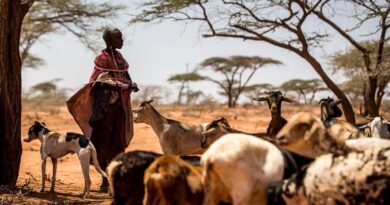
Dr. Au Shion Yee, Director for Agriculture, Food, Nature, and Rural Development at the Asian Development Bank (ADB), emphasized the four-pillar natural capital approach (valuation, governance alignment, blended finance, and knowledge management) as a way to develop stronger investment pipelines and connect environmental investments with livelihoods and income, particularly for communities such as Mongolian herders.
The case of Mongolia could provide a useful demonstration of how integrated planning can connect land restoration with climate action, biodiversity conservation, food security, and investment planning in other countries.
What remains a bottleneck to scaling these approaches may not be the lack of solutions, but the need for stronger alignment and joint action among communities, institutions, and investors toward shared priorities, data, financing and implementation.
“Only by implementing these Rio Conventions in an integrated manner, we can build more resilient future,” said Dr. Claudia Hiepe, Senior Policy Officer at Germany’s Federal Ministry for Economic Cooperation and Development (BMZ). She also offered a longer-term vision for this approach: “My vision is that in 10 years’ time, we will not be talking anymore about synergies, because it has become natural.”
Also Read: UPL Expands Nature-Based Agriculture Portfolio with Investment in Japan’s PhytoChrome
Global Agriculture is an independent international media platform covering agri-business, policy, technology, and sustainability. For editorial collaborations, thought leadership, and strategic communications, write to pr@global-agriculture.com