From Evidence to Action: What CGIAR is Bringing to UNCCD COP17
18 August 2026, Mongolia: Up to 40 per cent of the world’s land is degraded, affecting more than three billion people. Behind that figure are declining harvests, shrinking water sources, damaged ecosystems and increasingly precarious livelihoods.Land degradation is not only an environmental challenge, it is also an economic, social and human one.
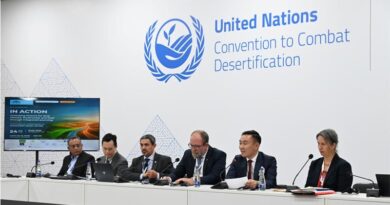
From 17 to 28 August 2026, the 17th Conference of the Parties to the UN Convention to Combat Desertification will bring countries and non-state actors together in Ulaanbaatar. They face a pressing question: how can land restoration strengthen food security, water resilience, biodiversity and rural livelihoods at the same time?
CGIAR will join the negotiations, contribute to partner-led discussions and convene a programme of events at the IUCN Pavilion, “Unite for Nature”, and elsewhere at COP17. We will bring scientists, governments, communities, civil society and investors together to exchange evidence, identify practical solutions, strengthen partnerships and help translate science into policy, investment and action.
Connecting the issues where they meet
CGIAR’s central message is that land, water, food, biodiversity and livelihoods cannot be addressed in isolation. They converge in the same landscapes and are managed by the same people. Yet policies, institutions and funding streams continue to separate them, creating gaps and trade-offs that weaken results.
The CGIAR Multifunctional Landscapes Science Program offers a practical response. Through Living Landscapes, researchers work with governments, communities, producers and businesses to understand competing needs, co-design solutions and connect local priorities with policy and investment, based on landscape visions to action co-created by landscape actors. The work combines restoration, agroecology, soil and water management, biodiversity conservation, governance and sustainable finance in ways suited to each place.
Experience from drylands already shows what this looks like. ICRISAT’s integrated watershed research across the dryland tropics has shown how coordinated soil, water and crop management can improve water availability, productivity, household incomes and resilience. At COP17, these lessons will feed into sessions on the water-land nexus and a proposed coalition for multifunctional landscapes. The Grand Coalition is intended to create a platform where science, policy, finance and implementation partners can align their efforts, share learning and develop joint pathways for action, shifting from fragmented to coordinated action.
This need for coordinated action is especially clear in managing drought. CGIAR advocates for anticipatory action through climate services, drought monitoring, prepared institutions and timely finance that enable communities to act before a crisis unfolds. Since 2022, CGIAR and partners have expanded climate information services to more than 1.5 million farmers in five countries, combining forecasts with advice and, in some cases, access to inputs or finance. In Sri Lanka, farmers supported through an IWMI Agro-Climate Advisory Lab harvested 226 kilograms more rice per acre than farmers without the service. Information becomes useful when institutions and partnerships help people act on it.
COP17 discussions on drought resilience in Central Asia and Pakistan, the Drought Action Catalyst and the reform of agricultural subsidies and tariffs will explore how evidence, regional cooperation and better incentives can support that shift.
The connection between ecosystems, livelihoods and governance is equally visible in various landscapes including rangelands. With COP17 falling during the International Year of Rangelands and Pastoralists, rangelands and pastoralists, alongside agricultural lands, will be among the central issues on the negotiating agenda Discussions are expected to reinforce the UNCCD’s attention on the socio-economic importance of protecting productive land for food security, resilient livelihoods and the long-term sustainability of land-based production. Parties will negotiate a decision on the policy framework for rangelands and pastoralists (agenda item 5), which aims to strengthen global collaboration and support for the conservation, sustainable management and restoration of rangelands. The decision is expected to provide a stronger policy foundation for coordinated action and implementation beyond COP17.
CGIAR’s experience shows the value of putting communities at the centre. An assessment of participatory rangeland management found improved rangeland condition reported by 96 per cent of participating communities in Kenya and 93 per cent in Tanzania. The STELARR initiative is complementing this work by developing business cases and investment pathways for restoration at scale. CGIAR will bring these experiences into a session on water-smart and investable pathways for rangelands, while working with pastoralist organisations, governments and other non-state actors to build support for lasting implementation. Through its events and engagement in the negotiations, CGIAR will contribute evidence to support the implementation of the emerging policy framework, while bringing these experiences into discussions on water-smart and investable pathways for rangelands and working with pastoralist organisations, governments and other partners to build support for lasting implementation
Also Read: Paraquat and the Future of Pesticide Regulation in India
Global Agriculture is an independent international media platform covering agri-business, policy, technology, and sustainability. For editorial collaborations, thought leadership, and strategic communications, write to pr@global-agriculture.com