From Samarkand to 2030: What the 8th GEF Assembly means for CGIAR and food, land and water systems
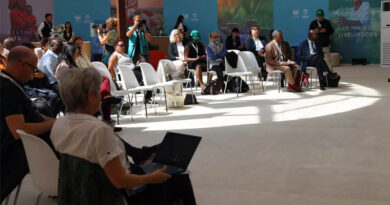
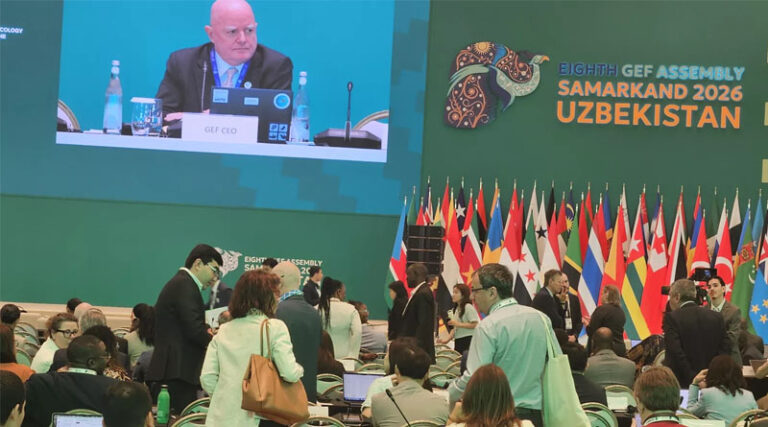
20 June 2026, Uzbekistan: The 8th Assembly of the Global Environment Facility (GEF), held in Samarkand, Uzbekistan from 30 May to 6 June 2026, marked a key moment for global environmental cooperation. Convened as the GEF’s highest governing body, the Assembly brought together governments, implementing agencies, multilateral organizations, civil society, Indigenous Peoples, women, youth, scientists and the private sector to chart a more integrated path toward the 2030 environmental goals. It also welcomed the GEF-9 replenishment, with initial pledges of USD 3.9 billion for the 2026–2030 cycle.
The central message from Samarkand was clear: the world cannot address biodiversity loss, land degradation, climate change, water insecurity, and pollution through fragmented action. The Assembly emphasized integration, blended finance, whole-of-government and whole-of-society approaches, and greater support for Least Developed Countries, Small Island Developing States, Indigenous Peoples and local communities. This direction is highly relevant to CGIAR, whose science and partnerships are already positioned at the intersection of food, land, and water systems.
An Assembly focused on implementation, integration and urgency
The 8th GEF Assembly took place at a time when countries are under pressure to deliver on multiple global commitments, including the Kunming-Montreal Global Biodiversity Framework, the Paris Agreement and the UN Convention to Combat Desertification. The discussions therefore moved beyond ambition-setting toward practical implementation: how to make environmental finance more accessible, how to reduce transaction costs, how to strengthen policy coherence, and how to scale solutions that deliver multiple benefits at once.
For the GEF partnership, GEF-9 is effectively the “last sprint” toward 2030. The new cycle is expected to support integrated solutions across food systems, drylands and drought management, sustainable forest management, urban systems, island ecosystems, climate resilience, biodiversity conservation and pollution reduction. This creates a strong opening for CGIAR to help countries translate global commitments into science-based investment programs that improve environmental outcomes while protecting food security and livelihoods.
Live Newsroom
Why food, land and water systems are central to GEF-9
Food, land, and water systems are central to the current environmental crisis. Agriculture and food systems depend on healthy soils, functioning ecosystems, reliable water resources and stable climates, yet they can also contribute to biodiversity loss, greenhouse gas emissions, land degradation, nutrient pollution and water stress when poorly managed. GEF-9’s integrated programming therefore offers an opportunity to shift from isolated environmental projects to systemic transformation across landscapes, watersheds, value chains, and policy frameworks.
CGIAR can contribute directly to this agenda by bringing credible science, country presence, tested innovations and long-standing partnerships with governments, farmers, pastoralists, research institutions, development banks and the private sector. Its comparative advantage lies in connecting environmental goals with food and nutrition security, livelihoods, resilience, and equity. This is particularly important in low- and middle-income countries, where environmental action must also respond to poverty, vulnerability, and growing demand for nutritious food.
In food systems, CGIAR can support GEF-9 investments through evidence-based approaches to sustainable and resilient production, including regenerative agriculture, integrated crop-livestock systems, circular nutrient management, sustainable livestock and dairy systems, climate-smart advisory services, improved feeds, low-emission practices, agroforestry and biodiversity-friendly value chains. These solutions can reduce emissions, improve productivity, protect ecosystem services, and support healthier diets.
In land systems, CGIAR can help countries design and implement landscape-scale restoration, sustainable rangeland management, participatory land-use planning, soil health improvement, biodiversity-inclusive production systems and monitoring frameworks that measure ecological quality as well as social impact. This is especially relevant for drylands and pastoral systems, where land degradation, climate risk, water scarcity, and livelihood pressures intersect.
In water systems, CGIAR can strengthen GEF-9 programs by supporting integrated watershed management, water productivity, climate-resilient irrigation, pollution reduction from agriculture, drought preparedness and nature-based solutions that enhance ecosystem resilience. By linking land, water, biodiversity and food security, CGIAR can help countries develop investment packages that generate multiple global environmental benefits and tangible local development gains.
Opportunities for CGIAR engagement
The GEF is country-driven. This means CGIAR’s resource mobilization strategy for GEF-9 should begin with country priorities and national environmental commitments. CGIAR centers should engage early with GEF Operational Focal Points, ministries of environment, agriculture, water, finance and planning, and accredited GEF Agencies such as FAO, IFAD, UNDP, UNEP, the World Bank, AfDB and others. The goal should be to co-create country-owned pipelines where CGIAR provides technical evidence, innovation platforms, monitoring systems, and implementation support.
Second, CGIAR should package its solutions in ways that match GEF-9 priorities. Rather than presenting stand-alone research activities, CGIAR should offer integrated investment modules: low-emission livestock and rangeland restoration; climate-resilient mixed farming systems; soil health and circular nutrient management; biodiversity-friendly food value chains; One Health approaches at the wildlife-livestock-human interface; and water-smart landscapes. Each module should clearly show global environmental benefits, development of co-benefits, cost-effectiveness, scalability, and potential co-financing.
Third, CGIAR should use the momentum from the Assembly to deepen partnerships with implementing agencies and development of finance institutions. The GEF-9 replenishment emphasizes blended finance and private sector engagement. CGIAR can help de-risk investments by generating data, business cases, decision-support tools, monitoring systems, and evidence on adoption pathways. This can attract co-financing from governments, development banks, foundations, agribusinesses and impact investors, especially where environmental outcomes are linked to resilient livelihoods and market opportunities.
Fourth, CGIAR should strengthen its value proposition as a knowledge and learning partner for GEF-9. Many countries need support to design robust theories of change, integrate science into project preparation, track outcomes beyond hectares restored, and apply adaptive management. CGIAR can contribute through foresight, geospatial analytics, participatory monitoring, gender and social inclusion tools, greenhouse gas accounting, soil and water diagnostics, and evidence of synthesis for policy coherence.
From opportunity to action
The Samarkand Assembly confirmed that environmental finance is moving toward integrated, inclusive, and investable solutions. For CGIAR, this is an opportunity to position food, land and water systems not as sectors competing for resources, but as platforms for delivering climate, biodiversity, land, water and livelihood outcomes together.
To mobilize resources from GEF-9, CGIAR should act quickly: map priority countries and focal points; align CGIAR science with national GEF pipelines; build coalitions with accredited agencies; prepare concise investment notes; identify co-financing from existing CGIAR and partner programs; and demonstrate how science-based innovation can accelerate the last sprint to 2030. If CGIAR can combine evidence, partnerships and country demand into bankable program concepts, GEF-9 can become a major pathway for scaling solutions that transform food, land and water systems for people and the planet.
Also Read: FMC and Corteva Partner to Expand Rimisoxafen Herbicide Access Across the Americas
Global Agriculture is an independent international media platform covering agri-business, policy, technology, and sustainability. For editorial collaborations, thought leadership, and strategic communications, write