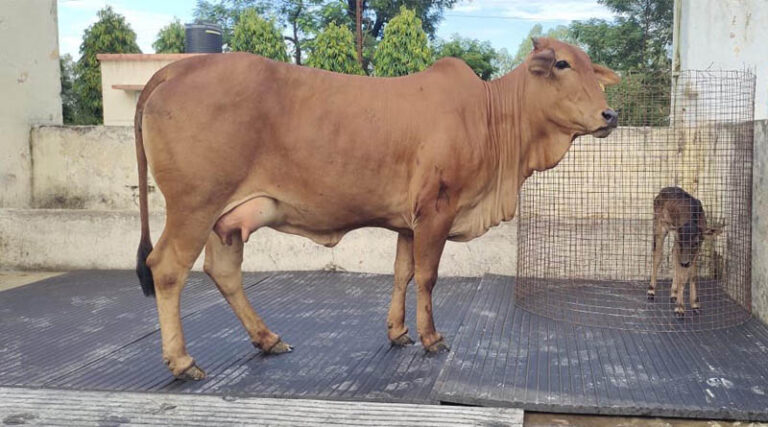
Uttarakhand’s indigenous Badri cattle breed has achieved a major milestone in conservation and genetic improvement, with a healthy female calf successfully born through Ovum Pick-Up and In Vitro Fertilization (OPU-IVF) technology.
14 September 2026, New Delhi: The calf was born on September 11, 2026, at the Academic Dairy Farm following the transfer of a Badri embryo into a Sahiwal recipient cow. Badri cattle are an important indigenous genetic resource of Uttarakhand and are recognised as the state animal.
The achievement is the result of a collaboration between ICAR-National Dairy Research Institute (ICAR-NDRI), Karnal, and G. B. Pant University of Agriculture and Technology, Pantnagar, with financial support from the Uttarakhand Biotechnology Council, Haldi.
The successful birth demonstrates the potential of advanced reproductive technologies to conserve, rapidly multiply and genetically improve valuable indigenous cattle germplasm.
Dr Dheer Singh, Director, ICAR-NDRI, said technologies such as OPU-IVF can accelerate the multiplication of elite female germplasm and support structured breed-improvement and conservation programmes for Badri cattle. He said the successful birth provides an important foundation for strengthening technology-based approaches to the conservation and genetic improvement of the breed.
The research programme began in 2023 under the leadership of then Vice-Chancellor of G. B. Pant University, Dr M. S. Chauhan. Since then, scientists from the university and ICAR-NDRI have worked to establish OPU-IVF, embryo production and embryo transfer procedures for Badri cattle.
Under the programme, oocytes were collected from genetically valuable Badri donor cows through ultrasound-guided ovum pick-up. The oocytes were matured and fertilised in vitro using semen from a genetically superior Badri bull supplied through the Uttarakhand Livestock Development Board.
The resulting embryos were cultured under controlled laboratory conditions before being transferred into synchronised recipient cows. One Badri embryo was transferred into a Sahiwal recipient, which subsequently gave birth to the healthy Badri female calf.
A second synchronised crossbred recipient is expected to deliver another Badri calf within the next five to seven days.
The OPU-IVF achievement could help increase the rate at which elite Badri germplasm is multiplied compared with conventional reproductive methods, as the technology enables multiple embryos to be produced from genetically superior female animals.
The research team is also exploring cloning of elite and high-producing Badri cows and has successfully generated cloned Badri embryos through multiple stages of the ongoing research. In the next phase, embryos produced through OPU-IVF and cloning are planned for transfer into suitable Sahiwal, crossbred and Badri recipient cows.
The efforts are aimed at accelerating the multiplication of superior Badri germplasm while supporting the long-term conservation and genetic improvement of Uttarakhand’s indigenous cattle breed.
Global Agriculture is an independent international media platform covering agri-business, policy, technology, and sustainability. For editorial collaborations, thought leadership, and strategic communications, write to pr@global-agriculture.com