CAZRI Moth Bean Varieties Show Climate Resilience During El Niño Dry Spell
14 September 2026, Jodhpur: Four recently released moth bean varieties developed by the ICAR-Central Arid Zone Research Institute (CAZRI), Jodhpur, have demonstrated strong resilience to prolonged moisture stress during the 2026 Kharif season, highlighting the potential of genetic improvement in building climate-resilient pulse production in arid regions.
Moth bean is a key pulse crop of western Rajasthan’s hot and arid regions, where it is cultivated across nearly 1 million hectares. However, productivity remains low at around 350 kg per hectare due to erratic rainfall of just 150–250 mm, prolonged dry spells and limited soil moisture.
The CAZRI varieties, CAZRI Moth-4, CAZRI Moth-5, CAZRI Moth-6 and CAZRI Moth-7, were released over the past three years following more than a decade of breeding and genetic improvement focused on stress resilience, developmental plasticity and yield potential.
Their performance during Kharif 2026 was particularly notable as the crop experienced a dry spell of around 35 days. Rainfall effectively ceased after August 3, while cumulative pan evaporation reached around 180 mm during the dry period through September 7. Surface soil moisture declined from around 15–16% to 5–6%, while moisture at 10–40 cm depth fell from approximately 23% to 16%.
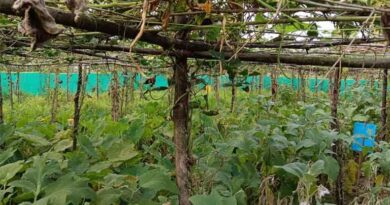
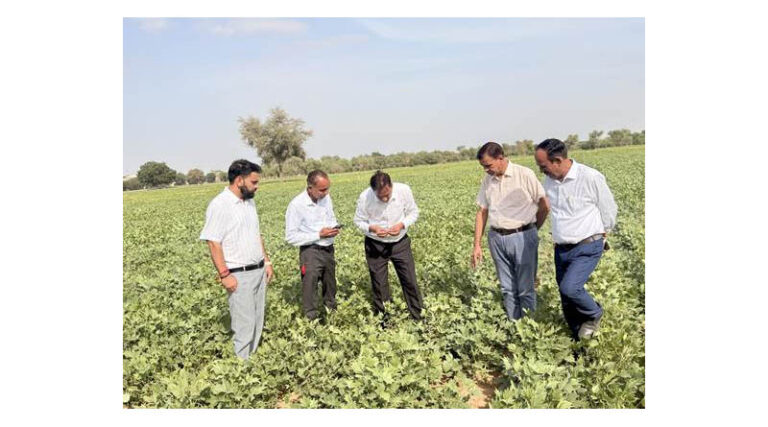
Despite the prolonged moisture deficit coinciding with flowering, pod formation and reproductive development, the CAZRI varieties maintained green foliage, continued growth and showed profuse pod development at around 55 days after sowing.
CAZRI attributed the field performance to both varietal characteristics and crop management. Timely sowing with the onset of the July monsoon, 45 × 10 cm plant spacing, interculture at 20 days after sowing for moisture conservation, weed management and effective canopy development helped maximise the use of available soil moisture.
The varieties also demonstrate developmental plasticity, beginning flowering at around 30 days after sowing and adjusting growth and maturity according to soil moisture availability. This trait is particularly important in arid rainfed agriculture, where rainfall can vary sharply in amount, timing and distribution.
Seed multiplication of the four varieties is currently underway across seven hectares at the CAZRI Research Farm to meet the 23.32-quintal seed requirement indented through the Saathi Portal for 2026. In 2025, the combined requirement for the four varieties was 63.2 quintals.
According to CAZRI, one quintal of breeder seed can potentially generate 1,000–1,400 quintals of certified seed. If successfully multiplied and distributed, this could support cultivation across approximately 10,000 hectares. Even at 50% of this potential, wider adoption in Rajasthan could cover around 25% of the state’s moth bean area. Rajasthan State Seeds Corporation, National Seeds Corporation and selected private companies are involved in seed multiplication.
Dr M. L. Jat, Secretary, Department of Agricultural Research and Education (DARE) and Director General, ICAR, said moth bean is a unique crop of the Thar Desert and that climate-resilient varieties could help make the region more prosperous, create new income opportunities for farmers and contribute to pulse self-reliance.
He said the ability of the varieties to maintain growth and pod development during an extended period without substantial rainfall demonstrates the potential of genetic improvement as an important component of climate-resilient agriculture. He also stressed that optimum plant population, timely sowing, weed management and moisture-conservation practices are essential for varieties to realise their genetic potential under stress conditions.
The results offer a field-level indication of how climate-resilient crop genetics, combined with appropriate agronomic practices, can help sustain pulse production under increasingly variable rainfall and moisture-stress conditions.
Also Read: UPL Expands Nature-Based Agriculture Portfolio with Investment in Japan’s PhytoChrome
Global Agriculture is an independent international media platform covering agri-business, policy, technology, and sustainability. For editorial collaborations, thought leadership, and strategic communications, write to pr@global-agriculture.com