08 July 2026, New Delhi: The crop protection chemicals sector and agrochemicals industry is currently witnessing a major transformation driven by rising demand for biological crop protection solutions including bio-stimulants, bio-fertilizers and other organic soil enhancement solutions. This shift presents both significant challenges and great potential for agrochemical companies in terms of growth opportunities.
Amit Dutta, Director, Agri, Food & Nutrition, Frost & Sullivan
New solutions based on agri-biologicals like environmentally friendly microorganisms, plant-based extracts, beneficial insects or other natural sources used for crop and soil health and pest management, are transforming the market.
Agrochemicals Industry Overview
The global agrochemicals industry is a cornerstone of modern agriculture, playing a pivotal role in ensuring food security and supporting sustainable farming practices. The industry faces significant transformation due to regulatory shifts, technological innovation, climate uncertainty, and rising demand for sustainable solutions.
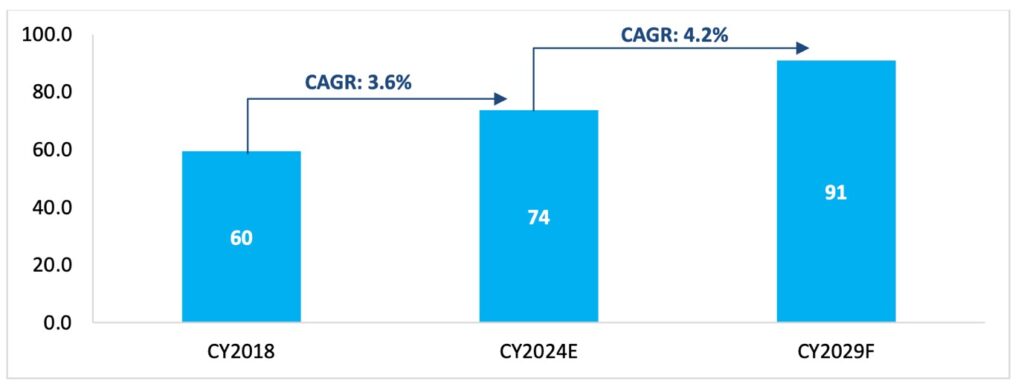
According to Frost & Sullivan analysis, the global crop protection market was valued at around USD 74 billion during 2024 and is expected to reach $91 billion during 2029 with a CAGR of 4.2% during the forecast period global crop protection market has experienced steady growth over the past few years, driven by the increasing demand for food, advances in agricultural technology, and the need to manage growing pest and disease pressures.
Global Crop Protection Market Size and Future Projections
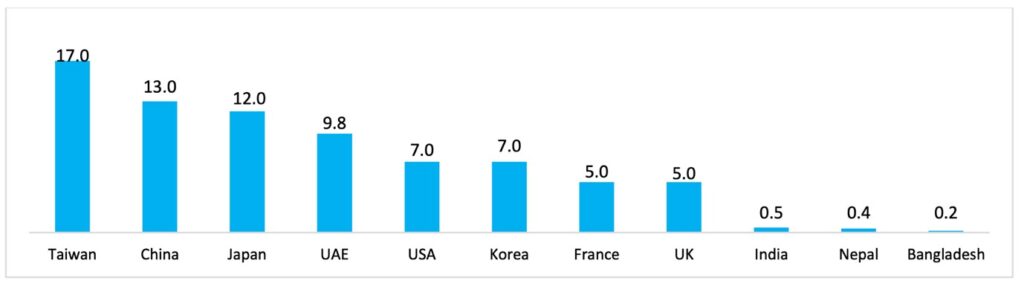
Per Capita Consumption of Agrochemicals in Major Geographies
Per capita agrochemical consumption indicates the degree of reliance on chemical inputs for enhancing agricultural productivity, shaped by factors like land availability, crop types, and policy frameworks.
The data highlights notable regional disparities driven by agricultural goals and practices. Asian countries such as Taiwan, China, and Japan focus on maximizing outputs from limited arable land through intensive chemical use, creating opportunities for high-value agrochemical markets. In contrast, the US and Europe emphasize sustainable farming and regulatory frameworks, which underscore the growing importance of innovation in bio-based or precision inputs as alternatives to traditional chemicals. In this regard, India has significant growth potential in the uptake of agrochemicals.
Emergence of India as an Agrochemical Hub
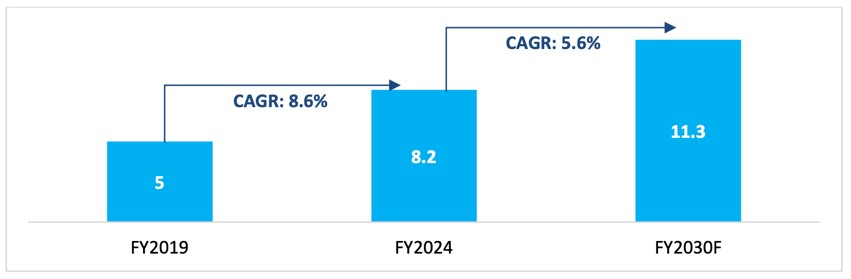
The Indian agrochemicals market is a significant contributor to the global agrochemical industry, valued at approximately USD 8.2 billion in FY 2024, with strong growth potential due to increasing domestic demand and a robust export market. The market is expected to reach $11.3 bn by FY 20302, growing with a CAGR of 5.6% supported by the need for higher agricultural productivity, increasing pest incidence due to climate change, and greater adoption of hybrid and high-yielding seeds. Herbicides are gaining share due to labor shortages and rising mechanization, while the insecticides segment remains dominant. With such strong growth, India is rapidly emerging as a global agrochemical hub, driven by strong export growth, rising demand for cost-efficient manufacturing, and global supply chain diversification away from China.
Market Size of Agrochemicals Market in India
Agri Biologicals
Their relevance of agri biologicals globally has intensified amid mounting pressures on global food systems and food security concerns amid rising global tensions. As climate volatility, soil degradation, and tightening environmental constraints limit the viability of agri input intensification, agri biologicals are helping to drive structural change towards efficiency and outcome-based input strategies.
Globally the market was valued at around USD 12-13 Bn in 2023 and is expected to grow to around USD 25-30 Bn by 2030.
The key growth drivers for Agricultural Biologicals market include:
Growth in adoption of sustainable and regenerative farming practices
Rise in demand for biologicals from conventional production systems resulting from growing awareness and regional Govt. Initiatives
Investments and capital inflow into R&D for large and medium-scale companies, contributing to the development of new and improved products and research partnerships, indicating a high degree of focus on innovations.
While agri- biologicals segment is largely expected to grow faster than agrochemicals with resistance management being a major opportunity for innovation, restraints including regulatory harmonization across geographies, efficacy of biologicals and current geopolitical scenario is expected to adversely impact the growth.
The Indian agri biologicals market is largely driven by the bio-stimulants consistently growing at CAGR of 13.5 %, currently valued at USD $320 million, which is expected to cross USD 450- 500 mn by 2030. Seaweed extract-based products constitute more than one-third of Indian bio-stimulant markets followed by amino acid-based products for the foliar / spray segment.
Increasing awareness amongst farmers on the importance of good quality bio-stimulants against the adverse impacts of crop chemicals and residues, increasing cost of production, climate change (abiotic stress), and deteriorating soil health continues to drive the demand for bio-stimulants.
The Next Phase of Agrochemicals – Rise of Bio-Agriculture
Over the past few years, global geopolitical conflicts have significantly influenced the supply and demand dynamics of agrochemicals. While industry is gradually moving toward organic and biological alternatives, their adoption remains relatively low, especially in emerging economies. Nevertheless, increasingly stringent environmental regulations and the growing emphasis on sustainable farming practices are expected to reduce the use of chemical crop inputs over the medium to long term. By quickly adapting to the shift toward agri-biologicals, adopting advanced technologies and capabilities, developing customized business models, and restructuring their operations, agrochemical companies can convert changing market demands into profitable growth opportunities.
Global Agriculture is an independent international media platform covering agri-business, policy, technology, and sustainability. For editorial collaborations, thought leadership, and strategic communications, write to pr@global-agriculture.com