Brasil AgrochemShow Highlights Regulatory, Technology and Market Trends in Brazilian Agriculture
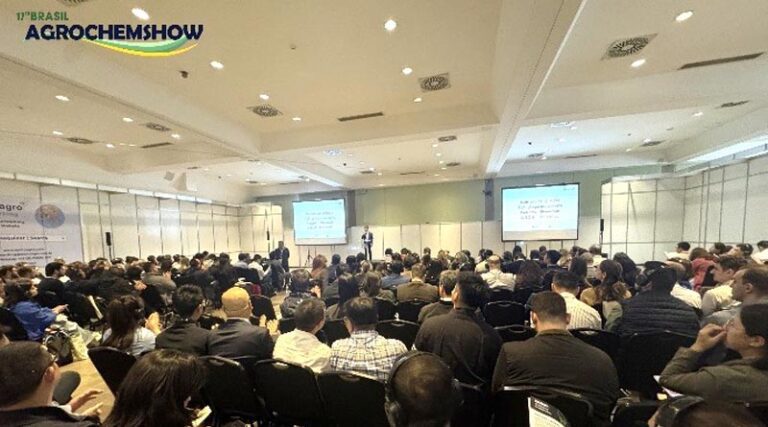
24 August 2026, São Paulo: The 17th Brasil AgrochemShow, held August 3–4 at the Centro de Eventos São Luís in São Paulo, brought together approximately 1,000 participants from 12 countries to discuss developments across Brazil’s agricultural inputs sector, including agrochemicals, biologicals, fertilizers, equipment, laboratories, logistics and related services. The event was organized by AllierBrasil in partnership with CCPIT CHEM.
The two-day programme featured lectures and technical discussions covering pesticide regulation, regenerative agriculture, risk assessment, biologicals, artificial intelligence, supply chains and agricultural input demand.
Regenerative Agriculture and Sustainability
Eliana Maria Gouveia Fontes, scientific coordinator of the Regenera Cerrado project and a researcher at Embrapa Genetic Resources and Biotechnology, presented results from a programme monitoring more than 1,600 hectares of commercial soybean and corn farms in Brazil’s Cerrado.
Regenerative plots showed approximately 70% adoption of the evaluated practices, compared with 37% in conventional systems. The project reported a 44.2% reduction in the population of Fusarium oxysporum and an 18.7% reduction in Fusarium solani in areas with a higher Regenerative Index.
The project also recorded greater water infiltration, improved soil structure, more than 50 bee taxa and natural mortality of 36.4% of caterpillars caused by fungi and parasitoids. Areas located close to native vegetation produced soybean seeds with an average mass 7% higher.
The presentation also highlighted challenges to wider adoption, including the need for training, technical assistance, measurement and monitoring technologies, and credit adapted to the transition period.
Brazil Implements New Non-Dietary Pesticide Risk Assessment Framework
Adriana Torres de Sousa, Manager of Risk Monitoring and Assessment at Anvisa’s General Toxicology Management Office, discussed the implementation of RDC No. 998/2025, which standardizes non-dietary risk assessments for operators, re-entry workers, residents and bystanders.
The assessment compares estimated exposure with reference values and can lead to refinement of the assessment, mitigation measures or rejection of a particular exposure scenario. Operational implementation began on June 1, 2026.
According to the presentation, DAROC became mandatory for active ingredients new to Brazil and for applications involving active ingredients with an established AOEL or AAOEL. Applications submitted without the required document may be placed on hold.
Sergio Graff, Medical Director of Toxiclin, addressed the same regulatory development from a medical toxicology perspective, focusing on exposure risk during and after agrochemical applications and the groups covered by the new assessment approach.
Application Technology Gains Importance as Environmental Requirements Increase
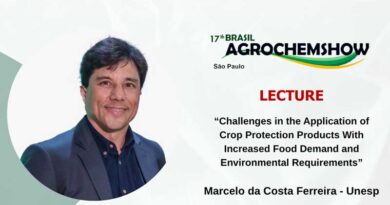
Marcelo da Costa Ferreira, full professor and head of the Department of Plant Health at Unesp in Jaboticabal, discussed the challenge of increasing agricultural productivity while facing restrictions on the expansion of cultivated areas.
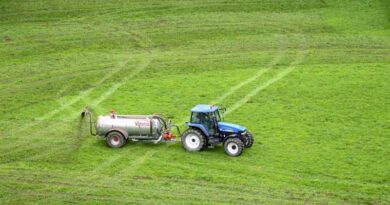
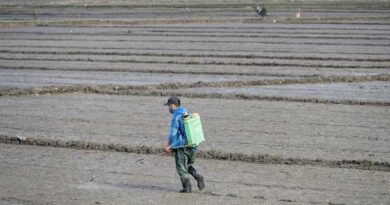
His presentation examined technologies designed to improve pesticide deposition and reduce drift, waste and exposure. These included drones, targeted applications, biological inputs and lower-toxicity molecules.
The discussion linked application technology with the broader need to produce more per hectare while responding to environmental and commercial requirements.
Regulatory Strategies for Biologicals and Agrochemicals
Regulatory strategy was also a major focus of the event’s technical sessions. Terry Chow, Commercial Director of ALS in Hangzhou, China, and Diogo Zoltay, Manager of the Toxicology and Ecotoxicology Laboratory at ALS Laboratories in São Paulo state, discussed the relationship between regulatory strategies and studies conducted under Good Laboratory Practice (GLP), covering both biological products and agrochemicals.
Lahys Caetano Tomaz, director and partner at SCI-AGRO laboratory, addressed five-batch studies and the different approaches required for generic products and new active ingredients. The discussion focused on technical requirements according to the nature and regulatory purpose of each product.
Artificial Intelligence Moves Into Day-to-Day Agribusiness
Artificial intelligence was another area highlighted during the event.
Guilherme Sanches, an agricultural engineer specializing in AI and Big Data and creator of the OagronomIA project, demonstrated applications of artificial intelligence in the daily work of agribusiness professionals.
The session focused on practical applications rather than AI as a future concept. Sanches also emphasized the importance of training, warning that professionals who do not learn to use AI tools could face productivity and competitiveness gaps as adoption increases.
China Supply Chain Faces Capacity and Price Pressures
The outlook for agricultural input supply chains was addressed by Zhang Jinlong, a consultant with more than 20 years of experience in China’s agrochemical industry.
Brazilian pesticide imports reached approximately 333,400 tonnes in the first half of 2026, down 7.5% from the corresponding period, although Chinese exports of formulated products to Brazil resumed growth in June.
Zhang highlighted the effects of geopolitical conflicts and logistical restrictions on raw materials including oil, sulfur, bromine and natural gas. At the same time, he pointed to excess production capacity as a continuing source of pressure on prices.
Brazil’s Pesticide Registration System Remains Under Pressure
Brazil approved 912 pesticide registrations in 2025. By July 7, 2026, 473 registrations had already been granted, indicating the potential for another high-registration year.
Flavio Hirata, partner at AllierBrasil, said 158 products were withdrawn from the market and 228 registration requests were cancelled in 2025. He noted that such cases represent regulatory investments that did not ultimately result in products reaching farmers or generating returns for companies.
The presentation also covered SISPA, FLORA, DAROC and increased post-registration oversight. According to Hirata, legal actions reduced the average registration timeline by approximately 1.5 years for products approved in 2025, although they did not eliminate the regulatory backlog.
Paraguay Reviews Registration Requirements for Chemical and Biological Products
The event also looked beyond Brazil. María Fernanda Cáceres Sanabria, Regulatory Manager at Registros Paraguay S.R.L., presented Paraguay’s pesticide registration framework administered by SENAVE.
The system includes experimental, provisional and definitive certificates, as well as registration for export. Equivalent products are assessed for identity, physicochemical properties, toxicology and effects on birds, fish and bees.
New active ingredients require additional environmental and toxicological data, while biological products are assessed for areas including taxonomic identification, genetic stability, production processes, infectivity, pathogenicity and environmental effects. The assessment period discussed during the session was approximately 12–15 months.
Litigation Adds Uncertainty to Brazil’s Registration Framework
Luciana Fabri Mazza, partner at Mazza & Manente de Almeida Law Firm, examined legal disputes surrounding Brazil’s Pesticide Law No. 14,785/2023.
The discussion focused on differing interpretations of implementation deadlines and procedures between MAPA and Anvisa. Mazza also outlined differences between writs of mandamus, which rely on pre-established documentary evidence, and ordinary proceedings against government agencies.
Pending regulation and differing interpretations continue to contribute to litigation around pesticide registration in Brazil.
Cooperatives and Distributors Face Changing Input Demand
José Francisco de Paula Neto, Business Superintendent at Coplacana, presented the cooperative’s activities across crop protection products, fertilizers, machinery, equipment, retail and agricultural inputs.
The discussion examined input demand, supply challenges and relationships between cooperatives, suppliers and farmers, providing a commercial perspective on Brazil’s agricultural input market.
Marcelo Pedroso, Supply Manager at Grupo Agromave, highlighted demand for herbicides, insecticides, fungicides and nematicides, as well as raw materials for biological products, foliar fertilizers and adjuvants.
For the 2026/27 crop season, he pointed to tighter credit conditions, farmer indebtedness, fertilizer price volatility and deteriorating barter ratios. Grupo Agromave’s 2026–2030 plan includes expansion into areas such as digital agriculture, grain storage and ethanol.
A Broad View of Brazil’s Agricultural Inputs Market
The 17th Brasil AgrochemShow provided a cross-section of the issues shaping Brazil’s agricultural inputs industry, from regulatory changes and pesticide registration to biologicals, regenerative agriculture, application technology, artificial intelligence and supply-chain pressures.
The programme also reflected the increasing interaction between Brazil’s domestic market and international agricultural-input supply chains, with discussions involving China, Paraguay and global regulatory and GLP requirements.
Since 2005, Brasil AgrochemShow has served as a platform for foreign companies seeking entry into Brazil and for Brazilian companies looking to establish international partnerships. The 2026 edition brought together participants from 12 countries across the agricultural inputs value chain.
Also Read: UPL’s Advanta to Acquire Egyptian Seed Company Hytech Egypt for $110 Million
Global Agriculture is an independent international media platform covering agri-business, policy, technology, and sustainability. For editorial collaborations, thought leadership, and strategic communications, write to pr@global-agriculture.com