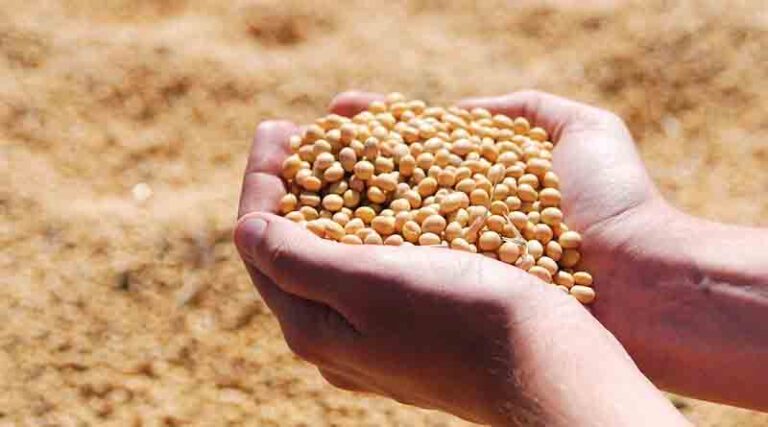
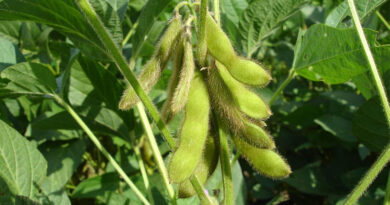
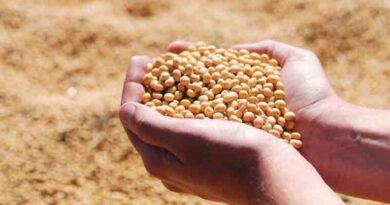
23 November 2026, Beijing, CN: Customs authorities in China have slowed clearance of soybean cargoes at several ports to more than 20 days, well above the usual turnaround of under 15 days, as swollen domestic stockpiles and weak livestock demand curb the pace of unloading, according to people familiar with the matter. Most of the delayed cargoes were imported from Brazil by private crushing companies rather than by the state-owned buyers that have been fulfilling Beijing’s commitment to purchase US soybeans.
The slowdown comes as separate customs data shows Chinese purchases of American farm goods outside soybeans are on pace for their lowest level in seven years. China bought $7.2 billion worth of non-soybean US agricultural products between January and September, the weakest nine-month total since 2019, when the first US-China trade war was at its height.
In May, the White House said Beijing had agreed to purchase $17 billion of US agricultural goods annually starting in 2026, on top of a separate commitment made in October 2025 to buy at least 25 million tons of US soybeans a year through 2028. China has made steady progress toward the soybean target, but it is falling well short of the broader pledge, and it remains unclear whether the shortfall counts as a breach since the White House has not said whether the annual clock started in May or will begin once China’s promised tariff cuts take effect; those cuts have not yet been finalized.
Sorghum and corn lag further behind
US sorghum shipments to China peaked in 2021 at 6.5 million metric tons, worth $2.1 billion, but Brazil gained market access in September 2025 and has already shipped 1.7 million metric tons this year with roughly 1 million more tons planned, according to Eduardo Vanin, senior agriculture strategist at Marex. US sorghum exports reached about 3.7 million tons through the end of August, ahead of the prior year’s pace, but sales have dried up over the past four months. Tim Lust, chief executive of the National Sorghum Producers, said beans are trading, but other commodities are not.
Corn purchases have also fallen well short of their prior peak. China imported $5.6 billion of US corn, almost 20 million metric tons, at its 2021 peak. COFCO Futures, a state-affiliated futures broker, said US corn is no longer competitive on price, partly because of ample domestic Chinese supply, and forecast only about 900,000 tons of US corn imports for the 2026-27 marketing year that began in September.
Beef access remains partial. China renewed export licenses in May for more than 400 US beef processing plants, but roughly half of US fed-cattle slaughter capacity is still ineligible to ship to China, according to Joe Schuele, a spokesperson for the US Meat Export Federation. Some plants were barred after Chinese authorities reported residues of substances not approved for use in China. Pork and chicken remain oversupplied in the Chinese market, while US beef prices are elevated because of smaller domestic cattle herds.
Darin Friedrichs, co-founder of Sitonia Consulting, said reaching the $17 billion non-soybean target would likely require directed purchases by state-owned buyers rather than ordinary commercial demand, the same approach already used to support soybean purchases.
The port slowdown is also tied to weak returns in China’s hog sector. Pig farmers are losing more than 500 yuan ($75) on every animal raised, as pork prices sit at multi-year lows, cutting into demand for the soybean meal used in animal feed. China’s soybean meal inventories are near their highest level in more than two years, and imported soybean stockpiles remain elevated even after easing from record highs reached in September. Dalian soybean meal futures fell as much as 1.5 percent to their lowest intraday level in four months as the clearance delays became apparent. Chinese officials indicated the slowdown could prove short-lived, noting that similar clearance delays have occurred and been resolved before.
Global Agriculture is an independent international media platform covering agri-business, policy, technology, and sustainability. For editorial collaborations, thought leadership, and strategic communications, write to pr@global-agriculture.com