Data Centres vs Farmland: Which Land Use Delivers Better Long-Term Returns?
30 March 2026, London: As global demand for digital infrastructure accelerates driven by artificial intelligence (AI), cloud computing, and data storage—land is emerging as a critical asset class. Across regions such as the United States, Europe, and parts of Asia, agricultural land and peri-urban property are increasingly being targeted for large-scale data centre developments. This shift raises an important question for landowners, investors, and policymakers: which land use offers stronger long-term profitability—data centres or traditional agriculture and real estate infrastructure?
The data centre opportunity: High-value, long-term leases
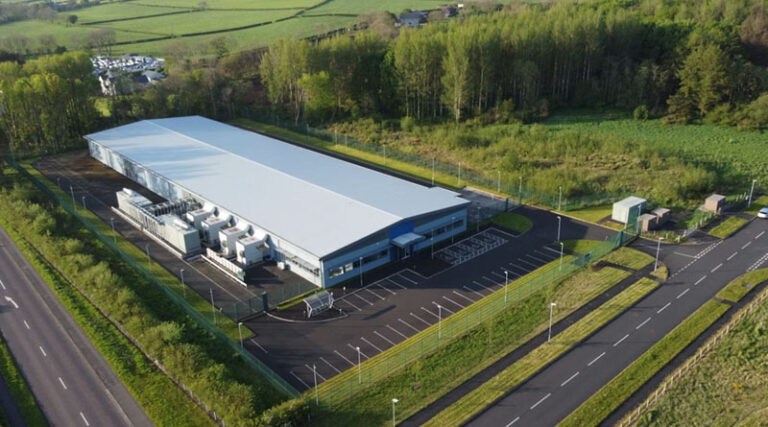
Data centres are among the fastest-growing infrastructure assets globally. Hyperscale operators and technology companies require vast land parcels with access to power, water, and connectivity. For landowners, this demand translates into premium pricing and long-term lease security.
In many markets, land leased or sold for data centre use can command significantly higher upfront valuations compared to agricultural land. Additionally, lease agreements often span 20–30 years, offering predictable and stable income streams. In some cases, revenue-sharing models or escalation clauses tied to inflation further enhance returns.
Another advantage lies in infrastructure-led value creation. Once a data centre ecosystem is established, surrounding land values typically increase due to improved connectivity, power infrastructure, and industrial clustering.
Environmental cost: Land degradation and resource pressure
While financially attractive, data centre development raises important environmental concerns—particularly when it involves conversion of fertile agricultural land.
Large-scale data centres require extensive land levelling, construction, and permanent surface sealing, which can lead to irreversible land degradation. Productive soils, once converted into built infrastructure, lose their agricultural potential permanently.
Water usage is another critical issue. Data centres generate substantial heat and rely on cooling systems that often consume large volumes of water, either directly or indirectly through energy production. In water-stressed regions, this can contribute to declining groundwater levels, affecting nearby farming communities.
Additionally, the concentration of high-energy infrastructure places pressure on local ecosystems. Increased energy demand—often met through thermal power—can further strain natural resources, while waste heat and industrial activity may alter local microclimates over time.
These factors make land conversion not just an economic decision, but a long-term environmental trade-off.
Agriculture: Stable, essential, but lower financial yield
Agricultural land has traditionally been viewed as a low-risk, steady-return asset, particularly in regions with strong food demand and supportive government policies. While annual returns from farming may be modest compared to industrial land use, agriculture provides consistent income, food security, and intergenerational value.
Over the long term, farmland tends to appreciate gradually, especially near expanding urban areas. It also offers diversification benefits, as its performance is less directly tied to industrial or technology cycles.
However, profitability in agriculture is increasingly influenced by factors such as climate variability, input costs, water availability, and market access. Without diversification or value addition, purely agricultural income may not match the financial returns offered by commercial land conversion.
Real estate and infrastructure: A middle ground
Land used for residential, commercial, or mixed-use infrastructure often represents a balanced investment pathway. As urbanisation expands, such land can deliver strong capital appreciation alongside rental income.
Compared to data centres, real estate development typically involves lower technical complexity and more diversified demand drivers. However, it also carries risks related to market cycles, regulatory changes, and project execution delays.
In high-growth corridors, infrastructure-led development—such as logistics parks, industrial zones, and warehousing—can rival or even exceed data centre returns, depending on location and timing.
Key comparison: Long-term profitability factors
1. Income stability:
Data centres offer highly predictable, contract-based income. Agriculture provides seasonal but consistent returns, while real estate income depends on occupancy and market conditions.
2. Capital appreciation:
Infrastructure and real estate often deliver strong appreciation in urbanising regions. Data centre-driven zones can see rapid value spikes. Agricultural land appreciates more slowly unless converted.
3. Risk profile:
Agriculture carries environmental and market risks. Data centres face regulatory, energy, and environmental sustainability risks. Real estate is exposed to economic cycles.
4. Environmental impact:
Data centres can lead to permanent loss of fertile land, groundwater stress, and ecological imbalance, whereas agriculture—if managed sustainably—can maintain soil health and support biodiversity.
5. Social and strategic value:
Agricultural land contributes to food security and rural livelihoods, making it strategically important beyond financial metrics. Data centres, on the other hand, support the digital economy but require significant natural resources.
The long-term perspective: Profit vs sustainability
From a purely financial standpoint, data centre land use often delivers higher immediate and long-term monetary returns, particularly in regions with strong digital infrastructure demand. However, this comes with higher dependency on policy, power availability, and environmental sustainability.
Agricultural land, while less lucrative in direct financial terms, offers resilience, ecological balance, and long-term societal value. For many landowners, especially those with generational ties to farming, these factors play a decisive role.
Real estate and infrastructure development sit between the two, offering scalable returns with moderate risk, particularly in rapidly urbanising economies such as India.
Last word
The decision to convert land for data centres versus retaining it for agriculture or real estate is increasingly complex. While data centres may maximise financial returns, they can also accelerate land degradation and resource depletion, particularly in water-sensitive regions.
As demand for both food and digital infrastructure grows, the challenge for policymakers and landowners will be to strike a balance, ensuring that economic development does not come at the cost of long-term environmental sustainability and agricultural resilience.
Also Read: MIT-WPU Researchers Develop AI Models to Boost Oil Recovery Amid Global Energy Volatility
Global Agriculture is an independent international media platform covering agri-business, policy, technology, and sustainability. For editorial collaborations, thought leadership, and strategic communications, write to pr@global-agriculture.com