Risk Management At Sowing – Frost Or Heat?
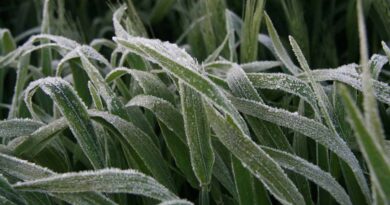
10 April 2026, AU: Frost is still one of the most unpredictable challenges for growers, with some damaging events now occurring later than expected. Together with increasing heat stress at grain fill, this makes sowing timing a key risk management decision.
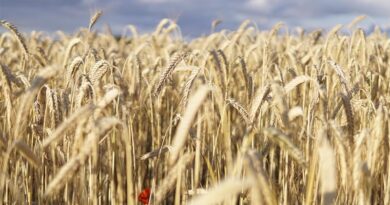
A GRDC-supported RiskWi$e project in Western Australia is seeking to help growers better understand the interrelationship between time of sowing (TOS) and the risks of frost or heat stress.
Understanding the risks, how decisions are made and the impact of those decisions is a key component of RiskWi$e projects.
For growers, determining the right balance between early and late sowing requires awareness of the risks involved with frost and heat stress at either end of the growing season. With greater awareness, growers can decide what will maximise the reward (yield) and minimise the risks for their operations.
Sowing early increases yield potential and reduces heat stress risk, but increases frost risk. Sowing later mitigates the risk of frost but also increases the potential of heat stress and lowers yield potential.
Time of sowing decisions
Historical rules of thumb in the south-east WA wheatbelt would see canola sown in late April (with Anzac Day often the trigger), wheat sown in early May, and lupins, oats and barley planted as the next crops in the seeding schedule.
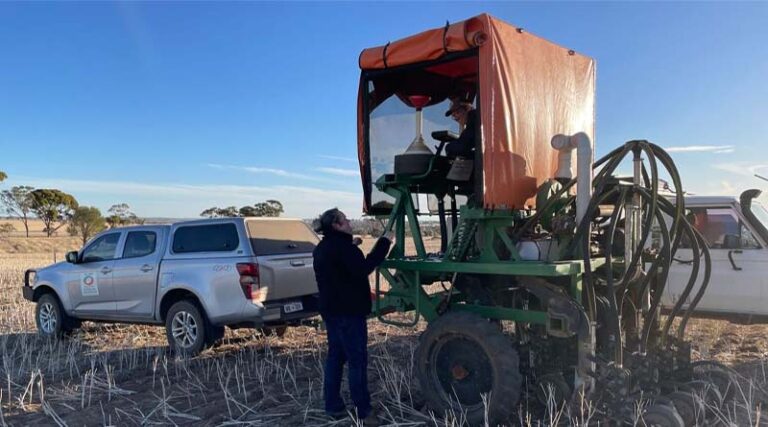
The Facey Group and Corrigin Farm Improvement Group (CFIG) have been interrogating the best approach to decisions about TOS as part of the RiskWi$e initiative.
The Facey Group has focused on the TOS of wheat, while CFIG has concentrated on legume break crops – field peas, lupins, chickpeas and vetch.
Surveying 26 growers to establish a baseline of current practices, the Facey Group determined the key drivers that underpin sowing decisions.
Grower practice
In practice, sowing dates were in line with anecdotal evidence supporting canola being sown in late April and wheat in early May. Growers reported maximising the length of the growing season as the most important factor.
First rains and soil moisture were perceived as critical factors guiding early sowing, while early break management was more dependent on paddock conditions, frost and follow-up rain.
Larger operations indicated TOS was driven by the need to complete their full sowing program before a set date. The aim was to maximise the growing season for as much of the farm as possible, while minimising the risk of a false break.
Managing frost risk still impacted sowing decisions for many growers, with wheat (the most frost-susceptible crop) being sown last. This was despite some growers suggesting the impact of frost was less with improved varieties.
Approaches to mitigate risks
Growers surveyed identified 4 main strategies used to manage risk and the impacts of heat and frost.
These are consistent with common risk management approaches:
- variety choice to stagger flowering times across the optimal flowering window and its peripheral dates, which helps to manage unpredictable frost or heat events occurring in the middle of that window
- planting less wheat and more frost-tolerant crops, such as barley
- reducing cropping on low-lying, frost-susceptible paddocks
- opting to make hay from crops suffering frost damage.
However, strategies to limit losses can also reduce profits in a good season. In seasons where frost pressure is low, later sowing often shortens the growing season and increases exposure to end‑of‑season heat, which can reduce yield and profit.
It’s important growers consider the likelihood of different outcomes to maximise yield potential and minimise the downside risks.
Staggering wheat flowering window
One risk management strategy is to time sowing and varieties to stagger flowering so that less of the crop is exposed to an unexpected heat or frost event.
Analysis of this shows that when flowering is staggered across the window, there is a greater upside and smaller downside for yield potential.
It lowers the risks of exposure to seasonal frost and heat anomalies compared with not staggering flowering.
Sowing legumes early
Chickpeas sown early give growers an opportunity for a double break crop.
In the first year of the trial in 2024, CFIG determined that early-sown chickpeas (sown mid-April) produced a higher yield than standard sowing (in May).
The yield increase of 0.68 t/ha compared with 0.55 t/ha (20 to 25% increase) indicated that earlier establishment and utilising soil moisture effectively led to less heat or moisture stress.
In the case of field peas, TOS had a significant impact: early sowing increased yield by 49%, suggesting the crop also responds well to early establishment, which reduces the risk of heat stress later in the season.
Vetch showed a moderate yield improvement of 0.84 t/ha with early sowing, compared with 0.50 t/ha under traditional sowing times. Early sowing of lupins did not show any significant improvement on traditional sowing dates.
Strategies in practice
The Facey Group work suggests that implementing multiple strategies rather than a fixed strategy can help mitigate the risk of frost losses. Facey Group CEO Tina Astbury says, “Grower experience in our region is that we have a severe frost event once a decade, a medium frost once in 5 years and a mild frost in most years. Over the long term, these frost events can cost growers wheat yield reduction of about 370 kg/ha a year.
It is important then to understand the weather patterns in your own region and to have historical data of frosts and times of higher temperatures to understand this exposure to risk.
If it is likely to be a year of milder frosts, then sowing later based on expectations of severe frost may forgo greater yield potential.
Managing risk through time of sowing – legumes
Complementing the work of the Facey Group, the CFIG project aims to equip growers with a better understanding of the trade-off between sowing legume crops early to maximise yield potential and exposure to frost and/or late-season heat stress during flowering.
Establishment, protein and legacy impacts
Plant establishment analysis showed that early sowing of chickpeas and vetch promoted stronger crop establishment; however, field peas and lupins had no discernible change.
Protein levels were also analysed for lupins, chickpeas and field peas based on TOS, and were found to be consistent for both early and traditional planting times.
When assessing soil moisture, there were no significant changes pre-seeding or post-seeding across the 4 legume varieties. Weed pressure was low across all crops, indicating that reasonable weed control was achievable with early sowing.
“Our first year of results showed that there was a variation in benefits in terms of time of sowing for legumes. Chickpeas, lupins and vetch had some, but field peas had the greatest difference,” says Joy Valle, Executive Officer with CFIG.
The CFIG team also showed there were legacy impacts on subsequent cereal crops following the legumes.
Wheat planted in the following season showed improved yield following the earlier sown legumes – that may be due to the increased availability of nitrogen after the legumes, or perhaps better retained soil moisture. Further research will need to be done to confirm this over multiple years.
Grower experience – flexibility
Corrigin grower Callum Nicholls believes flexibility is the best approach to making decisions about optimal TOS.
During wet seasons, Callum tends to increase the amount of canola and barley sown, while in drier conditions he pulls back on canola and focuses more on wheat and barley.
To mitigate the risk of frost, he will sow on higher ground and utilise shorter-season crops to reduce the risk of heat stress towards the end of the season.
When sowing opportunities occur later using shorter-season crops, this helps reduce the risk of crops maturing during high heat, which can severely affect yield. Variety guides that give information on crop maturity are critical for informing these decisions.
Overall, Callum’s farm works for him because of the flexibility and adaptability he builds into his farming practices. His ability to adjust sowing times and crop varieties based on seasonal conditions, along with calculated nitrogen applications, helps him manage risks and maintain profitability, even in challenging years.
Grower experience – aim high
On the west side of Corrigin, the Evans family’s approach is to ‘aim high’ with the understanding that a higher biomass crop will still yield well even after frost.
Callum Evans and his father Greg’s farm is situated in a known frost zone. It is because of this that they have adopted a bold mindset to target higher production through varieties with high yield potential.
“We’d rather a 4 t crop frosted back to 2, than a 2 t crop frosted to one,” says Greg.
Traditionally, Greg and Callum would plant around Anzac Day, but in recent years have opted to plant earlier – up to a month – if they receive a decent rainfall event.
Barley and oats (oats having being added in 2025) are part of the farming rotation system to give frost resilience and flexible sowing dates, while wheat is no longer planted in frost-prone paddocks where the risk higher.
This approach is driven by simple economics and on-farm experience. They’ve seen that pushing sowing earlier often results in stronger establishment, better use of winter rainfall, and more robust crops heading into spring – even if some seasons bring setbacks.
Managing time of sowing is about balancing upside potential with downside risk
There is no single perfect sowing date.
- Understand your local frost and heat history
- Stagger flowering windows
- Match crop and variety to paddock risk
- Build flexibility into your system
Also Read: Skymet Forecasts Below-Normal Monsoon for India in 2026 at 94% of LPA
Global Agriculture is an independent international media platform covering agri-business, policy, technology, and sustainability. For editorial collaborations, thought leadership, and strategic communications, write to pr@global-agriculture.com