India Identifies 111 High-Priority Districts as Centre Steps Up El Niño Preparedness for Kharif 2026
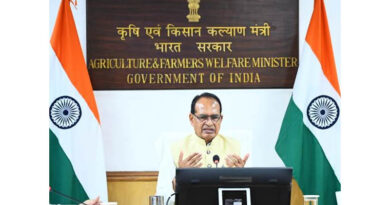
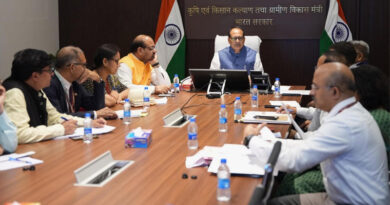
27 June 2026, New Delhi: With the threat of El Niño and a delayed southwest monsoon looming over the 2026 Kharif season, the Government of India has launched an extensive preparedness strategy focused on 111 high-priority districts identified as being most vulnerable to rainfall deficits. Union Minister for Agriculture & Farmers’ Welfare Shivraj Singh Chouhan chaired a high-level review meeting with state agriculture ministers, district collectors, scientists from ICAR and ICAR-CRIDA, and officials from the India Meteorological Department (IMD) to assess preparedness and coordinate contingency measures.
The Ministry of Agriculture, in collaboration with ICAR, has identified 315 districts that could face the impact of a weak monsoon. Among these, 111 districts with less than 25% irrigation coverage have been classified as high priority, while 76 districts fall into the medium-priority category and 128 districts into the low-priority category based on irrigation infrastructure. Most of these districts are spread across 12 states, including Madhya Pradesh, Maharashtra, Gujarat, Uttar Pradesh, Rajasthan, Karnataka, Bihar, Jharkhand, Telangana, Andhra Pradesh and Odisha.
To minimise crop losses, the government has activated District Agriculture Contingency Plans (DACPs) prepared by ICAR and ICAR-CRIDA. These plans recommend district-specific interventions such as promoting alternative crops, crop diversification, efficient water management and additional livelihood opportunities. State governments have been directed to ensure that these plans are implemented on the ground rather than remaining as administrative documents.
Recognising water availability as a critical factor, the Centre has prioritised conservation measures, including the repair and restoration of ponds, farm reservoirs, check dams and other water-harvesting structures. Rural development programmes such as MGNREGA will be leveraged to strengthen water storage while generating rural employment. Reservoir storage levels are also being monitored basin-wise to guide state-specific interventions.
Live Newsroom
The government has advised states to encourage short-duration and low-water-consuming crop varieties, while promoting crop diversification, intercropping and mixed farming to reduce production risks. Greater emphasis will be placed on pulses, millets and oilseeds, which perform relatively better under limited moisture conditions. Farmers have also been advised to avoid premature sowing until adequate rainfall and soil moisture are available.
To ensure uninterrupted agricultural operations, adequate stocks of seeds and fertilisers have already been positioned, with additional seed reserves earmarked for vulnerable districts in case resowing becomes necessary. The Ministry has also confirmed sufficient availability of major fertilisers, including urea, DAP, MOP, NPK and SSP, for the Kharif season.
Scientific advisories will be disseminated through 731 Krishi Vigyan Kendras (KVKs), Agro-Meteorological Advisory Units, SMS alerts, WhatsApp, radio, television and digital platforms to help farmers make informed decisions on sowing, crop selection and input management. Parallel contingency plans have also been prepared to address potential fodder shortages through advance stocking and transportation from surplus regions.
The Centre has further strengthened the financial safety net by expanding coverage under the Pradhan Mantri Fasal Bima Yojana (PMFBY), accelerating issuance of Kisan Credit Cards (KCC) and encouraging farmers to utilise PM-KISAN assistance for agricultural inputs. A dedicated El Niño Monitoring Cell and Crop Weather Watch Group have been established at the national level to track weather developments, crop conditions and input availability on a real-time basis.
Reassuring farmers, Chouhan said the government is acting proactively rather than waiting for the situation to worsen. He emphasised that coordinated efforts by the Centre, states, scientific institutions and farmers would help minimise the impact of El Niño and safeguard agricultural production and rural livelihoods during the 2026 Kharif season.
Also Read: EU Mandates Digital Labels for Plant Protection Products from 2028
Global Agriculture is an independent international media platform covering agri-business, policy, technology, and sustainability. For editorial collaborations, thought leadership, and strategic communications, write to pr@global-agriculture.com