23 June 2026, New Delhi: Despite delayed monsoon progress and negligible rainfall across several major agricultural regions during the initial weeks of the Kharif season, India has recorded a modest increase in overall Kharif sowing compared with the corresponding period last year. According to the latest data released by the Ministry of Agriculture & Farmers Welfare, total Kharif crop area coverage reached 119.90 lakh hectares as on June 19, 2026, compared with 117.95 lakh hectares during the same period in 2025, reflecting an increase of 1.95 lakh hectares.
The early sowing momentum has been driven primarily by rice, pulses, and coarse cereals (Shri Anna), while acreage under cotton and oilseeds, particularly soybean, has declined due to weather uncertainties and delayed planting decisions in key producing states.
Kharif 2026 Area Coverage as on June 19, 2026 (Area in Lakh Hectares)
Crop
Normal Area*
Final Area 2025
Area Sown 2026
Area Sown 2025
Change Over 2025
Rice
412.00
446.70
12.36
8.09
+4.26
Pulses
123.64
118.97
7.21
6.39
+0.83
Shri Anna & Coarse Cereals
182.63
192.12
12.43
9.82
+2.61
Oilseeds
200.08
196.38
7.24
8.11
-0.87
Sugarcane
54.20
58.84
57.31
56.64
+0.67
Jute & Mesta
6.40
6.06
6.22
6.09
+0.14
Cotton
125.51
115.20
17.13
22.82
-5.69
Total
1104.46
1134.27
119.90
117.95
+1.95
*Normal Area = Average Area Coverage during 2020-21 to 2024-25.
Rice Acreage Surges 53%
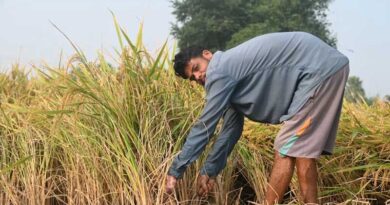
Rice has emerged as the biggest contributor to the increase in Kharif acreage. Farmers have planted rice on 12.36 lakh hectares, up from 8.09 lakh hectares a year ago, registering an increase of 4.26 lakh hectares or more than 52%. The expansion indicates proactive sowing in irrigated regions and areas receiving pre-monsoon moisture despite uneven rainfall distribution.
The development is significant given that rice remains India’s largest Kharif crop with a normal area of around 412 lakh hectares and achieved a final coverage of 446.70 lakh hectares in 2025.
Pulses Continue Positive Trend
Pulses acreage increased to 7.21 lakh hectares from 6.39 lakh hectares last year, showing a gain of 0.83 lakh hectares.
Among pulse crops:
Moongbean recorded the strongest growth, rising to 4.08 lakh hectares from 2.86 lakh hectares, an increase of 1.21 lakh hectares.
Arhar (Pigeonpea) remained largely stable at 1.61 lakh hectares.
Mothbean sowing commenced with 0.10 lakh hectares, compared with negligible area last year.
Urdbean acreage declined by 0.36 lakh hectares to 0.62 lakh hectares.
Other pulse categories also witnessed marginal reductions.
The increase in pulses acreage aligns with the government’s continued emphasis on improving domestic pulse production and reducing import dependence.
Shri Anna and Coarse Cereals Show Strong Expansion
The government’s sustained promotion of millets and climate-resilient crops appears to be influencing planting decisions. Total acreage under Shri Anna and coarse cereals reached 12.43 lakh hectares, compared with 9.82 lakh hectares last year, marking an increase of 2.61 lakh hectares.
Major contributors include:
Bajra (Pearl Millet): 4.05 lakh hectares versus 2.14 lakh hectares last year (+1.91 lakh ha)
Agriculture experts note that millets require comparatively less water than many conventional crops, making them attractive options during periods of uncertain monsoon onset.
Oilseeds Witness Decline Despite Groundnut Growth
Oilseeds acreage fell to 7.24 lakh hectares from 8.11 lakh hectares last year, resulting in a decline of 0.87 lakh hectares.
The decline is largely attributed to lower soybean sowing:
Soybean: 1.30 lakh hectares versus 2.50 lakh hectares last year (-1.20 lakh ha)
Groundnut: increased slightly to 5.25 lakh hectares (+0.16 lakh ha)
Sunflower: rose sharply to 0.49 lakh hectares from 0.27 lakh hectares (+0.21 lakh ha)
Sesamum: declined marginally
The soybean slowdown is particularly significant as the crop occupies more than 120 lakh hectares in a normal season and is highly dependent on timely monsoon rainfall. Farmers in Madhya Pradesh, Maharashtra and Rajasthan are reportedly waiting for adequate soil moisture before undertaking large-scale sowing operations.
Cotton Records Sharpest Fall
Among all major crops, cotton registered the steepest decline in area coverage.
Cotton sowing stood at 17.13 lakh hectares compared with 22.82 lakh hectares during the corresponding period last year, reflecting a reduction of 5.69 lakh hectares.
The decline is being attributed to delayed rainfall in cotton-growing regions and cautious farmer sentiment amid fluctuating market prices and weather uncertainties.
However, cotton sowing is expected to accelerate once monsoon conditions improve across western and central India.
Sugarcane and Jute Remain Stable
Long-duration crops continued to maintain stable acreage:
Sugarcane: 57.31 lakh hectares compared with 56.64 lakh hectares last year (+0.67 lakh ha)
These crops are less sensitive to short-term rainfall fluctuations during the current stage of the season.
Weather to Determine Next Phase of Sowing
The current acreage figures represent only the initial phase of Kharif sowing, and substantial planting activity is expected during the coming weeks as monsoon rains advance across central, western and northern India.
While the overall increase of 1.95 lakh hectares demonstrates resilience among farmers despite limited rainfall, the significant decline in soybean and cotton acreage highlights the dependence of major rainfed crops on timely monsoon precipitation.
Agriculture officials remain optimistic that normal monsoon progression during late June and July could help bridge current acreage gaps and support sowing levels comparable to or higher than last year’s final Kharif coverage.
The coming fortnight will be crucial in determining whether India can sustain the early sowing momentum and recover acreage in key rainfed crops as monsoon activity intensifies across the country.
Global Agriculture is an independent international media platform covering agri-business, policy, technology, and sustainability. For editorial collaborations, thought leadership, and strategic communications, write to pr@global-agriculture.com