AI, Drones and Laser Weeding Robots Reshape Farming in China’s Grain Heartland
05 September 2026, Heilongjiang, China: Farms across Heilongjiang province, China’s largest grain producer for 16 consecutive years, are moving beyond basic mechanization toward artificial intelligence, drone monitoring, and robotic weeding as the region pushes into a new phase of precision agriculture, according to reporting published September 3 from Harbin and Wuchang.
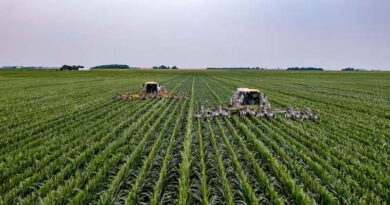
Mechanization of plowing, sowing, and harvesting in the province has already reached 99.28 percent, a level that leaves little room for further gains from traditional equipment alone. Officials and agricultural technology companies in the province are instead focusing on smarter decision making tools layered on top of that existing machinery base, part of a broader shift outlined in China’s 2026 to 2030 five year plan for agriculture.
Heilongjiang produced 82 million tonnes of grain in 2025, marking the province’s 22nd consecutive bumper harvest and underscoring its role as the anchor of China’s food security strategy. The province now counts 676,000 intelligent agricultural machines in operation, according to 2025 figures, ranging from GPS guided tractors to newer robotic systems entering fields for the first time this season.
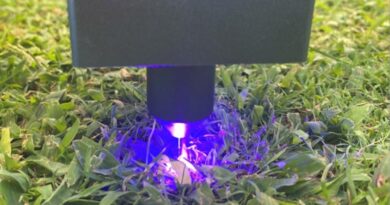
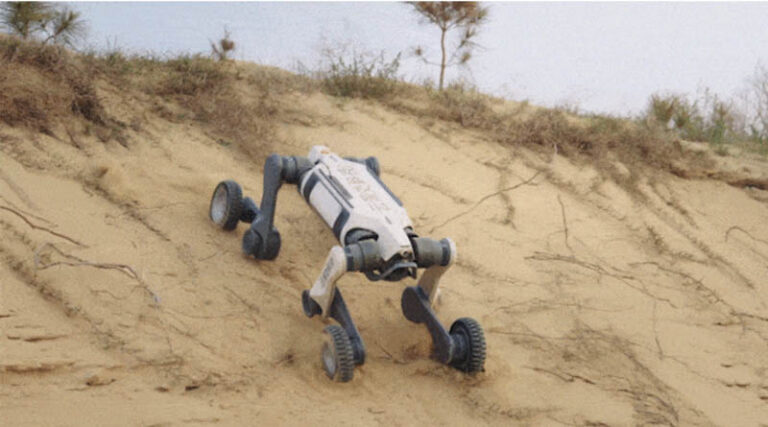
Among the newer technologies drawing attention are four wheeled laser weeding robots equipped with multispectral cameras that can identify and eliminate weeds with more than 95 percent effectiveness while causing less than 0.1 percent crop damage, according to figures from Heilongjiang Dewo Technology Development, one of the companies developing the systems. Du Mujun, the company’s chief engineer, said the technology can cut weeding costs by up to 70 percent compared with manual labor, a significant saving in a province where rural labor has grown scarcer as younger workers move to cities.
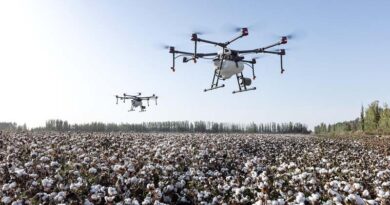
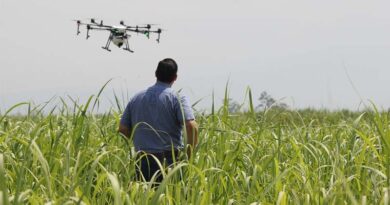
Drone based crop monitoring has also expanded rapidly. Beidahuang Information Company, a major state linked agribusiness operator in the province, is using drones and remote sensing to build digital maps covering 3.2 million hectares of farmland, with crop condition data updated roughly every five days. Wang Hao, deputy general manager of the company’s market operation center, said a single drone can now survey an area that would take a farmer a full day to walk, roughly 200 mu or about 13 hectares.
Electric drive precision seeders equipped with smart terminals are running about 50 percent faster than conventional mechanical seeders, according to Li Yongwei, deputy general manager of Harbin Huagong Zhiyun Technology, one of the firms supplying the equipment. Packaging robots using QR code tracking are also being deployed further down the supply chain to trace grain from field to storage.
Hu Jinyou, a professor at China Agricultural University, said the shift reflects a broader transition in Chinese agriculture from mechanical capacity toward data driven precision, unfolding on a scale shaped by China’s smallholder land structure and state backed agribusiness operators. Heilongjiang is also set to host a new national pilot base for AI crop planting applications as part of the current five year plan.
The push comes as Beijing has repeatedly stressed the need to secure domestic grain output amid concerns over global supply disruptions and adverse weather patterns forecast for the current growing season. Heilongjiang and neighboring Jilin together account for roughly one fifth of China’s total grain production, making technology gains in the two provinces disproportionately important to national food security targets.
For India and other major grain producing countries, Heilongjiang’s experience offers an early look at how AI and robotics can be layered onto an already highly mechanized farm base, a stage several Indian states with strong irrigation and equipment penetration may reach within the next decade as labor costs rise and precision agriculture technology becomes more affordable.
Also Read: Syngenta Welcomes Trevor Watson As Turf Territory Manager For Mid-atlantic And Northeast Region
Global Agriculture is an independent international media platform covering agri-business, policy, technology, and sustainability. For editorial collaborations, thought leadership, and strategic communications, write to pr@global-agriculture.com