US Researcher Wins Federal Grant to Pair Drones With Ground Robots for Precision Farming
15 September 2026, Nevada, US: A University of Nevada, Reno engineer has secured a five-year federal grant to build a robotic system that combines aerial drones with ground-based rovers, aiming to give farmers a more complete picture of crop health while cutting unnecessary fertilizer and pesticide applications.
The National Science Foundation awarded Parikshit Maini, an assistant professor in the university’s Department of Computer Science and Engineering, a $618,201 CAREER Award on August 5, 2026. The CAREER program is the NSF’s most competitive early-career funding track, reserved for researchers whose work is expected to build a lasting research and teaching foundation. Maini’s project is titled “From Fields to Decisions: Planning and Sensing Cooperative Teams of Air and Ground Robots in Precision Agriculture.”
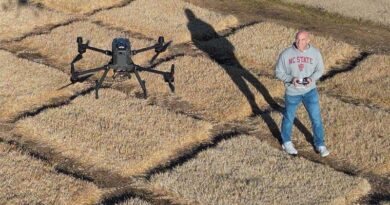
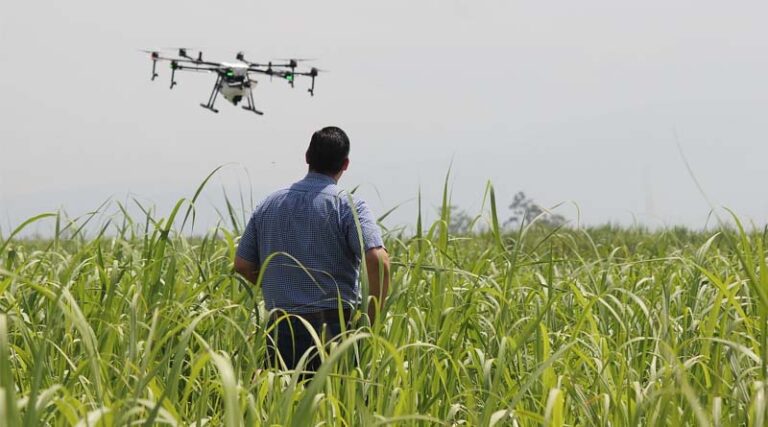
The core idea addresses a gap in how farms currently gather data. Drones flying overhead can quickly survey large areas and spot patterns such as patches of stressed or discolored crops, but they only see the canopy from above. Ground vehicles moving between crop rows can capture side-on images of stems, leaves and fruit that drones miss entirely. Maini’s system is designed to let the two machines work as a coordinated team rather than as separate tools, merging the overhead and side-view data into a single, more accurate assessment of plant health.
Solving power and communication limits in the field
A central engineering problem the grant will fund is what researchers call the operational trio of battery limitations, unreliable wireless communications and task unpredictability. Drones have limited flight time before their batteries run low, and remote farm fields, particularly in arid regions, often have patchy wireless connectivity that can disrupt coordination between machines. Maini’s design addresses the power constraint directly: the drones will be able to land on and dock with the ground rovers to recharge mid-survey, extending how long a single mission can run without a human needing to swap batteries or retrieve the aircraft.
The planning and sensing algorithms being developed under the grant are meant to let the robot team adapt in real time. If a drone loses signal or a rover encounters an obstacle such as uneven terrain or dense foliage, the system is intended to reroute tasks between the two machines rather than stalling the survey. This kind of adaptive, decentralized coordination is a harder computer science problem than programming a single robot, because each machine has to make decisions based on incomplete information about what its partner is doing.
The practical payoff for growers, according to the project description, is more precise input management. When farmers know exactly which parts of a field are under stress from water shortage, nutrient deficiency or pest pressure, and which parts are healthy, they can apply fertilizer, water or crop protection products only where needed instead of uniformly across an entire field. That targeted approach is the basic promise of precision agriculture, and better ground-truthed data from combined air and ground sensing is meant to make those targeting decisions more reliable than drone imagery alone.
Maini’s research extends beyond agriculture. The same coordination algorithms are also intended to apply to infrastructure inspection, disaster response and even collaborative robots that could prepare construction sites on the moon or Mars, since all of these tasks involve machines with limited power and unreliable communication links working together in unpredictable environments. The CAREER Award also carries an education and outreach requirement, and Maini plans to involve student design teams and Nevada’s 4-H robotics programs as part of the funded work.
Also Read: UPL Expands Nature-Based Agriculture Portfolio with Investment in Japan’s PhytoChrome
Global Agriculture is an independent international media platform covering agri-business, policy, technology, and sustainability. For editorial collaborations, thought leadership, and strategic communications, write to pr@global-agriculture.com