Robot Dogs Cut Grape Harvest Labour by 70 Percent in China’s Turpan Vineyards
02 September 2026, Beijing: Chinese robotics company DEEP Robotics has deployed wheeled-legged robots, informally called robot dogs, in commercial vineyards in Turpan, a grape-growing region in northwestern China, where they are reported to cut manual carrying labour during harvest by more than 70 percent, according to reporting published September 1.
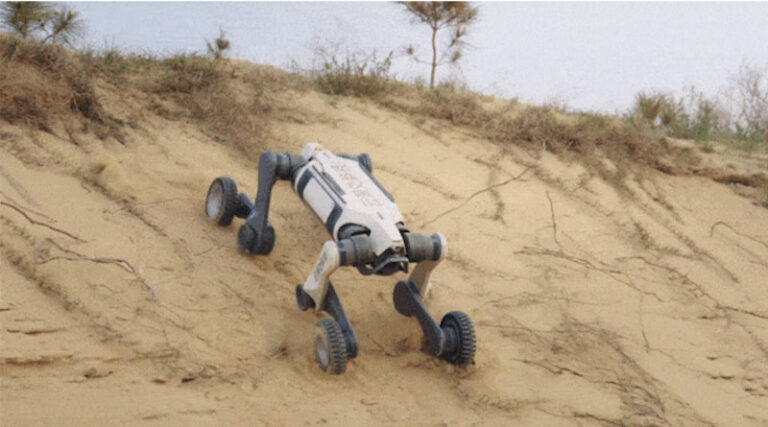
The machines, DEEP Robotics’ Lynx M20S model, are not harvesting the grapes themselves. Instead, they take over the physically demanding job of moving harvested grape baskets from the vine rows to central collection points, along with tasks like repositioning irrigation tubing and relaying field data collected during the harvest window. Each unit can carry loads of up to 35 kilograms and is built to operate across an unusually wide temperature range, from 50 degrees Celsius down to minus 30 degrees Celsius, which matters in Turpan, where ground temperatures regularly exceed 50 degrees Celsius during the August harvest season. The robots use onboard sensors to detect obstacles and can navigate passages as narrow as 50 centimetres without needing to turn around, a useful feature in tightly spaced vine rows.
The practical benefit growers are highlighting is speed. Grapes begin to dehydrate and shrivel quickly once picked, especially in Turpan’s extreme heat, so cutting the time between picking and delivery to a processing or packing point directly affects fruit quality and marketable yield. By taking over the carrying work that would otherwise require large seasonal labour crews walking loaded baskets out of the field by hand, the robots let human pickers focus solely on selecting and cutting fruit.
The deployment fits into a broader push across Chinese agriculture to substitute automation for manual labour, driven partly by a shrinking rural workforce as younger workers move to cities, and partly by government and provincial programs encouraging mechanisation in labour-intensive specialty crops like grapes, which have historically lagged behind grain crops in automation. China’s grain sector has moved far more aggressively toward large-scale mechanised harvesting over the past decade, while high-value specialty crops such as table grapes have remained more dependent on manual labour, making this kind of robotics deployment notable as an extension of automation into new crop categories.
No pricing or unit-cost information was available for the robots, and it is not yet clear how widely they will be deployed beyond the initial vineyard trials in Turpan, a region better known internationally for producing raisins and table grapes than for being a testbed of advanced field robotics. DEEP Robotics is one of several Chinese firms, alongside larger players like Unitree, that have been commercializing legged and wheeled-legged robots originally developed for industrial inspection and research use, and agriculture is an increasingly visible application area for that technology.
For readers in India, Latin America and other markets grappling with rising farm labour costs and rural-to-urban migration, the Turpan trial is a useful data point on how far legged and wheeled robotics have progressed toward practical, revenue-relevant farm tasks rather than remaining laboratory demonstrations. Labour-intensive horticulture and specialty crops, which dominate large parts of Indian agriculture, face many of the same seasonal labour shortage pressures that are driving Chinese growers toward this kind of automation, and vendors selling into China’s agtech market often look to export similar equipment once domestic volumes justify lower unit costs.
Also Read: Syngenta Welcomes Trevor Watson As Turf Territory Manager For Mid-atlantic And Northeast Region
Global Agriculture is an independent international media platform covering agri-business, policy, technology, and sustainability. For editorial collaborations, thought leadership, and strategic communications, write to pr@global-agriculture.com