China’s August Soybean Imports Rise as Argentina Trims Harvest Outlook
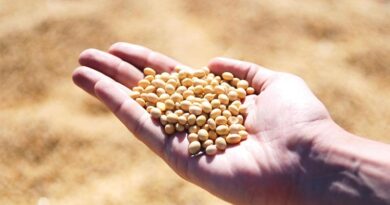
18 September 2026, Beijing: China imported 12.14 million tonnes of soybeans in August 2026, up 5.7 percent from July but down 1.1 percent from the 12.28 million tonnes brought in a year earlier, according to customs data reported this month. Cumulative imports for the first eight months of 2026 reached 74.11 million tonnes, marginally ahead of the 73.33 million tonnes recorded over the same period in 2025. The figures land just as Argentina’s Rosario Grains Exchange trimmed its own 2025/26 soybean harvest estimate and raised its outlook for corn, a combination that points to shifting production and trade patterns across the world’s two largest soybean exporters heading into the new South American planting season.
Analysts attributed August’s monthly rise in Chinese imports largely to Brazil’s bumper 2025/26 harvest, which has kept port logistics running smoothly and supplies flowing even as China’s pig-feed demand growth shows early signs of slowing. Liu Jinlu, an analyst at Guoyuan Futures, said a gradual decline in China’s breeding sow herd is likely to cap feed demand growth into the fourth quarter, while Rosa Wang of Shanghai JC Intelligence projected combined August to November arrivals of around 35 million tonnes, with a seasonal decline expected after that. Most analysts now expect China’s full-year 2026 soybean imports to come in flat or slightly below 2025’s record of 111.83 million tonnes.
Argentina shifts acreage toward corn as margins favour it
In Argentina, the Rosario Grains Exchange revised its 2025/26 soybean harvest estimate down to 47.8 million tonnes from a prior 48.0 million tonnes, a modest cut, while raising its corn harvest forecast to a range of 67.5 to 70.5 million tonnes from 66 million tonnes previously. The exchange said corn is gaining ground against soybeans in farmers’ planting decisions because of more favourable profitability, a shift that typically shows up first in exchange commentary before it is confirmed in final acreage figures once corn planting begins in the coming weeks. The exchange also lifted its wheat harvest forecast by 2.4 percent to 21 million tonnes, citing favourable early crop conditions ahead of harvest starting in November.
These shifts are unfolding against the backdrop of a forecast record-strength El Nino event, which meteorologists expect to peak in November or December with ocean temperatures potentially reaching 3.5 to 4.0 degrees Celsius above normal, above the previous record set in 2015 and 2016. Early indications point to broadly favourable planting conditions for Argentina and southern Brazil, though forecasters have flagged a heightened risk of severe weather and flooding in southern Brazil, while central Brazilian growing states such as Mato Grosso face a risk of prolonged dryness and temperatures exceeding 40 degrees Celsius. How that plays out over the next several months will matter more for 2026/27 output than any of this week’s incremental customs or exchange data.
Also Read: CropLife India Flags Narrowing Crop Protection Options for Farmers
Global Agriculture is an independent international media platform covering agri-business, policy, technology, and sustainability. For editorial collaborations, thought leadership, and strategic communications, write to pr@global-agriculture.com