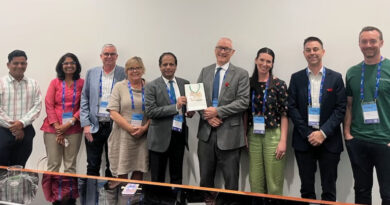
16 October 2026, US: Google DeepMind and the International Crops Research Institute for the Semi-Arid Tropics (ICRISAT) have partnered with research institutions to use artificial intelligence (AI) to accelerate the development of climate-resilient sorghum varieties and strengthen global food security.
The collaboration, supported by Google.org through the AI Collaborative for Food Security, also involves the HudsonAlpha Institute for Biotechnology and the Department of Genome Sciences at the University of Washington, Seattle.
The initiative aims to develop an open-access genetic atlas of sorghum, a climate-resilient and nutrient-rich crop widely cultivated in dryland regions. The resource will help researchers and plant breeders identify promising genetic combinations for developing improved varieties suited to changing climatic conditions.
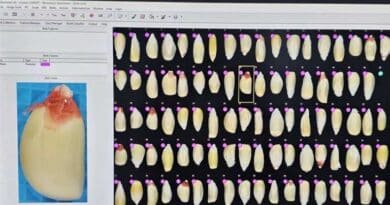
The project will draw on a representative sample from ICRISAT’s genebank, which holds more than 44,000 distinct seed collections from over 90 countries, including India. By combining advanced genetic analysis with machine learning, the partners aim to accelerate crop improvement compared with conventional breeding approaches that can take a decade or longer.
The genetic atlas is expected to support research into sorghum for multiple applications, including human nutrition, animal fodder and biofuel production. The open-access approach is intended to make the resource available to researchers and breeders worldwide.
Google DeepMind to Support Research Fellowship at ICRISAT
As part of the collaboration, Google DeepMind will support a three-year postdoctoral fellowship at ICRISAT. The fellowship marks Google DeepMind’s first such programme in India and its first outside the United Kingdom.
The research will also explore tools to characterise the genomes of other important crops, including chickpea, groundnut and pigeon pea, with the aim of extending AI-assisted genetic research beyond sorghum.
The initiative comes amid growing efforts to develop crops that can withstand climate variability while maintaining productivity and nutritional value. Sorghum and other millets are particularly relevant to dryland farming systems, where water scarcity and increasingly unpredictable weather patterns pose significant challenges to agricultural production.
Dr. Stanford Blade, Deputy Director General, Research & Innovation at ICRISAT, said the partnership would help apply AI to the challenges facing dryland agriculture.
“At ICRISAT, we are committed to advancing crop productivity, resilience, and sustainability in the drylands, especially as the world grows increasingly vulnerable to the effects of climate change. We are excited to partner with Google and bring AI’s potential to the mission of transforming dryland agriculture. We are honored to receive Google DeepMind’s first fellowship outside the UK. We aim for this collaboration to unlock the global potential of indigenous climate-resilient crops like sorghum, and to empower the agri ecosystem with cutting-edge tools that strengthen global food security and safeguard present and future generations.”
Google Expands AI-Based Agricultural Intelligence in India
Alongside crop research, Google is expanding the application of its Agricultural Understanding models, developed by its AnthroKrishi team, to support agricultural decision-making. Initially focused on India, the models now provide insights for 11 countries.
In Gujarat, technology company Amnex has integrated Google’s agricultural model APIs into the state government’s Krushi Pragati crop intelligence platform. According to Google, the platform supported more than 900 million SMS-based advisories for over 600,000 farmers in the state during the past year.
The advisories cover crop and soil health, pest and disease management, and weather patterns, supporting agricultural activities across more than 14 million hectares.
Nirav Shah, CEO of Amnex Infotech, said AI-powered agricultural models were helping address longstanding gaps in farm-level data.
“Agricultural decision-making has long been constrained by the lack of timely, farm-level data, making it difficult to deliver the right interventions at the right time. Google’s ALU and AMED models have helped solve this challenge, providing validated, real-time, parcel-level intelligence that is now powering India’s farmer-centric digital infrastructure. With this support, platforms like Gujarat’s Krushi Pragati have been able to improve farmer access to credit, crop yields, and so much more. We have been proud to partner with Google, and bring frontier AI to the fields, helping improve millions of lives and livelihoods across the country.”
Google is also working with OpenAgriNet, a global coalition seeded and led by the EkStep Foundation. The coalition has incorporated Google’s agricultural APIs into an analytics dashboard for agricultural administrators and is exploring their use in a broader application for the agricultural ecosystem.
The proposed application aims to connect agricultural information currently distributed across different sources, making it more accessible to farmers in their preferred languages. It could also support innovators developing specialised agricultural services and cooperatives seeking more detailed farm-level insights.
Google has announced that its Agricultural Understanding models are being made available in public preview, allowing developers, startups and researchers to explore applications tailored to local farming conditions and specific agricultural challenges.
The initiatives combine AI-assisted crop genetics with digital agricultural intelligence, highlighting the potential of these technologies to support crop improvement, climate adaptation and more informed decision-making across agricultural systems.
Global Agriculture is an independent international media platform covering agri-business, policy, technology, and sustainability. For editorial collaborations, thought leadership, and strategic communications, write to pr@global-agriculture.com