18 June 2026, Tunisia: As climate change and land degradation intensify across drylands, sustainable rangeland restoration is emerging as a critical pathway to safeguarding food systems, pastoral livelihoods, biodiversity, and long-term resilience.
Food systems are often depicted by fields of wheat, orchards, ranches, and irrigated cropland stretching to the horizon; rangelands are rarely featured.
Yet these vast landscapes, which cover more than half of the Earth’s terrestrial surface, support livestock systems that feed millions of people, sustain rural economies, conserve biodiversity, and store significant amounts of carbon in the soil, helping mitigate climate change.
The convergence of this year’s World Day to Combat Desertification and Drought theme, “Food. Feed. Fiber.” and the June focus of the International Year of Rangelands and Pastoralists (IYRP) 2026 on Sustainable Rangeland Use and Restoration is particularly timely.
Both point to the same question: what happens when the landscapes underpinning food, feed, and fiber begin to fail?
Across dry regions, climate change, recurrent droughts, unsustainable land use, and weak governance are accelerating land degradation. As vegetation declines and soils deteriorate, the impact extends well beyond the environment itself, setting off a chain reaction across livelihoods, food systems, and local economies.
The challenge is often framed as a battle against desertification; however, desertification is not the main problem so much as a warning sign that the landscape is losing its buffers against climate shocks, along with its ability to sustain people, livestock, and ecosystems.
Lessons learned from Tunisia demonstrate how sustainable rangeland use and restoration can be translated from concept into practice through appropriate governance, community engagement, and targeted restoration interventions.
Living Landscapes
For decades, restoration was largely treated as an engineering problem to be solved through tree planting, reseeding, and water-harvesting infrastructure. While these interventions are crucial, on their own, they hardly address the complex web of ecological and socioeconomic factors that drive degradation in the first place.
In Kebili, in Southern Tunisia, ICARDA and its partners are working within degraded pastoral systems by applying the concept of a Pastoral Living Landscape – an approach that treats landscapes as interconnected systems shaped by people, livestock, institutions, markets, and ecosystems.
The interconnected drivers of degradation demand equally interconnected restoration solutions. A landscape cannot be restored by vegetation alone if grazing pressures remain unmanaged. Likewise, water conservation measures will have a limited impact if local communities are excluded from decision-making, and new technologies are unlikely to succeed without governance systems that support their adoption and long-term management. Sustainable restoration, therefore, requires looking beyond individual interventions and focusing on the relationships that shape the landscape as a whole.
Restoring the System
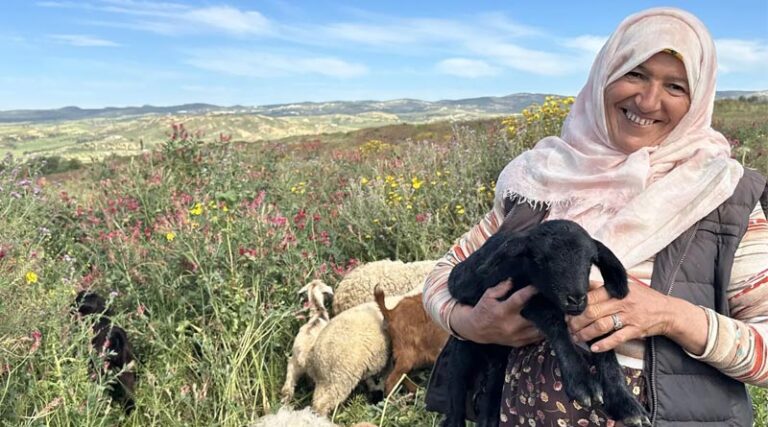
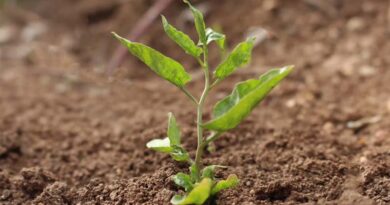
For ICARDA, that meant combining ecological restoration with community engagement, sustainable livestock management, local governance, and livelihood development. In Zaghouan, in central Tunisia, native forage species are being reintroduced to improve vegetation cover and enhance feed availability for livestock.
Early results show that reseeded and protected pastures can produce up to ten times more forage and support three times greater vegetation cover than degraded rangelands. Soil and water conservation measures are helping rangelands retain moisture, improve soil fertility, and restore ecological functions, with soil nitrogen levels increasing by 6 percent. Sustainable grazing practices are reducing pressure on already fragile ecosystems while extending grazing periods by up to five times, reducing reliance on costly supplemental feed. During favorable years, feeding costs were reduced by 65 percent. The local communities are simultaneously involved in identifying priorities, shaping restoration activities, and contributing local knowledge built over generations of living in dryland environments.
There is No Silver Bullet
One of the most important lessons emerging from rangeland restoration efforts is that no single innovation can reverse degradation on its own. Through our work across the Mediterranean’s drylands, ICARDA has found that successful restoration follows a sequence of six interconnected steps: building partnerships, understanding landscape conditions, defining shared objectives, designing integrated interventions, implementing locally adapted solutions, and continuously monitoring outcomes.
Restoration succeeds not because one intervention works, but because many interventions reinforce one another. In turn, moving restoration away from the search for a single breakthrough technology and toward a more realistic understanding that landscapes recover through collaboration, adaptation, and long-term stewardship.
A Foundation Hidden in Plain Sight
Vast and remote, rangelands are often treated as the spaces between places. Compared to forests or croplands, they receive little attention until they begin to fail. Yet for millions of people, they are the foundation of livelihoods, food systems, and resilience.
The challenge facing rangelands is not only to reverse degradation, but to safeguard the long-term health and productivity of the landscapes that sustain food, feed, and fiber production.
Global Agriculture is an independent international media platform covering agri-business, policy, technology, and sustainability. For editorial collaborations, thought leadership, and strategic communications, write to pr@global-agriculture.com