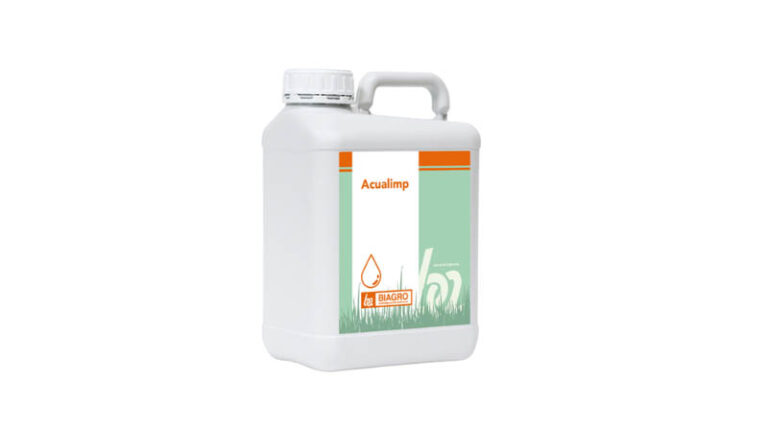
Acualimp — Flocculant Algaecide
02 August 2026, Valencia: Algae growth within irrigation systems and water storage infrastructure represents a persistent operational challenge for many commercial growing operations, capable of clogging filters, fouling emitters, and generally compromising the efficiency and reliability of water delivery systems that crops depend on throughout the growing season. Acualimp was formulated specifically to address this challenge, offering a cationic flocculant algaecide designed for the control of floating algae and black algae within irrigation water systems.
The cationic chemistry underlying Acualimp’s mode of action reflects a specific approach to algae control that combines direct algicidal activity with a flocculation function. Cationic compounds carry a positive electrical charge, which allows them to interact effectively with algae cells and other suspended particulate matter in water, which typically carry a negative surface charge. This charge interaction supports both direct disruption of algae cell structure and function, contributing to the product’s algicidal activity, and a flocculation effect, where the cationic compound causes suspended algae and other fine particulate matter to aggregate into larger clumps, or flocs, that can then be more readily filtered out or that settle out of suspension more effectively than the original finely dispersed particles.
Floating algae and black algae represent two distinct but commonly encountered problem categories within irrigation water management. Floating algae, often associated with nutrient-rich water conditions and adequate light exposure in open water storage systems like reservoirs or ponds, can form dense surface mats that not only clog filtration systems when drawn into irrigation infrastructure but can also affect water quality more broadly, including oxygen depletion issues in severe cases. Black algae, meanwhile, often develops within the more enclosed environment of irrigation pipes, drip lines, and emitters, where it can form persistent biofilms that progressively restrict water flow and, in severe cases, cause complete emitter blockage, undermining the uniformity of irrigation water delivery across a field or planting.
The practical consequences of unmanaged algae growth within irrigation systems extend well beyond the algae itself. Clogged filters require more frequent cleaning and maintenance, increasing labor demands and operational costs. Partially or fully blocked emitters create uneven water distribution across a planting, meaning some areas of the crop may receive inadequate irrigation while filtration and system pressure struggles to compensate for the restricted flow elsewhere — a problem that can directly translate into uneven crop growth and performance across an otherwise uniformly managed field. For operations relying on precise, uniform fertigation delivery as a core component of their nutrition strategy, algae-related emitter blockage can undermine the accuracy and effectiveness of that entire nutritional program, not just the water delivery itself.
Given these compounding operational risks, many growers incorporate algae management as a routine, preventive component of their irrigation system maintenance program rather than addressing algae growth only reactively after significant blockage or performance problems have already developed. Regular, scheduled treatment with a product like Acualimp, integrated into standard irrigation system maintenance protocols, helps maintain consistent water flow and filtration performance, protecting the broader investment in fertigation infrastructure and the precision nutrition programs that infrastructure supports.
Application of Acualimp typically involves introduction into the irrigation water system at appropriate points to achieve effective distribution and contact with the algae populations present, whether in open water storage sources or within the closed irrigation delivery system itself, with specific application approach depending on the particular configuration of a grower’s water source and irrigation infrastructure.
For growers managing irrigation systems susceptible to algae-related fouling and blockage — particularly common in operations drawing from open water storage sources or in warmer climate conditions that favor more vigorous algae growth — Acualimp offers a dual-action flocculant algaecide solution designed to both control the underlying algae population and support more effective filtration and removal of the resulting biological material, helping maintain the clean, reliable water delivery that underpins consistent irrigation and fertigation performance across the growing season.
Also Read: Bayer Launches New Insecticide Trance for Cotton in India
Global Agriculture is an independent international media platform covering agri-business, policy, technology, and sustainability. For editorial collaborations, thought leadership, and strategic communications, write to pr@global-agriculture.com