Paraquat, the world’s most controversial herbicide, has been outlawed by 74 countries on evidence linking it to Parkinson’s disease, acute poisoning deaths, and decades of corporate concealment. The United States is not one of them.
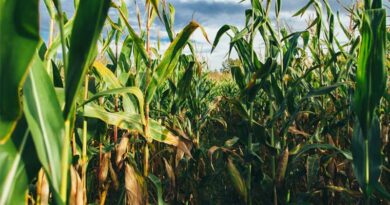
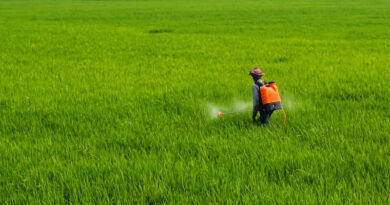
21 May 2026, Washington: Paraquat dichloride, sold most widely under the brand name Gramoxone, was first introduced commercially in 1962 by Imperial Chemical Industries in the United Kingdom. Sixty-four years later, the compound remains one of the most used herbicides on the planet and, simultaneously, one of the most banned. As of 2026, a WUFT analysis confirmed that 74 countries have prohibited its use. Yet in the United States, paraquat use tripled between 2008 and 2018. Approximately 8 million pounds are sprayed annually on soybean, corn, and cotton fields, and the US Environmental Protection Agency (EPA) has reapproved its registration as recently as 2024 (US EPA, Paraquat Dichloride Registration Review, 2024).
Why Farmers Adopted It
To understand why paraquat remains in use despite everything known about it, it helps to understand what made it transformative when it arrived. When ICI launched Gramoxone in 1962, conventional weed control relied heavily on mechanical tillage, which was labour-intensive, time-consuming, and damaging to soil structure.
Paraquat offered something genuinely new: a fast-acting, non-selective contact herbicide that killed green plant tissue on contact within hours, left no active residue in the soil, and allowed farmers to plant into treated fields almost immediately. Unlike many herbicides that travel through the soil and affect roots, paraquat binds tightly to soil particles and becomes chemically inactive on contact with the ground, meaning it does not leach into groundwater or persist in the food chain in the way several contemporaneous chemicals did.
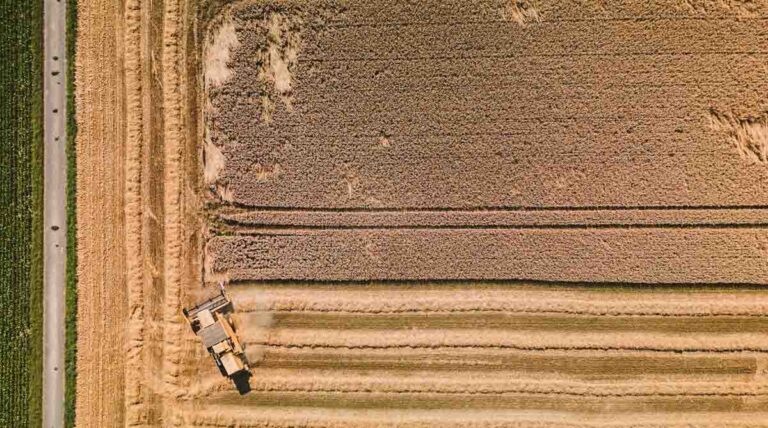
These properties made paraquat the cornerstone of what agronomists called conservation tillage, or no-till farming. By killing weeds chemically rather than mechanically, farmers could leave crop residue undisturbed on the soil surface, dramatically reducing erosion, retaining moisture, and cutting fuel costs. Across large-scale operations in the United States, Brazil, and Australia, adoption of no-till systems built around paraquat was credited with reducing topsoil loss on millions of acres of arable land. For smallholder farmers in parts of Asia and Africa, the low cost per application made it one of the few affordable tools for weed management at scale.
Paraquat also proved valuable as a harvest aid, used to desiccate crops such as soybean and cotton before mechanical harvesting, improving uniformity of drying and reducing processing costs. As glyphosate-resistant weed species have spread across North and South American farmland over the past two decades, paraquat’s different mode of action has made it one of the few remaining chemical tools effective against those resistant varieties, which is the primary argument still made by its proponents today (Syngenta product documentation; US farm industry submissions to EPA, 2022-2024).
The EPA itself warns that one sip of paraquat can kill. There is no antidote. Ingestion triggers rapid, progressive multi-organ failure, primarily through destruction of lung tissue caused by reactive oxygen species. In parts of Asia and the Pacific, paraquat has historically been responsible for a large share of suicide deaths precisely because it is cheap, fast, and lethal. Research documented that over several decades in Samoa, approximately 70 percent of suicides were committed using the herbicide (Mew et al., BMC Public Health, 2025).
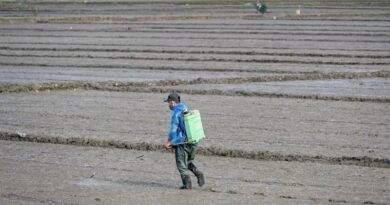
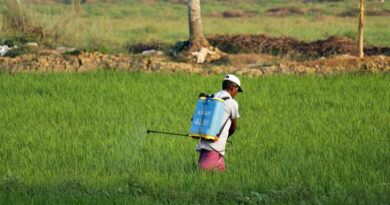
The long-term concern, however, is not acute ingestion. It is chronic low-dose exposure and its link to Parkinson’s disease, the world’s fastest-growing neurodegenerative condition. The mechanism is well-established at the cellular level: paraquat generates the same reactive oxygen species inside dopamine-producing neurons that it generates inside plant cells, destroying them progressively. Paraquat is routinely used in laboratory research specifically to induce Parkinson’s in animal models (AIP Conference Proceedings, 2025).
The Science
Epidemiological evidence has accumulated for three decades. A 1997 Taiwanese case-control study found greater prevalence of Parkinson’s disease among those exposed to paraquat. A landmark 2024 study published in the International Journal of Epidemiology by Paul and colleagues reported an odds ratio of 2.15 (95% CI: 1.46 to 3.19) for Parkinson’s disease among individuals with occupational paraquat exposure, an association robust to latency period adjustment and covariate analysis. Research drawing on the US National Institutes of Health-funded Agricultural Health Study found that workers in proximity to sprayed areas were more than twice as likely to develop Parkinson’s (National Library of Medicine, peer-reviewed).
A comprehensive 2025 systematic review in BMC Public Health (Mew et al., DOI: 10.1186/s12889-025-23830-w) examined regulatory outcomes across multiple countries and found that national bans reduced paraquat poisoning and deaths without measurable impact on agricultural output. Brazil banned paraquat in 2020 and remained a global leader in soybean and corn exports in the years that followed.
What Syngenta Knew
In October 2022, The New Lede and The Guardian published hundreds of pages of internal Syngenta documents obtained through litigation discovery. The documents showed that ICI, Syngenta’s corporate predecessor, had internal research from the 1960s and 1970s demonstrating that paraquat accumulates in human brain tissue and triggers neurological effects consistent with Parkinson’s disease. One internal scientist described the situation as “a quite terrible problem.”
Rather than disclosing this to regulators, the documents show the company withheld findings from the EPA, engaged a reputation management firm called v-Fluence to monitor scientific discourse, and assembled what internal communications called a “SWAT team” to counter independent researchers whose published findings threatened the company’s freedom to sell the product (Environmental Working Group, November 2022). Syngenta has denied that scientific evidence establishes a causal link, characterising independent research as “fragmentary and inconclusive.” Internal records contradict that position.
Litigation
More than 8,000 lawsuits are currently pending against Syngenta and Chevron in US federal courts, brought by farmers and farmworkers diagnosed with Parkinson’s disease after years of paraquat exposure. Syngenta has settled every case that has reached the eve of trial, including the August 2025 case of Douglas Nemeth v. Syngenta, a farmer with more than 20 years of exposure, settled weeks before the Philadelphia trial date (The New Lede, July 2025). The company has never allowed a paraquat case to reach a jury verdict.
In March 2026, Syngenta announced it would cease paraquat manufacturing at its Huddersfield, UK facility by June 2026, citing commercial reasons. Legal observers widely viewed the decision as a strategic exit from a product whose litigation exposure had become unmanageable with more than 8,000 active cases pending (California Personal Injury Lawyers Blog, March 2026).
The Export Paradox
Among the more striking dimensions of the paraquat story is that the countries producing the most of it banned it domestically long ago. Switzerland, where Syngenta is headquartered, banned paraquat in 1989. The UK banned it in 2007 but continued manufacturing it for export until 2026. China, through ChemChina’s ownership of Syngenta, banned domestic use in 2017 while continuing to produce it for the US and other export markets. A 2020 investigation by Public Eye and Unearthed found British authorities had approved the export of more than 28,000 tonnes of paraquat mixture in 2018 alone, shipped to countries in South America, Asia, and Africa. This practice, which the investigation described as a flagship example of Europe exporting banned substances to less-regulated markets, has continued for nearly two decades.
Where It Stands In 2026
In the United States, 13 states introduced legislation in 2026 to ban or restrict paraquat. Active bills remain in Illinois, Iowa, Missouri, Minnesota, New York, New Jersey, Vermont, and Pennsylvania. Vermont’s House passed its bill in March 2026. At the federal level, proposed Farm Bill language would pre-empt state action entirely, shielding paraquat from any sub-federal regulation. Wayne County, Mississippi, home to a major paraquat processing facility, ranks in the top seven percent of all US counties for Parkinson’s disease deaths recorded between 2018 and 2024 (Investigate Midwest, May 2026).
Globally, the direction is unambiguous. The manufacturer that produced most of the world’s supply is leaving the market. The countries that hosted its production banned it at home. Seventy-four nations have drawn the regulatory conclusion that the scientific and public health case against paraquat is sufficient. The remaining question, primarily for US regulators, is how much longer the evidence needs to accumulate.
Global Agriculture is an independent international media platform covering agri-business, policy, technology, and sustainability. For editorial collaborations, thought leadership, and strategic communications, write