Brazil Was World’s Second-Largest Importer of EU-Banned Pesticides in 2024, Oxfam Report Finds
24 October 2026, Brazil: Brazil imported about 15,000 tonnes of pesticides banned for use inside the European Union in 2024, making it the second-largest destination worldwide for these products after the United States, according to a new report from Oxfam Novib published on October 16, 2026.
The report, titled “Toxic Trade: The European Union’s double standard on highly hazardous pesticides,” was written by Anouk Franck, Eline Achterberg and Jacqueline Schuiling and runs 40 pages, with English, Spanish and Portuguese editions. It argues that EU-based agrochemical manufacturers continue producing pesticides the bloc judges too hazardous for use within its own borders, then export them to dozens of other countries, including Brazil, South Africa, Uganda and Peru.
According to the report, EU member states exported nearly 122,000 tonnes of these banned pesticides in 2024, more than double the volume shipped in 2018. In total, 93 countries received hazardous pesticides from EU exporters that year, and Oxfam says 75 percent of them are low or middle income countries in the Global South.
The report’s Brazil-specific figures, independently reported by Agência Brasil and by the Brazilian outlet Visão Agro, add detail to the national picture. Highly hazardous pesticides (HHPs), a World Health Organization and FAO classification covering products with severe acute toxicity, chronic health effects or environmental persistence, account for 49 percent of all pesticide sales in Brazil, compared with 12 percent in Germany. Oxfam also found that six of Brazil’s ten best-selling pesticides are banned for use in the EU.
Globally, Oxfam estimates that four companies control 61 percent of the pesticide market and earned a combined 2.7 billion euros (roughly 15.4 billion reais) from HHP sales. The report does not name the four companies in the portions available for review, though it ties their revenue to the broader pattern of hazardous products being marketed heavily in export-oriented farming regions.
Brazil’s own registration data, cited in the report’s Brazilian coverage, shows the domestic market continuing to expand regardless of the controversy: the country approved 725 new pesticide products in 2025, up from 663 in 2024, an increase of roughly 9.4 percent.
Viviana Santiago, director of Oxfam Brasil, said in a statement accompanying the report that it is not acceptable for the European Union to ban certain pesticides to protect its own population while allowing the same substances to be manufactured and exported elsewhere. She called for an end to exports of pesticides banned domestically in the EU, and for trade rules that prioritize health and environmental protection over commercial interests.
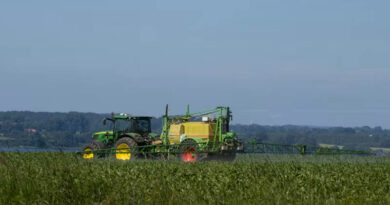
Oxfam links the pattern to Brazil’s large, export-oriented monoculture sectors, particularly soybeans, coffee and sugarcane, where it says HHPs are applied by tractor, aircraft and increasingly by drone, sometimes near forested areas. Brazil’s Ministry of Agriculture, Livestock and Supply did not respond to Agência Brasil’s request for comment on the report’s findings by the time of publication.
The report arrives as Brazil works through a separate overhaul of its pesticide registration system, with the agriculture, health and environmental ministries moving toward a unified electronic platform for product evaluations, a process companies must fully adopt by mid-2027.
Also Read: India: FSSAI Proposes New Residue Limits for Acetamiprid and Imidacloprid in Tea
Global Agriculture is an independent international media platform covering agri-business, policy, technology, and sustainability. For editorial collaborations, thought leadership, and strategic communications, write to pr@global-agriculture.com