18 November 2026, Beijing, CN: China’s technical-grade glyphosate price eased only slightly in the first ten days of November even as several of the raw materials used to make the herbicide became markedly cheaper, according to data the National Bureau of Statistics published on November 14, 2026.
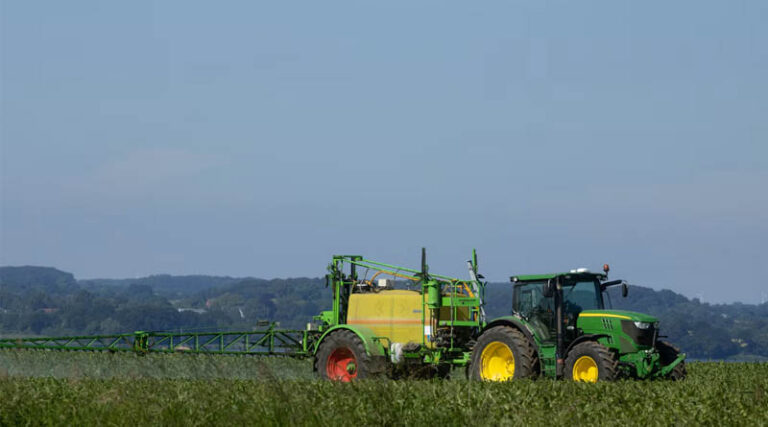
The bureau’s twice-monthly bulletin on market prices for important means of production, covering November 1 to 10, 2026, put the price of 95 percent technical-grade glyphosate at 29,000.0 yuan (about $4,349) per tonne, down 35.7 yuan from the previous ten-day period in late October, a decline of 0.1 percent. Glyphosate, the world’s most widely used herbicide and a product in which China holds the dominant share of global manufacturing capacity, was the only pesticide tracked among the bureau’s 50 benchmark industrial and agricultural products.
The near-flat glyphosate reading came against a backdrop of sharper declines in several chemical inputs that feed into pesticide manufacturing. Sulfuric acid, used in glyphosate and other agrochemical production, fell 6.9 percent to 1,484.6 yuan (about $223) per tonne. Caustic soda dropped 5.3 percent to 584.2 yuan (about $88) per tonne, and glacial acetic acid, a feedstock for several herbicide intermediates, fell 5.5 percent to 4,089.3 yuan (about $613) per tonne. Methyl alcohol, another common solvent and intermediate in agrochemical synthesis, slipped 0.3 percent to 3,591.5 yuan (about $539) per tonne.
Mixed Trends Across Agricultural Inputs
Overall, the bulletin showed a broadly softer price environment for industrial inputs heading into the second half of November, with 16 of the 50 tracked products rising, 32 falling and two unchanged compared with the previous ten-day period. Among fertilizers grouped alongside glyphosate in the bureau’s agricultural means of production category, urea climbed 1.2 percent to 1,770.0 yuan (about $265) per tonne, while compound fertilizer based on potassium sulfate fell 2.4 percent to 3,406.0 yuan (about $511) per tonne, monoammonium phosphate declined 1.8 percent to 3,630.2 yuan (about $544) per tonne, and potassium chloride at the port eased 0.3 percent to 2,769.5 yuan (about $415) per tonne.
The gap between a nearly unchanged glyphosate selling price and sharply cheaper sulfuric acid and caustic soda, both significant cost components in glyphosate’s main industrial production routes, points to potential relief on the margin side for Chinese technical-grade manufacturers even without a corresponding rise in the price they can charge for the finished herbicide. Methanol and glacial acetic acid, which also feed into broader agrochemical and intermediate chemical production, posted comparatively smaller declines over the same ten-day window.
The National Bureau of Statistics groups its 50 tracked commodities into nine categories spanning ferrous and nonferrous metals, chemical products, petroleum and gas, coal, non-metallic minerals, agricultural products mainly used for processing, agricultural means of production, and forest products, with glyphosate the sole pesticide entry tracked under the agricultural means of production heading alongside fertilizers and other farm input chemicals.
Global Agriculture is an independent international media platform covering agri-business, policy, technology, and sustainability. For editorial collaborations, thought leadership, and strategic communications, write to pr@global-agriculture.com