Bayer’s Rajvir Rathi and BASF’s Giridhar Ranuva appointed Vice Chairmen as association sets science-led agenda for Indian agriculture
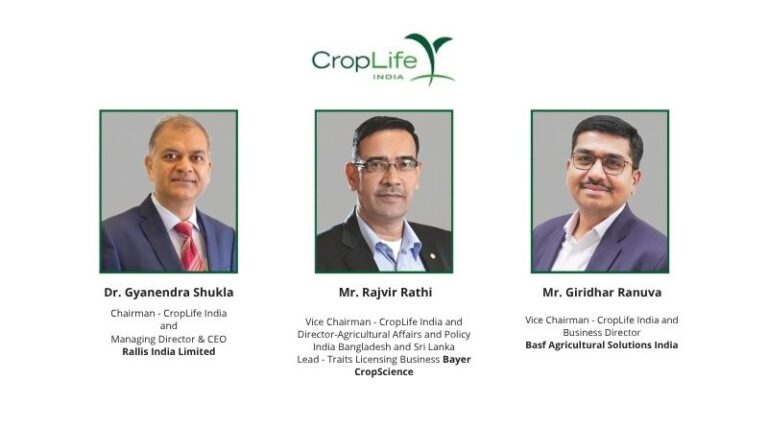
23 September 2026, New Delhi: CropLife India has elected Dr. Gyanendra Shukla, Managing Director and CEO of Rallis India Limited, as Chairman of its Board, alongside the appointment of Rajvir Rathi of Bayer Crop Science and Giridhar Ranuva of BASF Agricultural Solutions India as Vice Chairmen.
The appointments were announced following the association’s 46th Annual General Meeting in New Delhi.
CropLife India represents 17 research and development-led companies operating in the crop protection sector. According to the association, its members account for approximately 75% of India’s domestic crop protection market and around 95% of crop protection molecules introduced in the country.
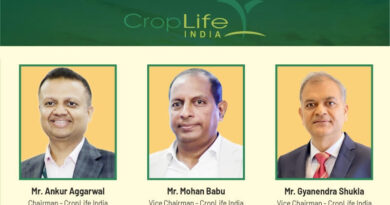
Gyanendra Shukla previously served as Vice Chairman from October 2025 and succeeds Ankur Aggarwal of Crystal Crop Protection, who served as Chairman for two terms beginning in 2024. During his tenure, Aggarwal led the association’s engagement with the Indian Government on regulatory issues, including the Draft Pesticides Management Bill, 2025.
The association also acknowledged the contribution of outgoing Vice Chairman Mohan Babu Boppana of Bayer CropScience.
Leadership brings extensive industry experience
Gyanendra Shukla has more than 35 years of experience spanning crop protection and seeds, with professional experience across India, the Asia-Pacific region and Africa.
Rajvir Rathi brings more than two decades of experience in regulatory and government affairs. He has also led CropLife India’s Advocacy & Communications Committee since its establishment.
Giridhar Ranuva has 23 years of industry experience, including 16 years with BASF Agricultural Solutions across multiple regions. He currently heads BASF Agricultural Solutions’ business in India.
The new leadership has outlined an agenda focused on agricultural innovation, regulatory frameworks, product stewardship, climate resilience and faster access to technologies for farmers.
“Over the next decade, India will need to produce significantly more food from essentially the same land. Closing that gap will require science, innovation and faster adoption at scale,” Shukla said.
He added that India needs to strengthen its capacity not only to develop new agricultural technologies but also to accelerate their adoption among farmers. Shukla also highlighted the importance of regulatory protection for safety and efficacy data generated during product development and registration.
According to Shukla, the proposed Pesticides Management Bill could provide an opportunity to strengthen India’s regulatory framework, with the industry working alongside the Government on its implementation.
Crop protection stewardship and traceability
Rathi said CropLife India would continue to emphasise responsible use of crop protection products and product traceability across distribution channels.
“Safe use on the farm is what keeps food safe on the plate,” Rathi said, adding that farmers should be able to purchase crop protection products with confidence that they are genuine and traceable, whether through traditional dealer networks or digital platforms.
He said science and stewardship would remain central to the association’s positions and its engagement with regulators.
Climate change reshaping pest management
Ranuva highlighted the changing dynamics of pest pressure as another priority for the sector.
“Climate change is rewriting the pest calendar,” he said, noting that pests may emerge earlier, persist for longer periods and expand into new geographic areas.
He pointed to the growing role of integrated approaches combining conventional crop protection, biologicals, drones and digital advisory tools.
For smallholder farmers in particular, timely access to a broader range of effective technologies could become increasingly important as climate variability alters pest and disease patterns.
CropLife India said it will continue working with the Government, scientific institutions and farmers on initiatives aimed at improving agricultural productivity while supporting safe and sustainable crop protection practices.
Global Agriculture is an independent international media platform covering agri-business, policy, technology, and sustainability. For editorial collaborations, thought leadership, and strategic communications, write to pr@global-agriculture.com