El Niño Could Reshape India’s Herbicide Market in 2026. Is the Crop Protection Industry Ready?
21 April 2026, New Delhi: India’s crop protection industry is approaching the 2026 Kharif season under heightened climate scrutiny. With the Agriculture Ministry reviewing preparedness measures and the India Meteorological Department projecting below-normal monsoon rainfall at 92 per cent of the long period average, alongside the possibility of El Niño conditions, the season is being viewed not merely as a weather event but as a commercial turning point for agricultural inputs.
For the herbicide segment, the implications could be significant. Weed pressure rarely disappears in a weak monsoon year; instead, it changes in timing, intensity and geography. That means companies relying only on historical sales cycles may face disruptions, while those using regional intelligence, faster supply systems and stronger farmer engagement may find new growth opportunities.
Why Herbicides Face a Unique El Niño Challenge
Among all crop protection categories, herbicides are particularly sensitive to rainfall behaviour, sowing progress and soil moisture. Insecticides often respond to pest outbreaks, while fungicides are linked to humidity and disease pressure. Herbicides, however, depend heavily on the moment weeds emerge, the timing of crop establishment and whether farmers can enter fields when needed.
If rains are delayed or erratic, herbicide demand may not decline uniformly. Instead, sales can shift suddenly from pre-emergence to post-emergence products, from premium programmes to lower-cost alternatives, or from one region to another. This makes forecasting more complex and increases the value of agile decision-making.
Delayed Sowing Could Disturb Traditional Demand Cycles
One of the first consequences of El Niño risk is delayed sowing. In crops such as soybean, cotton, maize and pulses, planting often begins only after sufficient soil moisture is available. If rainfall arrives late, herbicide purchases are also delayed, compressing demand into a much shorter selling window.
For manufacturers and distributors, this can create pressure on logistics, stock placement and retailer servicing. Companies that wait for visible demand may lose valuable market time, while those positioned in advance can respond faster.
Weed Pressure May Become Highly Localised
A weak monsoon does not always mean uniformly dry conditions. Some districts may receive timely showers, while nearby areas remain moisture-stressed. This can create highly uneven weed emergence across regions.
In such a scenario, national sales plans become less useful than district-level execution. A company may see strong demand in one cluster and weak movement in another within the same state. Success will depend on local visibility rather than broad seasonal assumptions.
Soybean Regions Could Become the Biggest Test Market
Central India’s soybean belt, particularly Madhya Pradesh and Maharashtra, could become one of the most closely watched herbicide markets this season. Soybean acreage is highly dependent on early rains, and any sowing delay can quickly alter product demand.
If planting shifts later than usual, demand may move away from early pre-emergence applications toward post-emergence rescue solutions. Companies with strong presence in soybean districts may need to prepare for a very different product mix than in a normal monsoon year.
Paddy May Stay Stable, But Strategies Could Change
Government discussions have indicated that paddy remains relatively resilient due to irrigation expansion and stronger preparedness systems. Even so, weed management strategies in rice may evolve depending on transplanting schedules, labour availability and local water conditions.
Where labour becomes expensive or water is constrained, direct-seeded rice systems may receive greater attention. That could increase demand for specialised herbicide programmes suited to those cultivation methods.
Cotton and Maize Will Reward Speed and Precision
In cotton and maize, weed competition in the early crop stage can significantly affect yields. Even short delays in weed control may reduce farm productivity. In an uncertain monsoon year, growers will need quick access to products and precise advisory support.
This creates an advantage for companies that can combine fast distribution with clear field recommendations rather than simply supplying inventory.
Global Best Practices Offer a Roadmap for India
Across Latin America, Australia and other climate-sensitive agricultural markets, leading crop protection companies no longer treat weather as a background variable. They integrate rainfall data, soil moisture signals and sowing trends into commercial planning throughout the season.
Indian companies can draw from the same playbook. Demand forecasting should become dynamic and regularly updated rather than fixed before the season begins. Inventory should move closer to high-risk zones before demand spikes. Farmer communication should focus on complete weed management programmes rather than single-product selling. Retailers should be used as intelligence partners, helping companies understand real-time field conditions.
District-Wise Rainfall Tracking and Smarter Inventory Allocation Will Be Critical
Agrochemical companies must also move beyond conventional sales tracking and adopt district-wise rainfall intelligence as a core commercial tool during an El Niño season.
Weekly monitoring of rainfall distribution, sowing progress and soil moisture trends can help companies decide where inventory should be liquidated quickly, where fresh allocation is required and where demand is likely to soften.
Instead of merely pushing volumes into the channel, the sharper strategy is to deploy products in locations where each litre or kilogram can maximise treated area and deliver visible farm outcomes. In a volatile monsoon year, smarter allocation based on field realities may prove far more valuable than higher unsold stock in low-activity markets.
Preparedness Must Extend Beyond Products
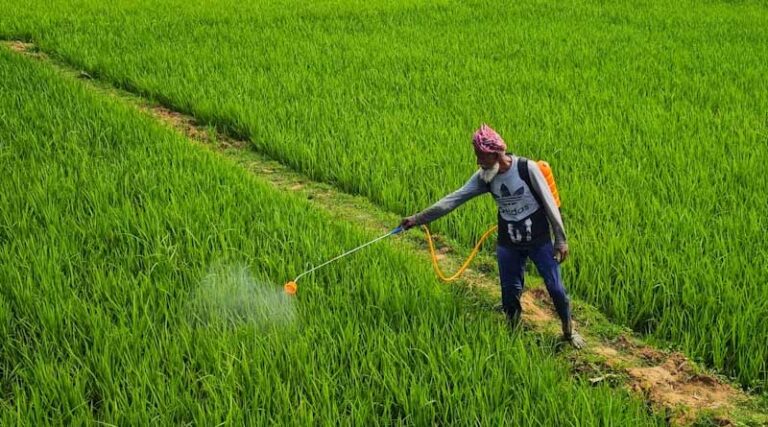
An El Niño season can also increase the risk of incorrect herbicide use. Under pressure, farmers may spray at the wrong stage, reduce doses, repeat applications unnecessarily or use unsuitable tank mixes. Such mistakes can damage yields and weaken trust in brands.
This makes stewardship essential. Companies that invest in training on timing, moisture conditions, nozzle selection and safe application practices can protect both farmer outcomes and long-term market reputation.
Agriculture Ministry’s Preparedness
The Agriculture Ministry has already emphasised contingency planning, district-level preparedness, seed reserves and continuous monitoring. For the private sector, that sends a clear signal: resilience is no longer optional.
If public systems are preparing at district level, the crop protection industry must do the same. Firms that continue to operate only through broad annual targets may find themselves outpaced by more responsive competitors.
Opportunity Can Emerge From Volatility
Climate uncertainty often creates disruption, but it can also accelerate change. Labour shortages may increase herbicide adoption. Farmers may seek more flexible post-emergence solutions. Retailers may strengthen loyalty toward companies that maintain uninterrupted supply. Advisory-led premium brands may gain greater trust.
In this sense, El Niño risk is not only a defensive challenge, it may also be a strategic opening.
Also Read: PHDCCI Organises Bharat Spices Conclave 2026, Sets Roadmap to Double India’s Spice Economy
Global Agriculture is an independent international media platform covering agri-business, policy, technology, and sustainability. For editorial collaborations, thought leadership, and strategic communications, write to pr@global-agriculture.com