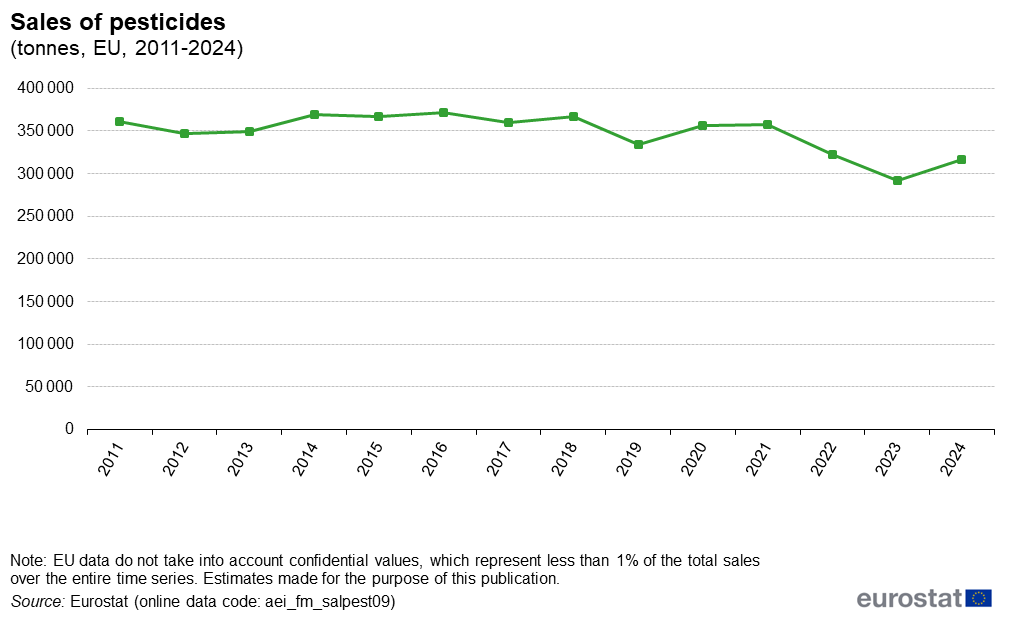
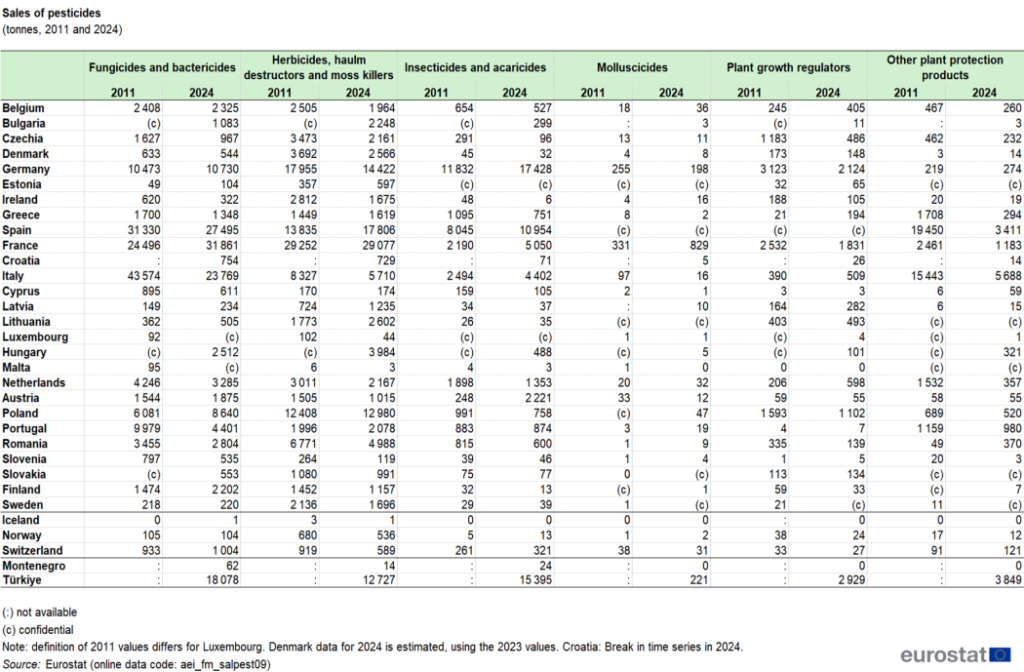
16 May 2026, EU: Sales of pesticides in the European Union (EU) increased to about 316,000 tonnes in 2024, marking an 8% rise compared to 2023. Despite the rebound, pesticide sales remained the second-lowest recorded since the data series began in 2011 and were still 12% below the 2011-2021 average.
The increase in pesticide sales during 2024 was largely linked to agri-meteorological conditions across Europe. Wet weather conditions during the year increased the incidence of humidity-related pathogens, resulting in higher demand for fungicides and molluscicides. Among all pesticide categories, fungicides and molluscicides recorded the highest increase in sales volumes during the year.
Fungicides and Bactericides Continue to Dominate EU Pesticide Market
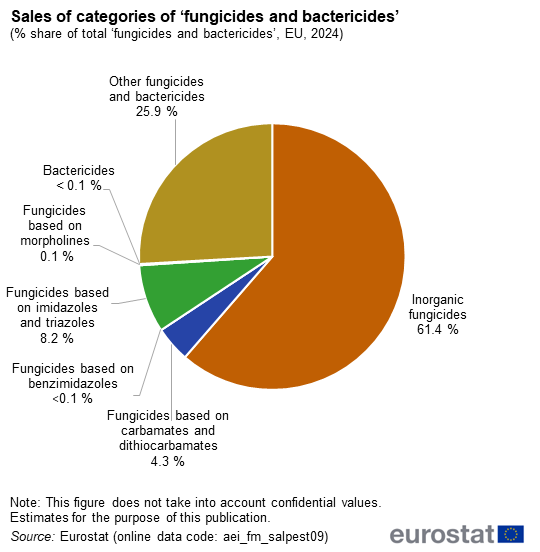
The pesticide market in the EU continued to be dominated by the ‘fungicides and bactericides’ category in 2024. This group accounted for 40% of the total pesticide sales volume in the region. The second-largest category was ‘herbicides, haulm destructors and moss killers,’ which represented 35% of overall sales.
The category ‘insecticides and acaricides’ contributed 17% of total pesticide sales in 2024. Meanwhile, molluscicides, plant growth regulators and other plant protection products together represented less than 10% of the overall sales volume.
Over the longer reference period between 2011 and 2024, fungicides and bactericides, along with herbicides and haulm destructors, consistently remained the largest pesticide groups sold in the EU market.
France, Spain, Germany and Italy Lead Pesticide Sales
France, Spain, Germany and Italy recorded the highest pesticide sales volumes across most major substance groups in 2024. These countries also represent the largest agricultural producers in the EU.
Collectively, the four countries account for 52% of the EU’s total utilised agricultural area (UAA) and 49% of the EU’s total arable land. Their extensive agricultural activity continues to influence overall pesticide consumption trends within the region.
Country-level analysis was based on 21 EU member states where complete and non-confidential pesticide sales data were available for both 2011 and 2024. These countries included Belgium, Czechia, Denmark, Germany, Ireland, Greece, Spain, France, Italy, Cyprus, Latvia, Lithuania, Hungary, the Netherlands, Austria, Portugal, Romania, Slovenia, Slovakia, Finland and Sweden.
Wet Weather and Regulatory Changes Influenced 2024 Market Trends
The rebound in pesticide sales in 2024 was influenced by multiple factors beyond weather-related disease pressure. Regulatory developments across the EU also shaped market dynamics during the year.
Changes in the regulatory status of active substances, including product withdrawals, new authorisations and uncertainty around approval renewals, affected purchasing patterns. Some withdrawals were linked to health concerns associated with certain substances.
Market conditions also shifted during 2024, with more competitive pricing compared to 2023 supporting higher sales volumes in some categories. In addition, agricultural practices such as crop rotation, expansion of cultivation areas for certain crops and evolving pest management strategies contributed to varying pesticide demand trends across EU member states.
Contrasting Trends Seen Across EU Countries Since 2011
While EU pesticide sales increased in 2024 compared to the previous year, long-term trends across member states showed contrasting developments.
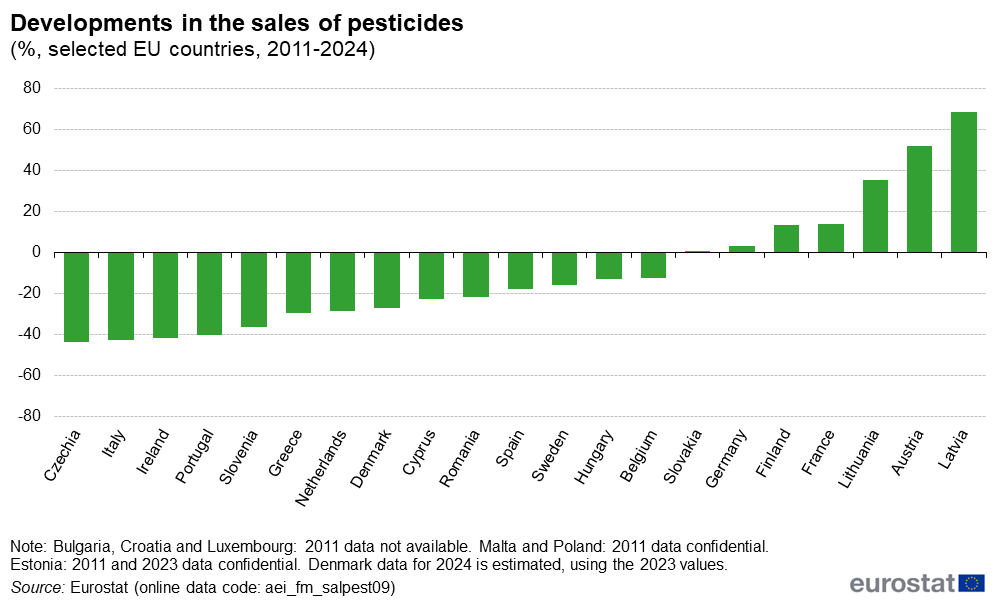
Between 2011 and 2024, pesticide sales volumes declined in 14 EU countries. Czechia recorded the sharpest decline at 44%, followed by Italy at 43%, Ireland at 42% and Portugal at 40%.
In contrast, pesticide sales volumes increased in Germany, Finland, France, Lithuania, Austria and Latvia over the same period. Slovakia recorded almost no change in pesticide sales volumes.
The report noted that relatively sharp increases in Lithuania and Latvia partly reflected growth from low absolute sales levels. It also highlighted that Germany and Austria report significant volumes of inert gases such as carbon dioxide and nitrogen, used in the storage of agricultural products, which inflate the total pesticide sales figures in these countries.
Inorganic Fungicides and Glyphosate-Based Herbicides Hold Major Shares
Within the fungicides and bactericides category, inorganic fungicides accounted for 61.4% of total sales in 2024. These products include copper compounds, inorganic sulphur and other inorganic fungicides, several of which are also permitted in organic farming systems.
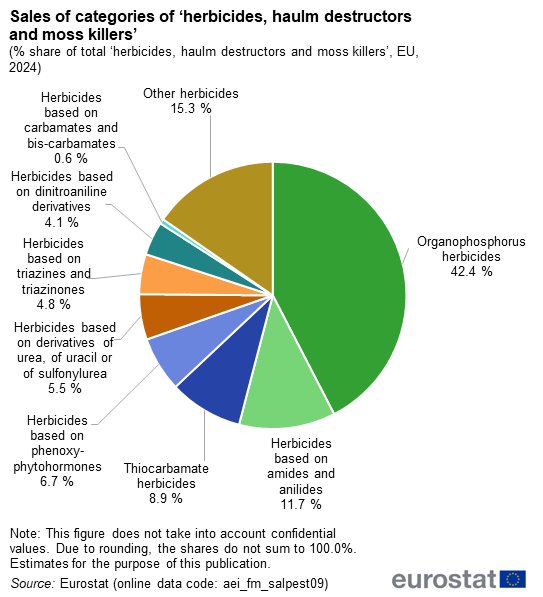
In the herbicides category, organophosphorus herbicides, including glyphosate, represented 42.4% of total EU sales within the ‘herbicides, haulm destructors and moss killers’ group during 2024.
Other herbicides, including aryloxyphenoxy-propionic, pyridyloxyacetic-acid and triketone herbicides, accounted for another 15.3% of herbicide sales. Herbicides based on amides and anilides represented 11.7% of sales within the same category.
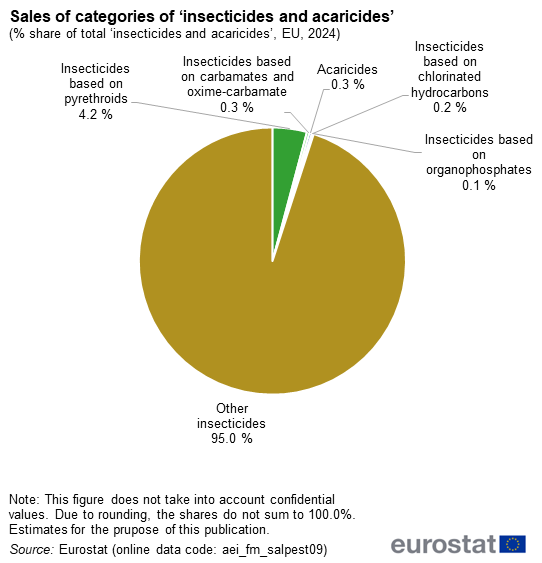
The ‘insecticides and acaricides’ category was heavily dominated by ‘other insecticides,’ which accounted for 95% of total sales in the group during 2024. This category includes several chemical classes such as pyridylmethylamine insecticides, insecticides produced through fermentation processes and straight-chain lepidopteran pheromones, including numerous insect attractants.
Insecticides based on pyrethroids represented 4.2% of total sales within the insecticides and acaricides category in 2024.
The 2024 rebound in EU pesticide sales highlights how weather conditions, regulatory developments and changing agricultural practices continue to shape crop protection demand across the region. While overall sales increased by 8% compared to 2023, total volumes remained below long-term averages, reflecting continued shifts in European agriculture, changing pest management strategies and evolving market conditions for crop protection products.
Global Agriculture is an independent international media platform covering agri-business, policy, technology, and sustainability. For editorial collaborations, thought leadership, and strategic communications, write to pr@global-agriculture.com