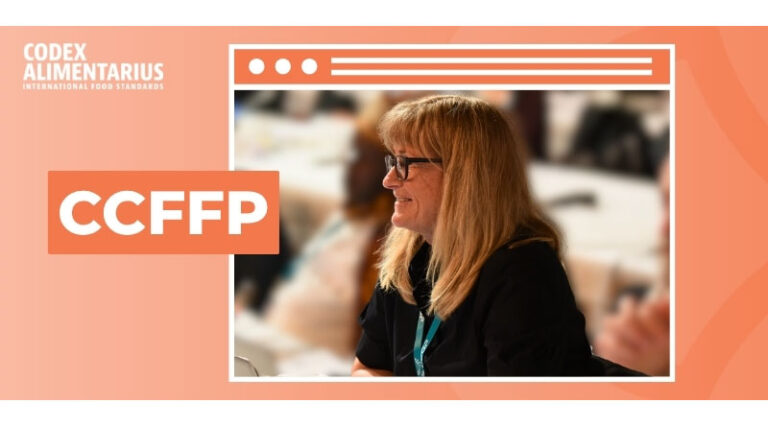
08 May 2026, US: The 37th session of the Codex Committee on Fish and Fishery Products (CCFFP) has concluded its meeting by correspondence by adopting the report of a fruitful meeting. A number of key decisions were made, and Norway made a key announcement regarding the hosting of the Committee. We asked the chairperson, Vigdis Synnøve Veum to tell us more.
Vigdis, the Codex Committee on Fish and Fishery Products (CCFFP) reconvened by correspondence for its 37th session 7 April–7 May 2026. What were the key outcomes of this meeting?
CCFFP37 agreed to forward the conversion of the Regional standard for laver products (Asia) into a worldwide Codex standard for adoption at Step5. The scope was slightly expanded to include the genus Porphyra, while remaining limited to dried laver products. Several sections retained in square brackets for further technical work through an Electronic Working Group (EWG).
CCFFP37 agreed to inform the Codex Committee on Contaminants in Food (CCCF) of the need to consider safety evaluations by the Joint FAO/WHO Expert Committee on Food Additives (JECFA) for key contaminants relevant to seaweed, including heavy metals (inorganic arsenic, cadmium, lead and mercury), iodine, and marine biotoxins.
In addition, CCFFP37 supported further development of new work related to seaweed by undertaking gap analyses and scoping exercises to clearly define purpose, scope, and priorities before submission of formal two proposals for:
a group standard for seaweed, structured in a flexible, stepwise manner with possible annexes for specific species or product categories; and
a code of practice for the production of seaweeds, including raw dried seaweed and seaweed-derived hydrocolloids used in food.
CCFFP37 made significant progress in reviewing and updating existing Codex standards, improving taxonomic accuracy, consistency, and alignment with Codex formats, and agreed to establish this review as a standing agenda item.
This session was one month long, which is twice the time that was allocated to the previous session, which also deliberated by correspondence. Was it helpful to have that extra time and, if so, how?
The extended duration of the session was beneficial in several respects. The additional time allowed for more thorough discussions at the national level and enabled the Chair to engage directly with delegates, who in turn had sufficient time to respond within normal working hours. It also provided flexibility to organize a virtual in‑session working group and made it easier for members to follow the discussions without excessive pressure on their schedules.
At the same time, the extended one‑month period proved to be resource‑intensive. Setting aside such a long timeframe required significant capacity, and given the technical nature of the agenda, the session would likely have benefited from a physical meeting. An in‑person format would have allowed for more dynamic discussions between delegates and the chairperson, including informal exchanges outside the plenary. It would also have facilitated the establishment of in‑session working groups or smaller drafting groups, which is more challenging when working exclusively by correspondence.
Overall, working by correspondence is an efficient approach for decision‑making processes, particularly when supported by electronic working groups (EWGs) for technical discussions. Decisions can then be made based on the outcomes and recommendations of these EWGs, including for transmission to CAC. However, lengthy and highly technical discussions are difficult to manage effectively by correspondence alone, even over an extended period such as one month.
CCFFP37 looked at updating the terms of reference and name of CCFFP. What are the implications of these changes and how will the Codex membership be better served by them?
CCFFP37 recognized the need to consider revising its terms of reference (ToRs) and name to better reflect current and future realities of aquatic food production, thereby enhancing the relevance and effectiveness of Codex for its membership.
The ToRs of the CCFFP were established more than 60 years ago. Like other international organizations, Codex must demonstrate its ability to evolve and adapt in order to remain relevant and responsive to changes in the global food system. Updating the ToRs of the Committee would signal openness to development and ensure that Codex terminology and mandates reflect today’s production realities and are meaningful to both long‑standing and newer Members.
These proposed changes go beyond terminology. They respond to fundamental transformations in the global fisheries and aquaculture sector that have direct implications for Codex standard setting.
Aquaculture has become the primary driver of growth in global aquatic food production, and seaweeds and other edible algae are emerging as rapidly expanding components of this sector. In this context, it is timely and strategic to consider revising the ToRs of the CCFFP.
Revising the ToRs to include aquatic food products would better align the Committee’s mandate with current and future production trends and more accurately capture the diversity of aquatic foods. Such an update would strengthen the relevance and clarity of the Committee’s work, ensure adequate coverage of aquaculture products, including seaweeds and edible algae, and enhance Codex’s ability to serve its membership effectively. Overall, the proposed changes would position the Committee to better support evidence‑based standard‑setting in a rapidly evolving global food landscape.
After over 60 years of service as the host country of CCFFP, Norway has decided to step down from that role. Do you have some message for the Codex membership and, looking back at those six decades of work, what do you think are the milestone achievements we should highlight?
Since its establishment, CCFFP has held 37 sessions, the three most recent of which were conducted by correspondence. Over the years, CCFFP has developed a substantial body of work, comprising 24 commodity standards, the Model certificate for fish and fishery products (CXG 48-2004), Guidelines for the sensory evaluation of fish and shellfish in laboratories (CXG 31-1999), and last but not least, a comprehensive Code of practice for fish and fishery products (CXC 52-2003). Together, these texts form a robust reference framework that has significantly facilitated international trade and promoted food safety and quality worldwide.
Beyond the formal outcomes, one of CCFFP’s greatest achievements has been its ability to bring together fish and aquatic food experts from all regions of the world. CCFFP has provided a forum not only for formal agenda items, but also for broader technical discussions and exchanges of experience related to trade and production. Discussions have at times been challenging, as one would expect in a technical committee, but they have consistently taken place in a collegial and constructive spirit.
I also believe that CCFFP benefitted from the interactions outside the plenary: through field trips, informal exchanges, and co‑hosting arrangements that helped build trust and mutual understanding. These moments reminded us that Codex work is not only about texts, but also about how to get to the final outcome and about the people involved.
Hosting CCFFP has been a major responsibility, but also a valuable opportunity. For Norway, with its strong engagement in fisheries and aquaculture and its role as one of the world’s major exporters of aquatic food products, this work has been particularly meaningful. As we step down as host, we do so with confidence that the Committee is well positioned to continue evolving and addressing future challenges with a new host.
On behalf of the Norwegian government, I would like to thank the Codex membership for six decades of cooperation, commitment, and shared purpose, and we look forward to continuing the journey together, albeit no longer from the host’s seat.
Global Agriculture is an independent international media platform covering agri-business, policy, technology, and sustainability. For editorial collaborations, thought leadership, and strategic communications, write to pr@global-agriculture.com