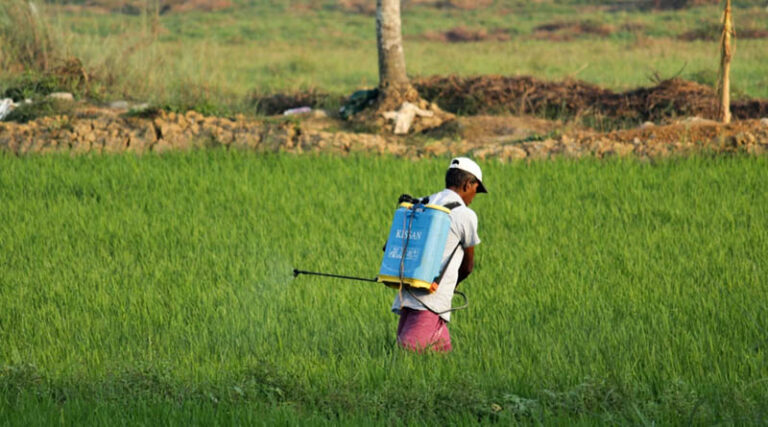
26 May 2026, New Delhi: As the Government reviews the sale of crop-protection products Paraquat Dichloride and Carbosulfan, following a restriction in Telangana and concern over poisoning deaths, CropLife India has urged that any decision must be guided by a clear understanding of what actually drives farmer suicides, and by a realistic view of what a ban would mean for farmers already under severe strain. A restriction removes the means, but it does not remove the root cause. In fact, restricting a product may deepen the distress that drives a farmer to take his or her life.
The evidence is well documented. The drivers identified across the scientific literature are consistent, including debt, crop failure, the absence of alternative livelihoods, and the inability to repay loans when the harvest fails.
For instance, a 2024 qualitative study of farmer suicides in Telangana and Andhra Pradesh, published in the Indian Journal of Community Medicine, concluded that the main causes are economic rather than related to the mental health of farmers, identifying debt and the resulting debt-trap as the central driver.
Another study, by the International Institute for Environment and Development, analysing data from 2014-15 to 2020-21 across five high-burden states, found that farmer suicides rise and fall with rainfall – at a 5% rainfall deviation the average was about 810 farmer suicides a year, rising to a projected 1,188 in a year of 25% rainfall deficit. The same study found that where guaranteed employment and social protection were available, suicide numbers stayed lower even after crop failure.
Taken together, the evidence makes clear that suicide is the symptom of a deeper crisis, and that restrictions on vital crop-protection products may only exacerbate it. The Government has, over the years, steadily strengthened the safety net for farmers through income support, crop insurance, institutional credit and rural employment guarantees.
The timing makes this especially urgent. CropLife India has urged the Government to take into consideration the needs at the farm, especially as the kharif sowing season begins, when farmers have already planned and committed to their inputs for the year. Disrupting affordable, established weed and pest control mid-season would raise costs and add to the financial pressure on farmers at the very moment they can least absorb it, the same pressure the evidence identifies as the real driver of these tragedies.
That pressure is not small. Weeds already cause an estimated ₹92,000 crore in lost crop productivity every year, 25-26% of yield in kharif crops and 18-25% in rabi, according to a study by the Directorate of Weed Research, an ICAR institute, and the Federation of Seed Industry of India, covering 3,200 farmers across 11 states.
Paraquat is used on close to 80 lakh acres a year and plays a role in weed management across tea, cotton, potato, maize, coffee, rubber, orchards and plantation crops. It supports the zero-tillage and conservation practices the Government itself promotes. At about ₹300-350 per acre, Paraquat remains a highly cost-effective solution, especially for small and marginal farmers, costing far less than manual weeding, whose price has risen sharply amid acute labour shortages.
Carbosulfan is among the few effective options against gall midge in paddy and is used on about 32 lakh acres. Higher input costs and lost yield push farmers further into the financial strain that lies behind this crisis, which is why CropLife India urges that the focus return to that strain itself.
“While debating on any product, we are deviating from the key concern of farmer’s suicide,” said Ankur Aggarwal, Chairman, CropLife India and Executive Chairman & Managing Director, Crystal Crop Protection Ltd. “The key issue is that a farmer’s distress does not disappear when a product is removed overnight. The debt, the failed crop and the fear of what comes next remain. If the aim is to save lives, the response must reach that cause, with solutions that enable availability of credit, a fair price for the crop, insurance that pays when the harvest fails, and stewardship and Good Agricultural Practices training on the ground.”
Global Agriculture is an independent international media platform covering agri-business, policy, technology, and sustainability. For editorial collaborations, thought leadership, and strategic communications, write to pr@global-agriculture.com