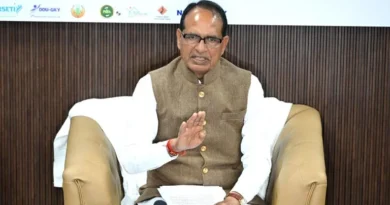
30 March 2026, New Delhi: India has taken a significant step toward sustainable infrastructure and agricultural innovation with the introduction of bio-bitumen derived from crop residues. Speaking at a technology transfer event titled “Lignocellulosic Biomass to Bio-Bitumen – Farm Residue to Roads” at CSIR Headquarters, Union Minister for Agriculture and Farmers’ Welfare and Rural Development, Shivraj Singh Chouhan, described the initiative as a transformative milestone for the country.
He emphasized that converting crop residue such as stubble into bio-bitumen for road construction represents a breakthrough that simultaneously addresses four key priorities: enhancing farmer incomes, protecting the environment, promoting self-reliance, and advancing indigenous technology.
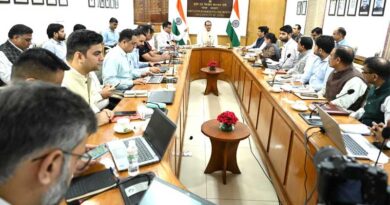
The event was attended by Union Minister for Science and Technology, Jitendra Singh, along with scientists and farmers.
From Stubble Burning to Sustainable Solutions
Highlighting the long-standing issue of stubble burning, Chouhan noted that changing agricultural practices and time constraints between cropping cycles have reduced traditional uses of crop residue, often leaving farmers with no option but to burn it. However, innovations like bio-bitumen now offer an economically viable alternative.
He explained that this approach transforms agricultural waste into a valuable resource, creating additional income streams for farmers while significantly reducing environmental damage. The initiative also aligns with ongoing efforts such as direct seeding technologies, which have already contributed to a decline in stubble burning in states like Punjab, Haryana, and Uttar Pradesh.
Reducing Imports and Strengthening Self-Reliance
The minister stressed the importance of reducing India’s dependence on imports, particularly in the context of global uncertainties. Bio-bitumen, he said, could substantially lower the country’s reliance on imported bitumen, potentially saving around ₹4,500 crore annually.
He described the initiative as a strong step toward achieving the vision of Atmanirbhar Bharat (self-reliant India), adding that well-aligned policies, clear intent, and strong leadership can deliver multi-dimensional benefits through a single innovation.
Science, Agriculture, and Innovation Converge
Chouhan also underscored the deep roots of scientific tradition in India, linking ancient knowledge systems with modern research. He praised scientists as key drivers of innovation, calling them “architects of progress and nation-building.”
He highlighted the collaborative efforts of institutions such as CSIR, CRRI, IITs, and agricultural research bodies in developing solutions that connect laboratories with fields, ultimately benefiting farmers and the broader economy.
Ensuring Food Security Amid Climate Challenges
The minister pointed out that India has emerged as the world’s leading rice producer, surpassing China, and continues to strengthen its agricultural output. However, he emphasized that ensuring food security for a population of over 1.4 billion remains a top priority.
Efforts are underway to achieve self-sufficiency in pulses, oilseeds, fruits, and vegetables, while research institutions are developing climate-resilient crop varieties capable of withstanding extreme conditions such as heat and excess moisture.
A Timely Innovation in a Changing Global Landscape
Speaking at the event, Jitendra Singh noted that the bio-bitumen initiative comes at a crucial time when global supply chains are under stress and countries are actively seeking alternatives to imports.
He highlighted that the successful development of bio-bitumen demonstrates multiple outcomes: reducing dependence on fossil fuels, contributing to India’s net-zero goals, and advancing the “waste-to-wealth” concept by converting crop residue into high-value products.
Singh added that this innovation could significantly cut India’s expenditure on imported bitumen, currently estimated at ₹25,000–35,000 crore annually.
Global Agriculture is an independent international media platform covering agri-business, policy, technology, and sustainability. For editorial collaborations, thought leadership, and strategic communications, write to pr@global-agriculture.com