India’s Rice Exporters Flag Pesticide Residue Compliance Gaps as Shipment Rejections Mount
28 September 2026, India: India’s rice export industry is sounding an alarm over pesticide residue and quality compliance failures that are driving shipment rejections in key overseas markets, with the Indian Rice Exporters Federation (IREF) calling for stronger pre-shipment testing to protect the country’s position as the world’s largest rice exporter.
The warning, reported on September 25, 2026, comes as India’s rice trade continues to expand rapidly. According to data from the Agricultural and Processed Food Products Export Development Authority (APEDA) cited by IREF, India exported 20.19 million metric tonnes of rice valued at 12.47 billion dollars in 2024-25. That scale means even a small percentage of rejected consignments translates into significant financial losses and reputational risk in destination markets.
IREF identified multiple causes behind border rejections, including pesticide residues exceeding permitted limits, microbial and physical contamination, specification mismatches with buyer contracts, inconsistent testing protocols between Indian and importing-country laboratories, and documentation errors. The federation did not release a breakdown of what share of rejections is attributable specifically to pesticide residues, but it singled out the European Union as a market where non-compliant consignments face automatic border rejection under the bloc’s maximum residue limit (MRL) framework for imported food.
Dev Garg, IREF’s national vice president, framed the issue as one of long-term market access rather than a single compliance hurdle. He said market access does not end when a shipment leaves the port, but ends only when that shipment meets the buyer’s requirements, a comment that underscores the federation’s push to treat compliance as a competitiveness issue rather than a paperwork formality.
Live Newsroom
IREF plans to make this a formal agenda item at the Bharat International Rice Conference (BIRC) 2026, scheduled for October 23 to 25, 2026, where the federation intends to convene a dedicated session examining compliance risk across the rice supply chain, from farm-level pesticide application through export documentation. The outcome is expected to be published as a “BIRC 2026 Rice Export Compliance Alert,” a reference document industry participants can use to tighten internal quality controls ahead of the next export season.
This is a distinct development from two other India-focused compliance studies published earlier in 2026 by the Crop Care Federation of India, one using nine years of domestic monitoring data to show that 97.18 percent of over 209,000 food samples complied with residue standards, and another using 14 years of UNIDO rejection data to argue that only 19 percent of India’s export rejections are pesticide-related, with the remainder tied to non-pesticide factors such as labeling and contamination. IREF’s rice-specific intervention adds an exporter’s-eye view on top of that data, focused specifically on what is happening at the port and in buyer relationships rather than on aggregate residue statistics.
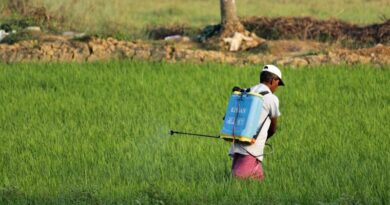
For global agribusiness readers, this matters because India’s rice sector sits at the intersection of two forces reshaping agrochemical demand worldwide: tightening importer-side MRL enforcement, particularly in the EU, and exporter-side pressure to standardize pesticide application and pre-shipment testing across a highly fragmented smallholder supply base. How India’s rice trade manages this tension will influence sourcing decisions for buyers in the Middle East, Africa and Europe, and it will shape demand for compliant, lower-residue crop protection products and biologicals among Indian rice growers, who account for a meaningful share of global insecticide and fungicide consumption on paddy.
IREF has not yet published specific data quantifying the scale of pesticide-related rejections in rice shipments, and no regulatory action from CIBRC or the commerce ministry has been announced in response. This remains an industry-driven compliance push ahead of the October conference rather than a change in registration or residue policy.
Also Read: New US Tariffs on Chinese Drones Raise Costs for Spray-Drone Farmers
Global Agriculture is an independent international media platform covering agri-business, policy, technology, and sustainability. For editorial collaborations, thought leadership, and strategic communications, write to pr@global-agriculture.com