Jain Irrigation to Produce Tissue Culture Plants of Two New Banana Varieties
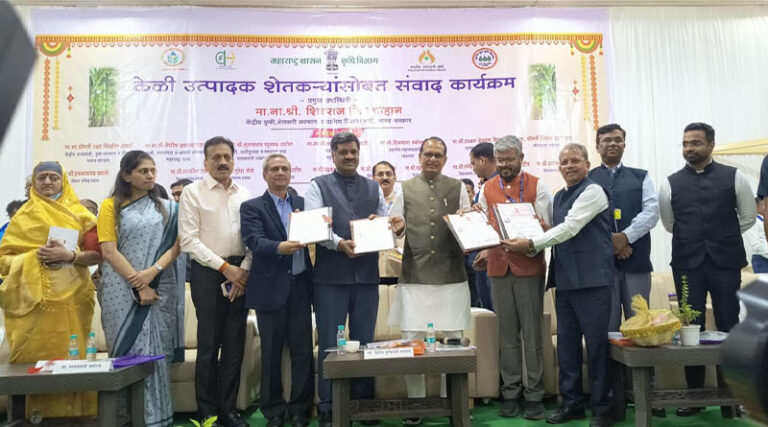
MoU Signed in Presence of Union Agriculture Minister
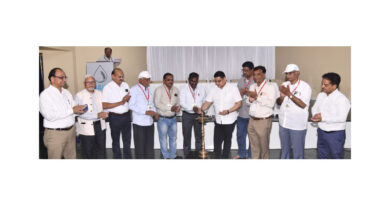
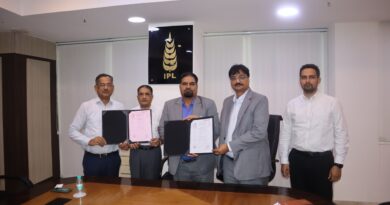
25 March 2026, New Delhi: In the presence of Union Agriculture Minister Shivraj Singh Chouhan, a Memorandum of Understanding (MoU) was signed at Jain Hills, Jalgaon, between the ICAR–National Research Centre for Banana (NRCB), Tiruchirappalli, and Jain Irrigation Systems Limited, Jalgaon. The agreement aims at the production of tissue culture plants of two newly developed banana varieties—Kaveri Vaman and Kaveri Puvan.
The MoU was signed by Dr. R. Selvarajan, Director of NRCB, on behalf of ICAR, and by Dr. Anil Patil and Dr. K. B. Patil from Jain Irrigation’s Tissue Culture Division. Present at the occasion were Ashok Jain (Chairman), Anil Jain (Vice Chairman & Managing Director), Ajit Jain and Atul Jain (Joint Managing Directors) of Jain Irrigation.
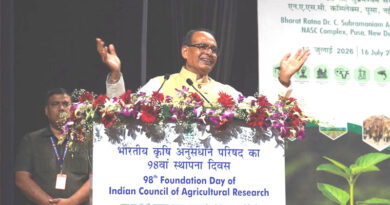
The exchange of MoU documents took place during a banana symposium आयोजित at Kavayitri Bahinabai Chaudhari North Maharashtra University, in the presence of several dignitaries, including Minister of State for Sports Raksha Khadse, Maharashtra Water Resources Minister Girish Mahajan, MP Smita Wagh, Joint Secretary in the Ministry of Agriculture Priyaranjan Das, Horticulture Director Ankush Mane, ICAR ADG Dr. V. B. Patel, District Collector Rohan Ghuge, and others.
Under the agreement, Jain Irrigation will produce and supply tissue culture plants of Kaveri Vaman and Kaveri Puvan to farmers from its Jalgaon facilities.
Key Features of the Varieties
Kaveri Vaman:
Developed from the popular ‘Grand Naine’ variety at Bhabha Atomic Research Centre (BARC), Mumbai, this variety belongs to the AAA genomic group. It performs well in well-drained soils and flat terrains. The plant is dwarf in stature, reaching a height of 150–160 cm, with blackish-brown spots on the pseudostem and a cylindrical growth habit. The bunch weight ranges between 18–25 kg. Fruits turn yellow upon ripening, with cream-coloured pulp and a sweet taste. Suitable for Ultra High Density planting, the variety does not require propping, reducing cultivation costs by about 10%. It is well-suited for wind-prone and coastal regions, matures in 11–12 months, and can be planted year-round. The average yield is 55–60 tonnes per hectare.
Kaveri Puvan:
Developed from the widely grown ‘Puvan’ variety after 15 years of research by NRCB, this variety is resistant to viral diseases and highly destructive Fusarium wilt (Panama disease) strains TR-1 and TR-4. It offers around 20% higher yield compared to the local Puvan variety. Additionally, it performs well in saline and alkaline soils, making it suitable for challenging growing conditions.
Also Read: India Issues Draft Rules for Amendment to Its Insecticides Rules, 1971
Global Agriculture is an independent international media platform covering agri-business, policy, technology, and sustainability. For editorial collaborations, thought leadership, and strategic communications, write to pr@global-agriculture.com