03 October 2026, Queensland: A robotic system that refills and remixes chemical tanks for autonomous spray robots without a worker ever touching the chemicals is now running commercially on a 65,000-acre grain and pulse farm in southern Queensland, Australia, extending how long the robots can spray unattended and adding to the chemical savings they already deliver, according to the manufacturer and independent farm-press reporting published in late September 2026.
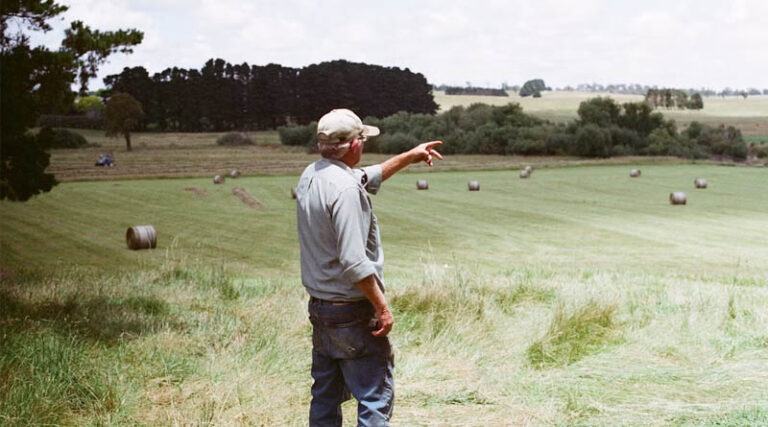
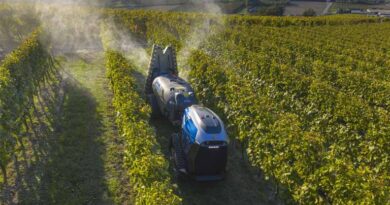
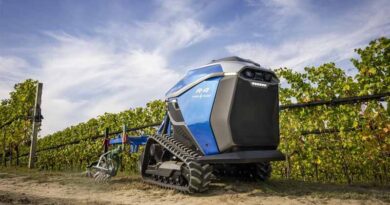
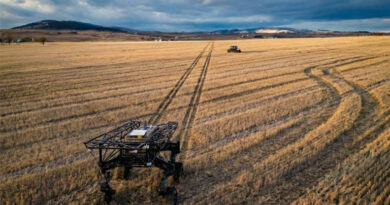
The farm, Coggan Farms near Meandarra, run by the Coggan family across five generations, crops about 32,000 acres of barley, wheat, chickpeas, canola and sorghum. It operates two autonomous spray robots built by SwarmFarm Robotics, a Queensland-based agricultural robotics company: an 18-metre boom unit fitted with Weed-It optical cameras that detect green plant material against bare soil and trigger individual nozzles to spray only the weeds they see, rather than blanketing the whole field. That targeting, known as spot spraying, is already the main source of the farm’s chemical savings, which the family and SwarmFarm say typically run around 85% and have reached as high as 95% compared with conventional blanket spraying.
Until recently, the limiting factor on these robots was not the spraying itself but the refilling. An autonomous sprayer can run around the clock, but its chemical tank still needs topping up every few hours, and until now that meant a person had to manually mix concentrate with water and pump it into the robot, which capped how long the machine could work without supervision and exposed the operator to repeated chemical handling.
SwarmFarm’s new AutoFill system removes that bottleneck. It is a stationary robotic unit, controlled through a smartphone app, that automatically measures out liquid chemical concentrate, blends it with water to the correct rate, and pumps the finished mix into a spray robot’s tank when the robot docks beside it, all without a person opening a drum or touching the solution. Coggan Farms has paired an AutoFill unit, priced at roughly 80,000 Australian dollars, with its SwarmBot fleet, and SwarmFarm says the combination lets the robots work for 24 to 30 hours between refuelling stops rather than being tied to daylight hours when a worker is available to mix chemicals.
Beyond removing a safety and labour bottleneck, AutoFill changes the economics of running the robots. SwarmFarm’s Integrated Autonomy Lead, Craig Hargreaves, says the system lifts a sprayer fleet’s working capacity by 20 to 30% simply by cutting the downtime robots previously spent waiting for a human to refill them, and the company puts the added cost saving from more precise, automated mixing at 2 to 3 Australian dollars per hectare on top of the existing spot-spray savings. Customers who have adopted AutoFill alongside their SwarmBots report payback periods of 12 to 18 months on the roughly 80,000 Australian dollar unit cost, according to the manufacturer; a single SwarmBot itself costs around 360,000 Australian dollars.
The technology has drawn industry recognition since its commercial launch in October 2025: AutoFill won the 2026 Henty Machine of the Year award, a closely watched Australian farm machinery prize, beating seven other shortlisted entries. SwarmFarm says roughly 50 AutoFill units are now operating commercially, nearly all in Australia with one deployed in the United States, alongside a wider fleet of more than 300 SwarmFarm robot systems in the field. The current version works only with liquid chemical formulations; granular products still require a separate hopper-based system, which SwarmFarm has flagged as a gap it is working to close.
Global Agriculture is an independent international media platform covering agri-business, policy, technology, and sustainability. For editorial collaborations, thought leadership, and strategic communications, write to pr@global-agriculture.com