GGGI, IRRI Advance PH Methane MRV Improvement Under ASEAN-Korea Initiative
23 July 2026, Philippines: The Philippines is continuing to advance its commitment to global climate action by hosting a high-level meeting dedicated to refining its national methane emission strategies.
The Global Green Growth Institute (GGGI) and International Rice Research Institute (IRRI) co-organized a country-focused event that serves as a cornerstone of the broader ASEAN-Korea Cooperation for Methane Mitigation (AKCMM) project, a three-year grant initiative funded by the ASEAN-Korea Cooperation Fund (AKCF) under its specific objective to improve Monitoring, Reporting and Verification systems (MRV) in the Philippines.
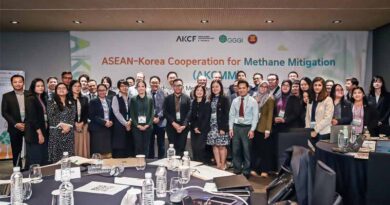
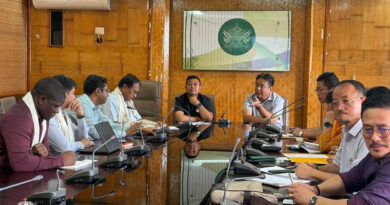
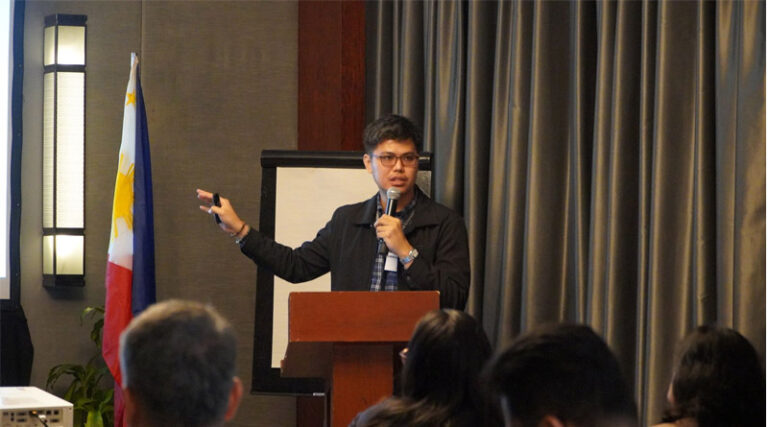
Held last July 14 to 15, 2026, the Workshop on the Global Methane Pledge Framework and Visioning for the Philippines’ Methane Emission Measurement, Reporting, and Verification (MRV) convened a diverse coalition of government agencies, international experts, and academic institutions. The workshop brought together more than 50 participants, with the broad representation reflecting the multisectoral nature of methane emissions and the necessity of a whole-of-government approach to its reduction for climate change mitigation.
A strategic framework for mitigation
The AKCMM project is designed to bolster methane reduction efforts across the ASEAN region through four strategic outputs: developing enabling policies and institutions, improving methane emission measurement, designing and financing reduction projects, and fostering regional dialogue.
In the Philippines, GGGI is leading the project’s implementation in close collaboration with the Department of Environment and Natural Resources (DENR), the Climate Change Commission (CCC), Department of Agriculture (DA), Department of Energy (DOE), Department of Science and Technology (DOST), and the National Irrigation Administration (NIA). Central to this effort is the Philippine Methane Reduction Committee (MRC), a body comprised of core members from these agencies. The MRC is tasked with critical responsibilities, including reviewing the national Methane Reduction Plan (MRP), identifying gaps in emission measurement, and selecting priority project concepts for funding.
The workshop focused heavily on the necessity of a robust MRV system. A reliable MRV framework is essential for setting realistic targets and monitoring the effectiveness of the MRP. To achieve this, IRRI, in collaboration with the University of the Philippines Los Baños (UPLB) and Clean Air Asia conducted a comprehensive situational analysis of methane MRV systems across four primary sectors in the Philippines agriculture, energy, waste, and industrial processes and product use (IPPU). These Gaps and Needs analysis will provide evidence-based recommendations for MRV improvements that align with the Philippines’ efforts to meet the requirements of the Global Methane Pledge.
Policy alignment and sectoral challenges
The first day of the workshop was dedicated to establishing a shared understanding of the international and national policy landscape. In her welcoming remarks, MRC Chairperson Assistant Secretary Noralene Uy emphasized that strengthening our understanding of methane emission sources and improving the MRV are critical steps toward achieving both national and global climate goals. “A robust MRV system is critical to understanding methane emissions, tracking progress, and guiding evidence-based policies and actions”, she added. IRRI Project Leader Dr. Ando Radanielson opened the sessions by outlining the workshop’s objectives and the broader context of the Global Methane Pledge.
A pivotal presentation by the CCC addressed the principles of the National Greenhouse Gas Inventory (NGHGI) and the importance of aligning methane-specific inventories with national reporting standards. This was followed by an info session featuring insights from various stakeholders, including GIZ, the Manila Observatory, the Oscar M. Lopez Center, UPLB Institute of Animal Science, and the Climate and Clean Air Coalition.
Participants then broke into sectoral groups—Agriculture, Energy, IPPU, and Waste—to engage in deep-dive discussions. These sessions mapped out the current status of MRV in each sector and identified specific challenges. The discussions set some priorities and capacity building needs that will move beyond theoretical frameworks in MRV improvements for the country such as addressing the challenges faced by agency technicians and data managers.
Empowering agencies with technical tools
Transitioning from policy to practice, the second day focused on the technical tools required for accurate methane accounting.
The workshop introduced and demonstrated several specialized accounting tools:
- For the Rice Sector: Tools such as SECTOR, MapAWD, RiceMoRe, and FarMoRe were showcased for their ability to track emissions from agricultural activities.
- For the Waste Sector: Participants explored the Solid Waste Emission Estimation Tool (SWEET), Carbon Mapper, and Waste MAP.
- General Modeling: The Low Emissions Analysis Platform (LEAP) was also highlighted for its utility in modeling methane emissions from the rice subsector.
A Readiness and Feasibility Assessment was conducted for these tools using a SWOT (Strengths, Weaknesses, Opportunities, and Threats) analysis. This participatory approach ensured that the adoption and customization of tools for the national MRV systems will prioritize practicality in addition to their scientific robustness to ensure suitability and feasibility for long-term implementation by the Philippine government.
Dr. Radanielson emphasized that improving the quality of activity data is vital for high-quality inventories, while climate scientist Dr. Reiner Wassmann recalled that data would need as well to be collected for a purpose and the improvement of emissions factors are key to enable disaggregation of inventories and as well tracking of progress at regional level.
The participants recognized the value of coming together across sectors and governmental agencies, and among the recommendations moving forward from the workshop is an open dialogue and conversation among agencies to ensure the establishment of implementation oversight mechanisms for the different legal frameworks in the country, such as those under Executive Order 174 (Institutionalizing Philippine Greenhouse Gas Inventory Management and Reporting System).
A collaborative path forward
The outputs of the two-day event will directly inform the final recommendations for the Philippines’ MRV improvement plan and the country MRP roadmap.
As the AKCMM project moves into its next phases, the collaboration between the AKCF, GGGI, IRRI, and Philippine national agencies serves as a model for regional climate cooperation. By bridging the gap between high-level policy commitments and technical “on-the-ground” measurement capabilities, the Philippines is positioning itself as a proactive leader in the ASEAN region’s fight against climate change.
Also Read: Bayer Launches New Insecticide Trance for Cotton in India
Global Agriculture is an independent international media platform covering agri-business, policy, technology, and sustainability. For editorial collaborations, thought leadership, and strategic communications, write to pr@global-agriculture.com