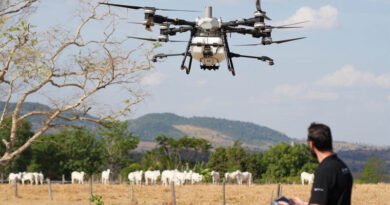
30 October 2026, Boulder, US: Boulder County, Colorado, is moving forward with plans to spray the herbicide indaziflam from drones across open space land in the Red Hill area, despite sustained opposition from nearby residents and renewed scrutiny of the chemical’s health effects.
County commissioners voted 2 to 1 on May 21, 2026, to revive the long disputed project, which targets about 800 acres of county open space west of U.S. Highway 36, near St. Vrain and Hygiene roads, including part of Heil Valley Ranch. The county’s broader weed management strategy under its 2024 Integrated Weed Management Plan envisions treating roughly 3,000 acres with the herbicide by 2030.
Indaziflam, developed by Bayer and sold under the brand name Rejuvra by the Bayer spinoff Envu since 2022, is used to control cheatgrass, an invasive annual grass that crowds out native vegetation and is widely blamed for worsening wildfire risk in the US West. County officials say drone application allows more targeted, lower volume treatment of difficult terrain than ground based spraying.
The project has drawn opposition from residents, environmental groups and at least one county commissioner. Azuraye Wycoff, owner of Yellow Barn Farm near the treatment area, said many in the community are “really livid” about the plan. Commissioner Ashley Stolzmann, the lone dissenting vote in May, said the county should not be “spraying known carcinogens from the sky over our community in a broad way.” Nick DiDomenico, who farms nearby at Elk Run Farm, has alleged the county’s reliance on the herbicide reflects undue influence from Bayer, a claim county officials and Envu representatives dispute.
Central to the dispute is whether indaziflam should be classified among a group of herbicides containing per- and polyfluoroalkyl substances, commonly known as PFAS or “forever chemicals,” because of its fluorine content. Researchers affiliated with the University of Colorado have said some industry funded studies of indaziflam’s environmental persistence lacked adequate disclosure of Bayer ties. Envu, which now markets Rejuvra, and industry groups maintain that regulatory assessments by the US Environmental Protection Agency continue to support the product’s approved uses.
In response to the backlash, Boulder County revised its approach between the project’s initial 2025 pause and its May 2026 revival. The buffer zone near homes was expanded from 50 feet to 100 feet, drift retardant additives were introduced, and boundary monitoring and soil sampling were added. The county also adjusted treatment areas to avoid habitat used by the Preble’s meadow jumping mouse, a federally listed threatened species. Stefan Reinold, the county’s deputy director of land management, said officials are not using the herbicide off label, and Jason Seuc, director of Parks and Open Space, said the revised plan reflects community feedback.
Separately, the advocacy groups Detox Boulder County and the Dandy Lyons Brigade have filed legal complaints over a 2022 application of Rejuvra in the nearby town of Lyons, with a court ruling expected in the coming months. The county’s Integrated Weed Management Plan itself is scheduled for formal reconsideration in 2027. Spraying under the current Red Hill plan is expected in late fall or winter 2026.
Global Agriculture is an independent international media platform covering agri-business, policy, technology, and sustainability. For editorial collaborations, thought leadership, and strategic communications, write to pr@global-agriculture.com